

6 Methods for Functional Connectivity Analysis
139
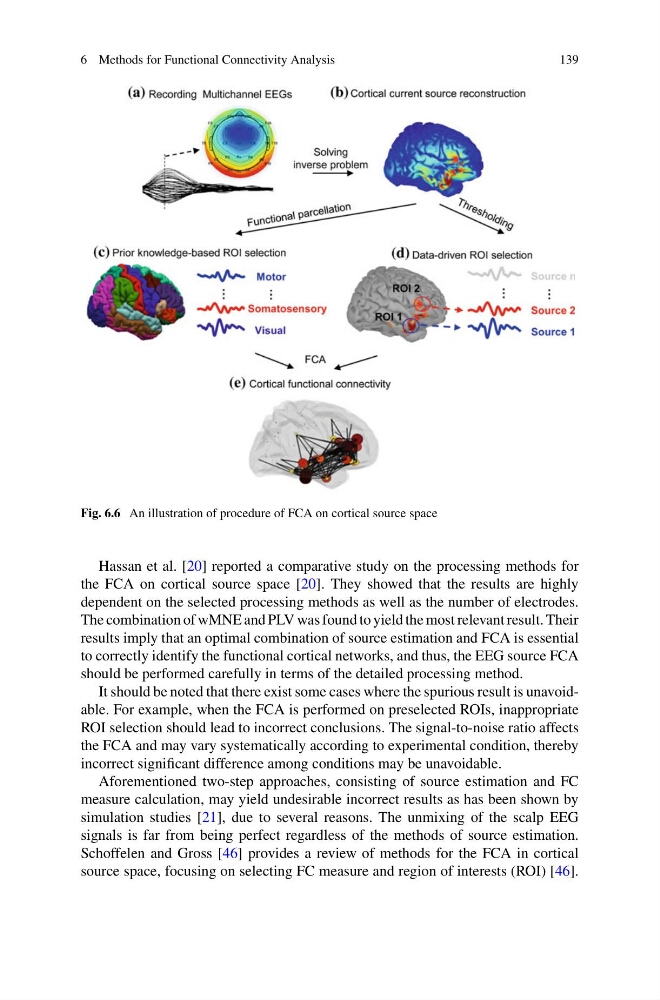
Fig. 6.6 An illustration of procedure of FCA on cortical source space
Hassan et al. [20] reported a comparative study on the processing methods for
the FCA on cortical source space [20]. They showed that the results are highly
dependent on the selected processing methods as well as the number of electrodes.
The combination of wMNE and PLV was found to yield the most relevant result. Their
results imply that an optimal combination of source estimation and FCA is essential
to correctly identify the functional cortical networks, and thus, the EEG source FCA
should be performed carefully in terms of the detailed processing method.
It should be noted that there exist some cases where the spurious result is unavoidable. For example, when the FCA is performed on preselected ROIs, inappropriate
ROI selection should lead to incorrect conclusions. The signal-to-noise ratio affects
the FCA and may vary systematically according to experimental condition, thereby
incorrect significant difference among conditions may be unavoidable.
Aforementioned two-step approaches, consisting of source estimation and FC
measure calculation, may yield undesirable incorrect results as has been shown by
simulation studies [21], due to several reasons. The unmixing of the scalp EEG
signals is far from being perfect regardless of the methods of source estimation.
Schoffelen and Gross [46] provides a review of methods for the FCA in cortical
source space, focusing on selecting FC measure and region of interests (ROI) [46].
139
Fig. 6.6 An illustration of procedure of FCA on cortical source space
Hassan et al. [20] reported a comparative study on the processing methods for
the FCA on cortical source space [20]. They showed that the results are highly
dependent on the selected processing methods as well as the number of electrodes.
The combination of wMNE and PLV was found to yield the most relevant result. Their
results imply that an optimal combination of source estimation and FCA is essential
to correctly identify the functional cortical networks, and thus, the EEG source FCA
should be performed carefully in terms of the detailed processing method.
It should be noted that there exist some cases where the spurious result is unavoidable. For example, when the FCA is performed on preselected ROIs, inappropriate
ROI selection should lead to incorrect conclusions. The signal-to-noise ratio affects
the FCA and may vary systematically according to experimental condition, thereby
incorrect significant difference among conditions may be unavoidable.
Aforementioned two-step approaches, consisting of source estimation and FC
measure calculation, may yield undesirable incorrect results as has been shown by
simulation studies [21], due to several reasons. The unmixing of the scalp EEG
signals is far from being perfect regardless of the methods of source estimation.
Schoffelen and Gross [46] provides a review of methods for the FCA in cortical
source space, focusing on selecting FC measure and region of interests (ROI) [46].