

108
Y. Zhang
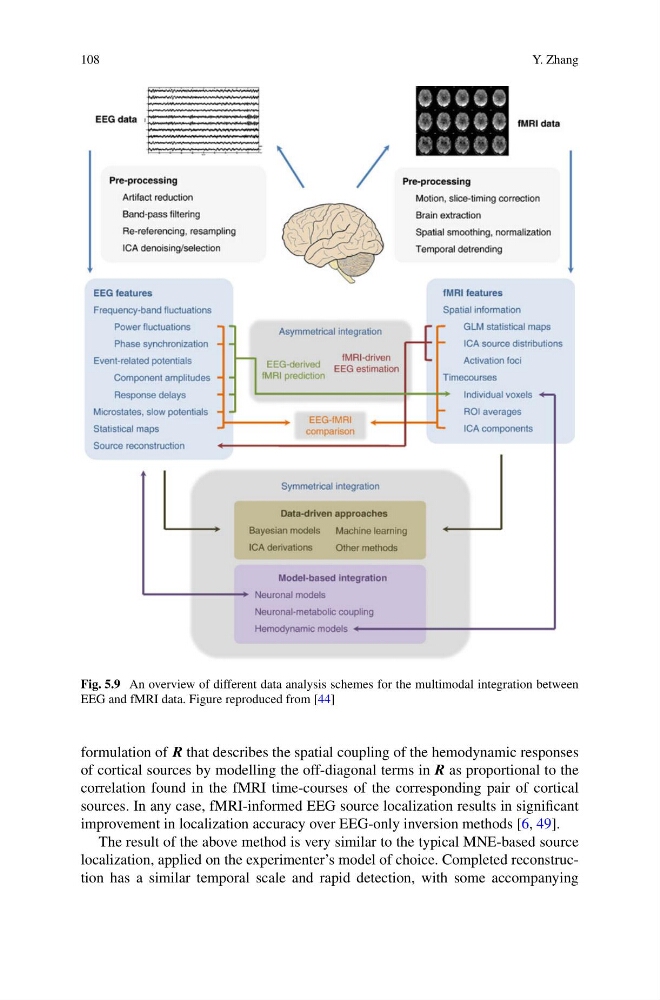
Fig. 5.9 An overview of different data analysis schemes for the multimodal integration between
EEG and fMRI data. Figure reproduced from [44]
formulation of R that describes the spatial coupling of the hemodynamic responses
of cortical sources by modelling the off-diagonal terms in R as proportional to the
correlation found in the fMRI time-courses of the corresponding pair of cortical
sources. In any case, fMRI-informed EEG source localization results in significant
improvement in localization accuracy over EEG-only inversion methods [6, 49].
The result of the above method is very similar to the typical MNE-based source
localization, applied on the experimenter’s model of choice. Completed reconstruction has a similar temporal scale and rapid detection, with some accompanying
Y. Zhang
Fig. 5.9 An overview of different data analysis schemes for the multimodal integration between
EEG and fMRI data. Figure reproduced from [44]
formulation of R that describes the spatial coupling of the hemodynamic responses
of cortical sources by modelling the off-diagonal terms in R as proportional to the
correlation found in the fMRI time-courses of the corresponding pair of cortical
sources. In any case, fMRI-informed EEG source localization results in significant
improvement in localization accuracy over EEG-only inversion methods [6, 49].
The result of the above method is very similar to the typical MNE-based source
localization, applied on the experimenter’s model of choice. Completed reconstruction has a similar temporal scale and rapid detection, with some accompanying