

19.3 Opsonization and Mononuclear Phagocytic System
(MPS) Clearance
19.3.1 Opsonization
Opsonization is the molecular event that NPs, microbes, or apoptotic cells are
chemically modified in the blood to have stronger interactions with phagocytes
(monocytes, macrophages, neutrophils and dendritic cells) and natural killer cells.
An opsonin (from a Greek word meaning “to prepare for eating”) is any molecule
that enhances phagocytosis by marking on the NPs or microbes to be more recognizable to phagocytes. After opsonization, NPs binding to phagocytes is greatly
increased. Opsonin molecules include an antibody, complement proteins and other
circulating proteins such as pentraxins, collectins and ficolins [24–26]. There are
over 1000 kinds of proteins in the blood circulation, and the proteins interact with
intravenously injected NPs and form a shell like coverage surrounding the NPs
which is called collectively corona proteins [27]. Opsonization could be regarded as
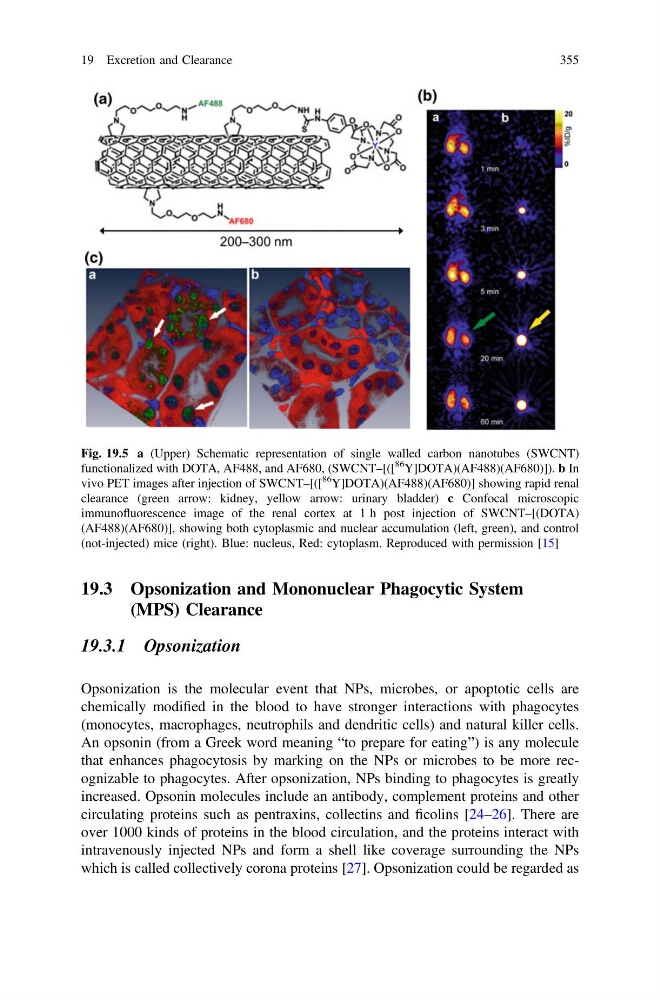
Fig. 19.5 a (Upper) Schematic representation of single walled carbon nanotubes (SWCNT)
functionalized with DOTA, AF488, and AF680, (SWCNT–[([
86
Y]DOTA)(AF488)(AF680)]). b In
vivo PET images after injection of SWCNT–[([
86
Y]DOTA)(AF488)(AF680)] showing rapid renal
clearance (green arrow: kidney, yellow arrow: urinary bladder) c Confocal microscopic
immunofluorescence image of the renal cortex at 1 h post injection of SWCNT–[(DOTA)
(AF488)(AF680)], showing both cytoplasmic and nuclear accumulation (left, green), and control
(not-injected) mice (right). Blue: nucleus, Red: cytoplasm. Reproduced with permission [15]
19 Excretion and Clearance
355
(MPS) Clearance
19.3.1 Opsonization
Opsonization is the molecular event that NPs, microbes, or apoptotic cells are
chemically modified in the blood to have stronger interactions with phagocytes
(monocytes, macrophages, neutrophils and dendritic cells) and natural killer cells.
An opsonin (from a Greek word meaning “to prepare for eating”) is any molecule
that enhances phagocytosis by marking on the NPs or microbes to be more recognizable to phagocytes. After opsonization, NPs binding to phagocytes is greatly
increased. Opsonin molecules include an antibody, complement proteins and other
circulating proteins such as pentraxins, collectins and ficolins [24–26]. There are
over 1000 kinds of proteins in the blood circulation, and the proteins interact with
intravenously injected NPs and form a shell like coverage surrounding the NPs
which is called collectively corona proteins [27]. Opsonization could be regarded as
Fig. 19.5 a (Upper) Schematic representation of single walled carbon nanotubes (SWCNT)
functionalized with DOTA, AF488, and AF680, (SWCNT–[([
86
Y]DOTA)(AF488)(AF680)]). b In
vivo PET images after injection of SWCNT–[([
86
Y]DOTA)(AF488)(AF680)] showing rapid renal
clearance (green arrow: kidney, yellow arrow: urinary bladder) c Confocal microscopic
immunofluorescence image of the renal cortex at 1 h post injection of SWCNT–[(DOTA)
(AF488)(AF680)], showing both cytoplasmic and nuclear accumulation (left, green), and control
(not-injected) mice (right). Blue: nucleus, Red: cytoplasm. Reproduced with permission [15]
19 Excretion and Clearance
355