

targets with proton beams; (iii) a fluorine can form a stable covalent bond with
carbon, which can increase its metabolic stability; (iv) fluorine in
fluorine-containing compounds can form an unexpected hydrogen bonding with the
desired biological target; (v) the half-life of
18 F allow
18 F labeled molecular
imaging probes to be shipped regionally to nearby research sites or hospitals which
are not equipped with cyclotron as radionuclide production facility [27–31].
14.3 SPAAC Reaction Based In Vivo
18 F-Labeling
of Mesoporous Silica Nanoparticles
Since biocompatible nanoparticles which have an optimal size can accumulate in
the tumor by passive targeting such as the enhanced permeability and retention
(EPR) effects [32–34], they have attracted much interest in therapy and early
diagnosis of cancer in broad nanomedicine research field [25–37]. Therefore, the
pharmacokinetic studies of the nanoparticles became a crucial topic for investigating the safety of these nanoparticles and their in vivo behavior via real-time
tracking using a PET system in the living body. In general, MSNs can show good
performance in the biomedical field as the vehicles for drug-delivery [38].
However, because these nanoparticles generally require a long circulation time for
homing at the tumor region [37, 38],
18 F may be not a suitable radioisotope for the
labeling of nanoparticles for PET imaging considering its short half-life
(t 1/2 = 109.8 min) [27–29].
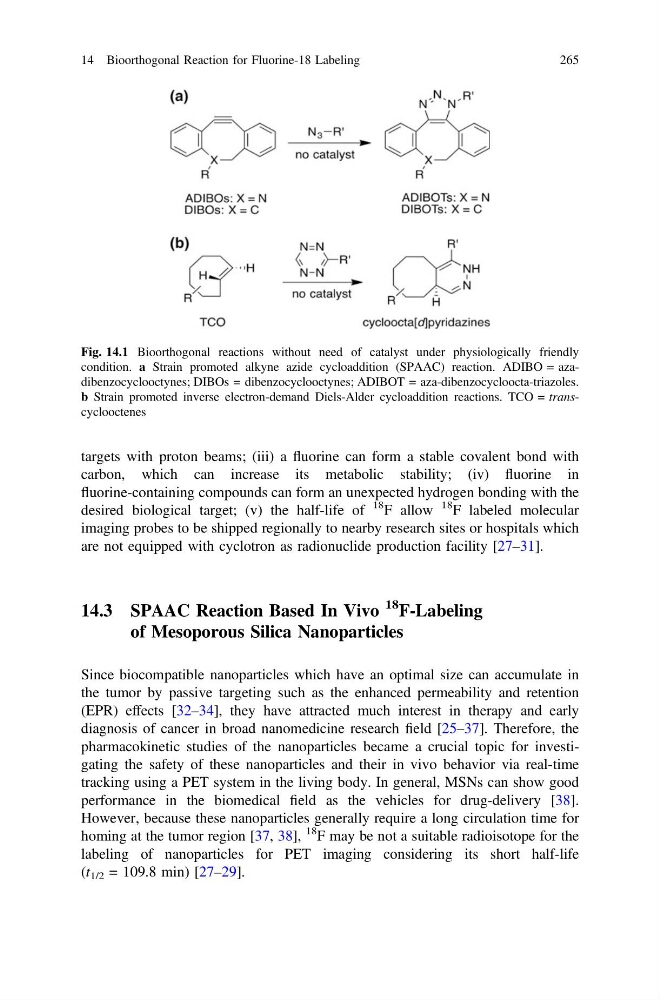
Fig. 14.1 Bioorthogonal reactions without need of catalyst under physiologically friendly
condition. a Strain promoted alkyne azide cycloaddition (SPAAC) reaction. ADIBO = azadibenzocyclooctynes; DIBOs = dibenzocyclooctynes; ADIBOT = aza-dibenzocycloocta-triazoles.
b Strain promoted inverse electron-demand Diels-Alder cycloaddition reactions. TCO = transcyclooctenes
14 Bioorthogonal Reaction for Fluorine-18 Labeling
265
carbon, which can increase its metabolic stability; (iv) fluorine in
fluorine-containing compounds can form an unexpected hydrogen bonding with the
desired biological target; (v) the half-life of
18 F allow
18 F labeled molecular
imaging probes to be shipped regionally to nearby research sites or hospitals which
are not equipped with cyclotron as radionuclide production facility [27–31].
14.3 SPAAC Reaction Based In Vivo
18 F-Labeling
of Mesoporous Silica Nanoparticles
Since biocompatible nanoparticles which have an optimal size can accumulate in
the tumor by passive targeting such as the enhanced permeability and retention
(EPR) effects [32–34], they have attracted much interest in therapy and early
diagnosis of cancer in broad nanomedicine research field [25–37]. Therefore, the
pharmacokinetic studies of the nanoparticles became a crucial topic for investigating the safety of these nanoparticles and their in vivo behavior via real-time
tracking using a PET system in the living body. In general, MSNs can show good
performance in the biomedical field as the vehicles for drug-delivery [38].
However, because these nanoparticles generally require a long circulation time for
homing at the tumor region [37, 38],
18 F may be not a suitable radioisotope for the
labeling of nanoparticles for PET imaging considering its short half-life
(t 1/2 = 109.8 min) [27–29].
Fig. 14.1 Bioorthogonal reactions without need of catalyst under physiologically friendly
condition. a Strain promoted alkyne azide cycloaddition (SPAAC) reaction. ADIBO = azadibenzocyclooctynes; DIBOs = dibenzocyclooctynes; ADIBOT = aza-dibenzocycloocta-triazoles.
b Strain promoted inverse electron-demand Diels-Alder cycloaddition reactions. TCO = transcyclooctenes
14 Bioorthogonal Reaction for Fluorine-18 Labeling
265