

SPAAC reactions have now also been utilised in the construction of nanomaterials for several applications, including nuclear imaging. In 2012, SPAAC
chemistry was applied in the preparation of shell-cross-linked nanoparticles
(SCK-NPs) labeled with the PET radiometal copper-64 [
64 Cu] [37]. This class of
nanomaterial has a micellar structure composed of a hydrophobic (typically polystyrene) interior and an exterior shell containing hydrophilic groups, such as poly
(acrylic acid-co-acrylamide). SCK-NPs have previously been explored as potential
drug delivery vehicles and in this example were utilised as the basis of a PET
imaging agent. In an initial attempt to radiolabel these nanoparticles with [
64 Cu],
the authors utilised traditional Cu(I)-catalysed click chemistry in a reaction between
azide-functionalised SCK-NPs and [
64 Cu]-DOTA-acetylene. Ultimately, this
approach led to poor radiolabelling yields (*10%) and was deemed unsuccessful,
largely due to exchange between the non-radioactive Cu(I) catalyst and the
DOTA-bound [
64 Cu], and the inability of the water soluble Cu(I) catalyst to access
the hydrophobic interior of the nanoparticles. To circumvent these issues, an
alternative [
64 Cu]-containing precursor based on the ring-strained DBCO species
was utilised in a Cu-free SPAAC reaction. This innovative approach was more
successful and enabled the efficient preparation of [
64 Cu]-SCK-NPs with improved
radiolabelling yields (*64%) and high specific activity (975 Ci/µmol). Here, the
adoption of SPAAC had additional advantages as the absence of copper also prevented undesirable click reactions between azide and acetylene residues within the
interior of each nanoparticle.
Later, in 2014, Reiner and colleagues prepared liposomal nanoparticles modified
with DBCO moieties and then utilised an azide-derivative of desferrioxamine
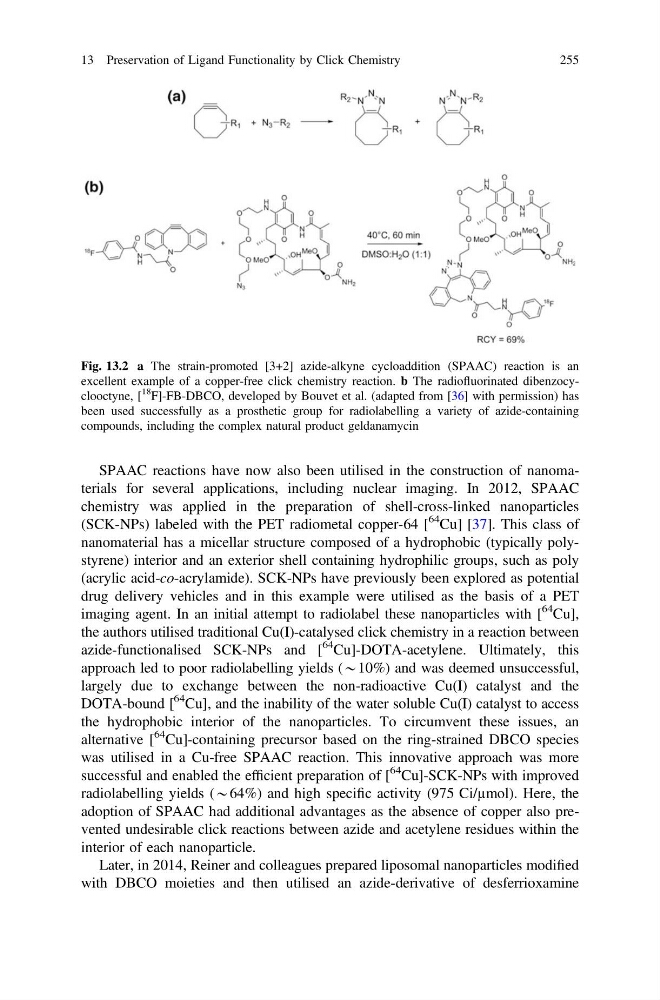
Fig. 13.2 a The strain-promoted [3+2] azide-alkyne cycloaddition (SPAAC) reaction is an
excellent example of a copper-free click chemistry reaction. b The radiofluorinated dibenzocyclooctyne, [
18
F]-FB-DBCO, developed by Bouvet et al. (adapted from [36] with permission) has
been used successfully as a prosthetic group for radiolabelling a variety of azide-containing
compounds, including the complex natural product geldanamycin
13 Preservation of Ligand Functionality by Click Chemistry
255
chemistry was applied in the preparation of shell-cross-linked nanoparticles
(SCK-NPs) labeled with the PET radiometal copper-64 [
64 Cu] [37]. This class of
nanomaterial has a micellar structure composed of a hydrophobic (typically polystyrene) interior and an exterior shell containing hydrophilic groups, such as poly
(acrylic acid-co-acrylamide). SCK-NPs have previously been explored as potential
drug delivery vehicles and in this example were utilised as the basis of a PET
imaging agent. In an initial attempt to radiolabel these nanoparticles with [
64 Cu],
the authors utilised traditional Cu(I)-catalysed click chemistry in a reaction between
azide-functionalised SCK-NPs and [
64 Cu]-DOTA-acetylene. Ultimately, this
approach led to poor radiolabelling yields (*10%) and was deemed unsuccessful,
largely due to exchange between the non-radioactive Cu(I) catalyst and the
DOTA-bound [
64 Cu], and the inability of the water soluble Cu(I) catalyst to access
the hydrophobic interior of the nanoparticles. To circumvent these issues, an
alternative [
64 Cu]-containing precursor based on the ring-strained DBCO species
was utilised in a Cu-free SPAAC reaction. This innovative approach was more
successful and enabled the efficient preparation of [
64 Cu]-SCK-NPs with improved
radiolabelling yields (*64%) and high specific activity (975 Ci/µmol). Here, the
adoption of SPAAC had additional advantages as the absence of copper also prevented undesirable click reactions between azide and acetylene residues within the
interior of each nanoparticle.
Later, in 2014, Reiner and colleagues prepared liposomal nanoparticles modified
with DBCO moieties and then utilised an azide-derivative of desferrioxamine
Fig. 13.2 a The strain-promoted [3+2] azide-alkyne cycloaddition (SPAAC) reaction is an
excellent example of a copper-free click chemistry reaction. b The radiofluorinated dibenzocyclooctyne, [
18
F]-FB-DBCO, developed by Bouvet et al. (adapted from [36] with permission) has
been used successfully as a prosthetic group for radiolabelling a variety of azide-containing
compounds, including the complex natural product geldanamycin
13 Preservation of Ligand Functionality by Click Chemistry
255