

fully explored. Finally ‘Proton beam activation’ method involves direct irradiation
of certain NPs with protons. The application of this method was limited due to the
difficulty in accessing the proton beams. All the methods have in common that they
do not use any chelator. This chelator-free method is attractive in that it offers an
easier, faster, more stable and specific radiolabeling for radionanomedicine and
further studies are warranted.
11.5 Conclusion
In conclusion, the development of the methods to enable surface labeling with
ligands and chelators should be solved first. The development of the imaging
methods to track the in vivo administered radiolabeled NPs is the next issue to be
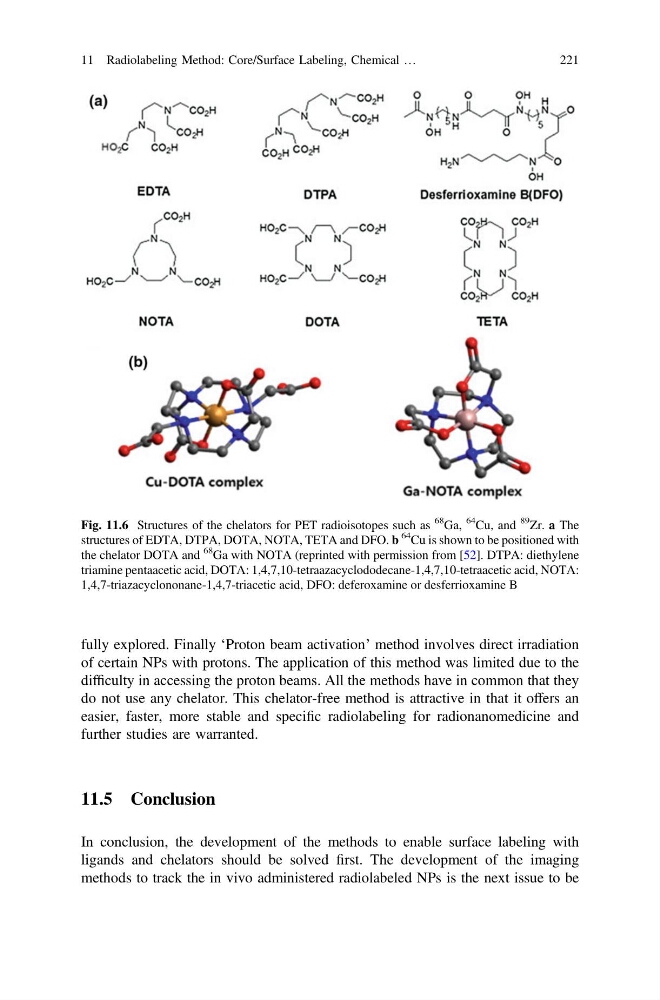
Fig. 11.6 Structures of the chelators for PET radioisotopes such as
68
Ga,
64
Cu, and
89
Zr. a The
structures of EDTA, DTPA, DOTA, NOTA, TETA and DFO. b
64
Cu is shown to be positioned with
the chelator DOTA and
68
Ga with NOTA (reprinted with permission from [52]. DTPA: diethylene
triamine pentaacetic acid, DOTA: 1,4,7,10-tetraazacyclododecane-1,4,7,10-tetraacetic acid, NOTA:
1,4,7-triazacyclononane-1,4,7-triacetic acid, DFO: deferoxamine or desferrioxamine B
11 Radiolabeling Method: Core/Surface Labeling, Chemical …
221
of certain NPs with protons. The application of this method was limited due to the
difficulty in accessing the proton beams. All the methods have in common that they
do not use any chelator. This chelator-free method is attractive in that it offers an
easier, faster, more stable and specific radiolabeling for radionanomedicine and
further studies are warranted.
11.5 Conclusion
In conclusion, the development of the methods to enable surface labeling with
ligands and chelators should be solved first. The development of the imaging
methods to track the in vivo administered radiolabeled NPs is the next issue to be
Fig. 11.6 Structures of the chelators for PET radioisotopes such as
68
Ga,
64
Cu, and
89
Zr. a The
structures of EDTA, DTPA, DOTA, NOTA, TETA and DFO. b
64
Cu is shown to be positioned with
the chelator DOTA and
68
Ga with NOTA (reprinted with permission from [52]. DTPA: diethylene
triamine pentaacetic acid, DOTA: 1,4,7,10-tetraazacyclododecane-1,4,7,10-tetraacetic acid, NOTA:
1,4,7-triazacyclononane-1,4,7-triacetic acid, DFO: deferoxamine or desferrioxamine B
11 Radiolabeling Method: Core/Surface Labeling, Chemical …
221