

radiolabeled NPs is the next issue to be addressed. With the improvement of
above-mentioned issues, radiolabeled NPs can be successfully translated to clinical
use.
11.1 Radiolabeling of Nanomaterials
Radiolabeled nanomaterials can be used for diagnosis, therapy and theranostics of
certain diseases. The radionanomedicine relies on efficient and reliable radiolabeling methods, to bind appropriate isotope with well-functionalized nanoparticles
(NPs), and the use of tracer amounts of radiolabeled NPs for in vivo theranostics.
An ideal radiolabeling method should be quick, easy, and highly efficient and
should not change the biological properties of target molecules [1]. The labeling of
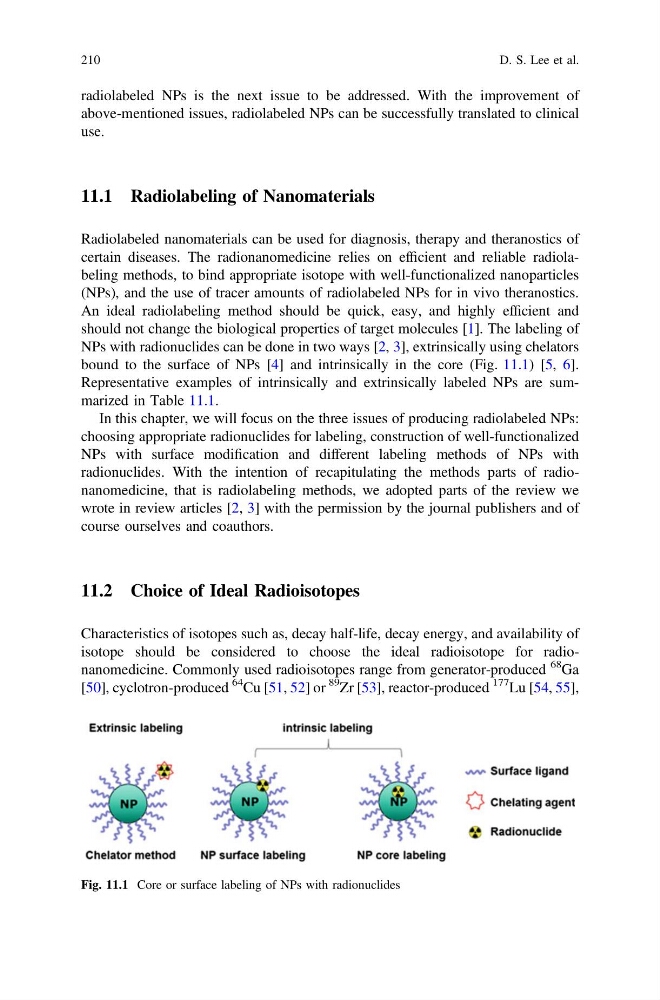
NPs with radionuclides can be done in two ways [2, 3], extrinsically using chelators
bound to the surface of NPs [4] and intrinsically in the core (Fig. 11.1) [5, 6].
Representative examples of intrinsically and extrinsically labeled NPs are summarized in Table 11.1.
In this chapter, we will focus on the three issues of producing radiolabeled NPs:
choosing appropriate radionuclides for labeling, construction of well-functionalized
NPs with surface modification and different labeling methods of NPs with
radionuclides. With the intention of recapitulating the methods parts of radionanomedicine, that is radiolabeling methods, we adopted parts of the review we
wrote in review articles [2, 3] with the permission by the journal publishers and of
course ourselves and coauthors.
11.2 Choice of Ideal Radioisotopes
Characteristics of isotopes such as, decay half-life, decay energy, and availability of
isotope should be considered to choose the ideal radioisotope for radionanomedicine. Commonly used radioisotopes range from generator-produced
68 Ga
[50], cyclotron-produced
64 Cu [51, 52] or
89 Zr [53], reactor-produced
177 Lu [54, 55],
Fig. 11.1 Core or surface labeling of NPs with radionuclides
210
D. S. Lee et al.
above-mentioned issues, radiolabeled NPs can be successfully translated to clinical
use.
11.1 Radiolabeling of Nanomaterials
Radiolabeled nanomaterials can be used for diagnosis, therapy and theranostics of
certain diseases. The radionanomedicine relies on efficient and reliable radiolabeling methods, to bind appropriate isotope with well-functionalized nanoparticles
(NPs), and the use of tracer amounts of radiolabeled NPs for in vivo theranostics.
An ideal radiolabeling method should be quick, easy, and highly efficient and
should not change the biological properties of target molecules [1]. The labeling of
NPs with radionuclides can be done in two ways [2, 3], extrinsically using chelators
bound to the surface of NPs [4] and intrinsically in the core (Fig. 11.1) [5, 6].
Representative examples of intrinsically and extrinsically labeled NPs are summarized in Table 11.1.
In this chapter, we will focus on the three issues of producing radiolabeled NPs:
choosing appropriate radionuclides for labeling, construction of well-functionalized
NPs with surface modification and different labeling methods of NPs with
radionuclides. With the intention of recapitulating the methods parts of radionanomedicine, that is radiolabeling methods, we adopted parts of the review we
wrote in review articles [2, 3] with the permission by the journal publishers and of
course ourselves and coauthors.
11.2 Choice of Ideal Radioisotopes
Characteristics of isotopes such as, decay half-life, decay energy, and availability of
isotope should be considered to choose the ideal radioisotope for radionanomedicine. Commonly used radioisotopes range from generator-produced
68 Ga
[50], cyclotron-produced
64 Cu [51, 52] or
89 Zr [53], reactor-produced
177 Lu [54, 55],
Fig. 11.1 Core or surface labeling of NPs with radionuclides
210
D. S. Lee et al.