

statements on television and in politics. At least now everybody knows: “Trees
produce oxygen!” But the stoichiometry of carbon dioxide (CO 2 ) and global
warming is something none of the public understand. Basic knowledge of natural
science topics (MINT) urgently needs to be pushed in schools.
What is kept in mind by former students? These are mainly the “big excursions”
of 1 or 2 weeks, the many coloured slides in lectures and the joint efforts in ice
skating. What else? Why are almost no excursions offered for students today? The
advice I gave students often included the following:
Have clear aims about what you want to achieve. Specialize as late as possible. Have at least
one or two hobbies. Biologists need good knowledge and understanding of chemistry. Use
the internet and software critically; use it to make work easier. Always try to optimize
applied methods. If something works well, keep it; be conservative and innovative. Set
scientific rationality against irrationality and esotericism, fake news and fundamentalism; it
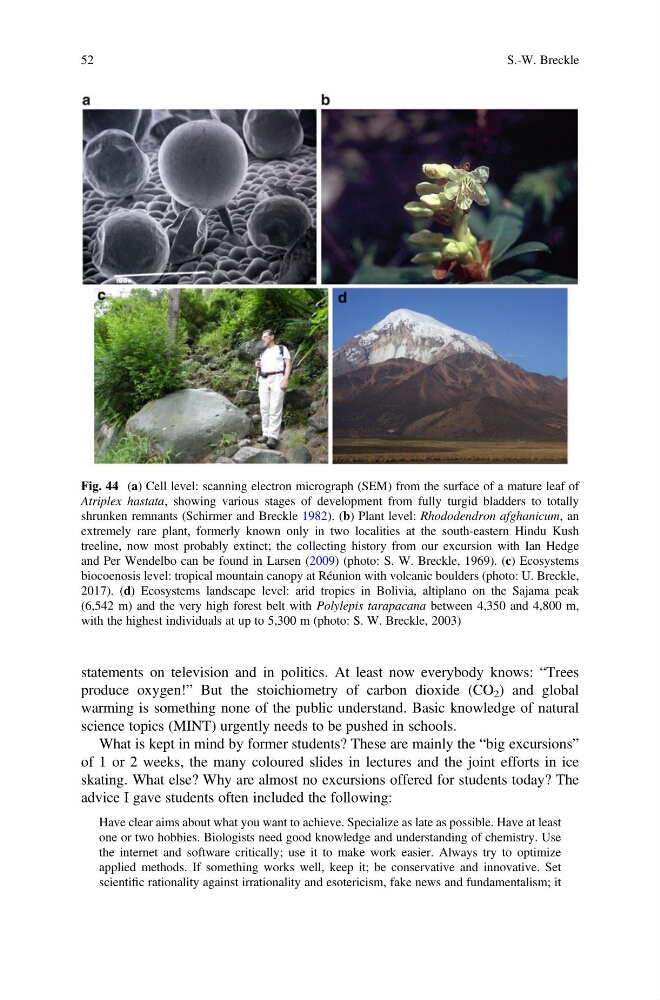
Fig. 44 (a) Cell level: scanning electron micrograph (SEM) from the surface of a mature leaf of
Atriplex hastata, showing various stages of development from fully turgid bladders to totally
shrunken remnants (Schirmer and Breckle 1982). (b) Plant level: Rhododendron afghanicum, an
extremely rare plant, formerly known only in two localities at the south-eastern Hindu Kush
treeline, now most probably extinct; the collecting history from our excursion with Ian Hedge
and Per Wendelbo can be found in Larsen (2009) (photo: S. W. Breckle, 1969). (c) Ecosystems
biocoenosis level: tropical mountain canopy at Réunion with volcanic boulders (photo: U. Breckle,
2017). (d) Ecosystems landscape level: arid tropics in Bolivia, altiplano on the Sajama peak
(6,542 m) and the very high forest belt with Polylepis tarapacana between 4,350 and 4,800 m,
with the highest individuals at up to 5,300 m (photo: S. W. Breckle, 2003)
52
S.-W. Breckle
produce oxygen!” But the stoichiometry of carbon dioxide (CO 2 ) and global
warming is something none of the public understand. Basic knowledge of natural
science topics (MINT) urgently needs to be pushed in schools.
What is kept in mind by former students? These are mainly the “big excursions”
of 1 or 2 weeks, the many coloured slides in lectures and the joint efforts in ice
skating. What else? Why are almost no excursions offered for students today? The
advice I gave students often included the following:
Have clear aims about what you want to achieve. Specialize as late as possible. Have at least
one or two hobbies. Biologists need good knowledge and understanding of chemistry. Use
the internet and software critically; use it to make work easier. Always try to optimize
applied methods. If something works well, keep it; be conservative and innovative. Set
scientific rationality against irrationality and esotericism, fake news and fundamentalism; it
Fig. 44 (a) Cell level: scanning electron micrograph (SEM) from the surface of a mature leaf of
Atriplex hastata, showing various stages of development from fully turgid bladders to totally
shrunken remnants (Schirmer and Breckle 1982). (b) Plant level: Rhododendron afghanicum, an
extremely rare plant, formerly known only in two localities at the south-eastern Hindu Kush
treeline, now most probably extinct; the collecting history from our excursion with Ian Hedge
and Per Wendelbo can be found in Larsen (2009) (photo: S. W. Breckle, 1969). (c) Ecosystems
biocoenosis level: tropical mountain canopy at Réunion with volcanic boulders (photo: U. Breckle,
2017). (d) Ecosystems landscape level: arid tropics in Bolivia, altiplano on the Sajama peak
(6,542 m) and the very high forest belt with Polylepis tarapacana between 4,350 and 4,800 m,
with the highest individuals at up to 5,300 m (photo: S. W. Breckle, 2003)
52
S.-W. Breckle