

A distinct proportion of all 373 vascular plant species found on the desiccated sea
floor are, so far, more or less halophytic. Table 1 gives an overview of the halophyte
types and their salinity indicator value S (with S values from 1 to 9) (Breckle 1985;
Ellenberg et al. 1991). Leaf-succulent halophytes play a major role, but nonhalophytes and pseudo-halophytes often conquer where the upper soil is already
desalinated and sand and dust have been accumulated; thus geomorphological
processes are strongly linked with vegetation development.
Several other projects in Uzbekistan used various but similar methods. In
Kazakhstan, a huge area was then declared a biosphere reserve (Breckle 2011a, b,
2013), enlarging the former Barsa-Kelmes Island area, partly according to our earlier
proposals, parallel to the now open space as far as Kazka Kulan on the former east
coast, where there are now herds of onagers (wild asses) and gazelles, often close to
the warm springs.
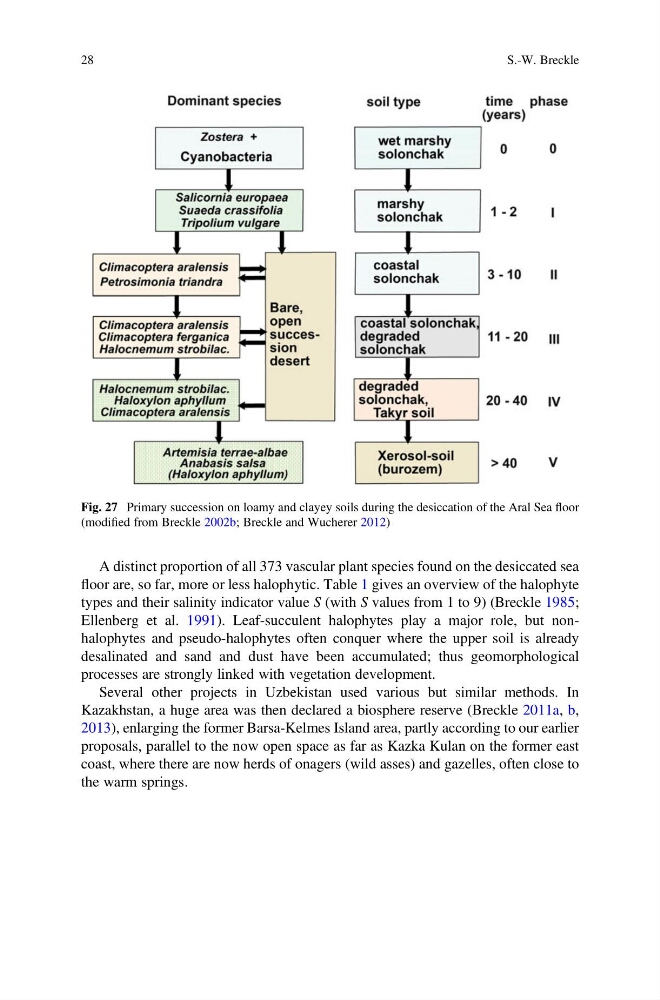
Fig. 27 Primary succession on loamy and clayey soils during the desiccation of the Aral Sea floor
(modified from Breckle 2002b; Breckle and Wucherer 2012)
28
S.-W. Breckle
floor are, so far, more or less halophytic. Table 1 gives an overview of the halophyte
types and their salinity indicator value S (with S values from 1 to 9) (Breckle 1985;
Ellenberg et al. 1991). Leaf-succulent halophytes play a major role, but nonhalophytes and pseudo-halophytes often conquer where the upper soil is already
desalinated and sand and dust have been accumulated; thus geomorphological
processes are strongly linked with vegetation development.
Several other projects in Uzbekistan used various but similar methods. In
Kazakhstan, a huge area was then declared a biosphere reserve (Breckle 2011a, b,
2013), enlarging the former Barsa-Kelmes Island area, partly according to our earlier
proposals, parallel to the now open space as far as Kazka Kulan on the former east
coast, where there are now herds of onagers (wild asses) and gazelles, often close to
the warm springs.
Fig. 27 Primary succession on loamy and clayey soils during the desiccation of the Aral Sea floor
(modified from Breckle 2002b; Breckle and Wucherer 2012)
28
S.-W. Breckle