

gymnosperms have had several clade-specific WGD events in their histories in
addition to the polyploidy event they share with angiosperms (Li et al. 2015b).
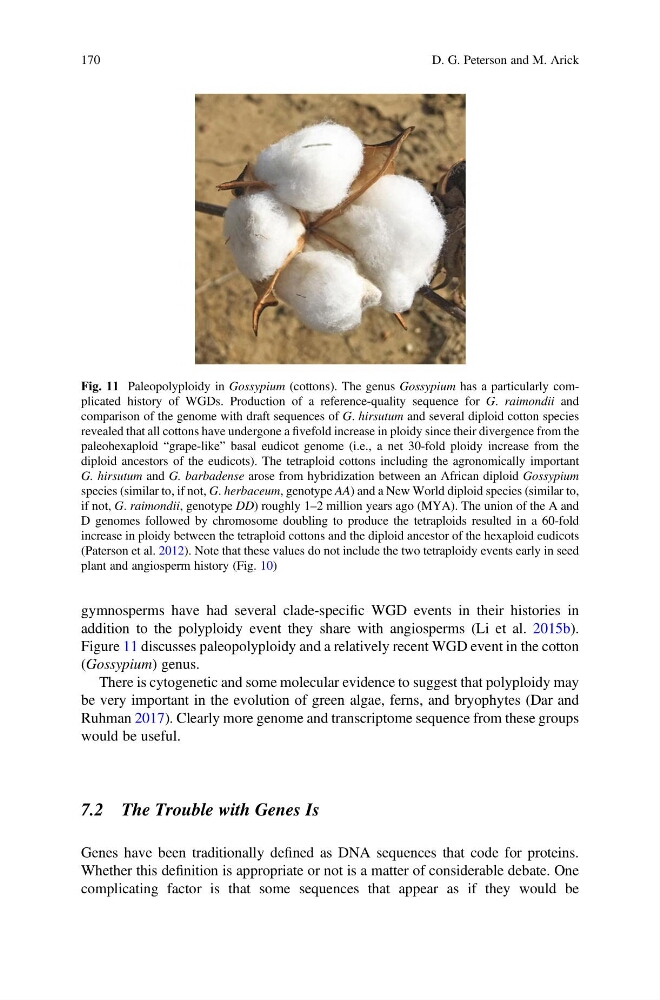
Figure 11 discusses paleopolyploidy and a relatively recent WGD event in the cotton
(Gossypium) genus.
There is cytogenetic and some molecular evidence to suggest that polyploidy may
be very important in the evolution of green algae, ferns, and bryophytes (Dar and
Ruhman 2017). Clearly more genome and transcriptome sequence from these groups
would be useful.
7.2 The Trouble with Genes Is
Genes have been traditionally defined as DNA sequences that code for proteins.
Whether this definition is appropriate or not is a matter of considerable debate. One
complicating factor is that some sequences that appear as if they would be
Fig. 11 Paleopolyploidy in Gossypium (cottons). The genus Gossypium has a particularly complicated history of WGDs. Production of a reference-quality sequence for G. raimondii and
comparison of the genome with draft sequences of G. hirsutum and several diploid cotton species
revealed that all cottons have undergone a fivefold increase in ploidy since their divergence from the
paleohexaploid “grape-like” basal eudicot genome (i.e., a net 30-fold ploidy increase from the
diploid ancestors of the eudicots). The tetraploid cottons including the agronomically important
G. hirsutum and G. barbadense arose from hybridization between an African diploid Gossypium
species (similar to, if not, G. herbaceum, genotype AA) and a New World diploid species (similar to,
if not, G. raimondii, genotype DD) roughly 1–2 million years ago (MYA). The union of the A and
D genomes followed by chromosome doubling to produce the tetraploids resulted in a 60-fold
increase in ploidy between the tetraploid cottons and the diploid ancestor of the hexaploid eudicots
(Paterson et al. 2012). Note that these values do not include the two tetraploidy events early in seed
plant and angiosperm history (Fig. 10)
170
D. G. Peterson and M. Arick
addition to the polyploidy event they share with angiosperms (Li et al. 2015b).
Figure 11 discusses paleopolyploidy and a relatively recent WGD event in the cotton
(Gossypium) genus.
There is cytogenetic and some molecular evidence to suggest that polyploidy may
be very important in the evolution of green algae, ferns, and bryophytes (Dar and
Ruhman 2017). Clearly more genome and transcriptome sequence from these groups
would be useful.
7.2 The Trouble with Genes Is
Genes have been traditionally defined as DNA sequences that code for proteins.
Whether this definition is appropriate or not is a matter of considerable debate. One
complicating factor is that some sequences that appear as if they would be
Fig. 11 Paleopolyploidy in Gossypium (cottons). The genus Gossypium has a particularly complicated history of WGDs. Production of a reference-quality sequence for G. raimondii and
comparison of the genome with draft sequences of G. hirsutum and several diploid cotton species
revealed that all cottons have undergone a fivefold increase in ploidy since their divergence from the
paleohexaploid “grape-like” basal eudicot genome (i.e., a net 30-fold ploidy increase from the
diploid ancestors of the eudicots). The tetraploid cottons including the agronomically important
G. hirsutum and G. barbadense arose from hybridization between an African diploid Gossypium
species (similar to, if not, G. herbaceum, genotype AA) and a New World diploid species (similar to,
if not, G. raimondii, genotype DD) roughly 1–2 million years ago (MYA). The union of the A and
D genomes followed by chromosome doubling to produce the tetraploids resulted in a 60-fold
increase in ploidy between the tetraploid cottons and the diploid ancestor of the hexaploid eudicots
(Paterson et al. 2012). Note that these values do not include the two tetraploidy events early in seed
plant and angiosperm history (Fig. 10)
170
D. G. Peterson and M. Arick