

enabling other scientists from around the world to utilize that data in exploring other
biological questions.
1 Such is the fundamental value of genomics (see Fig. 2).
Genome sequences represent the “genetic blueprints” of an organism. They
contain the instructions for building proteins and generating structural and regulatory
RNA molecules. While the difference between a genome and a functioning entity
(or blueprints and a constructed building) is tremendous, generation of a quality
genome sequence is a crucial step in understanding how entities function and evolve.
Comparison of genome sequences reveals how changes in DNA can affect phenotype and drive speciation.
Modern phylogenetic research typically classifies plants into an unranked eukaryotic clade called the Viridiplantae (Latin for green plants) which includes green
algae, hornworts, liverworts, ferns, mosses, club mosses, angiosperms, and gymnosperms.
2 Plants possess cell walls containing cellulose and are typically photosynthetic due to the presence of chloroplasts, photosynthetic organelles derived from
$0.01
$0.10
$1.00
$10.00
$100.00
$1,000.00
$10,000.00
Sep 2001
Sep 2003
Sep 2005
Sep 2007
Sep 2009
Sep 2011
Sep 2013
Sep 2015
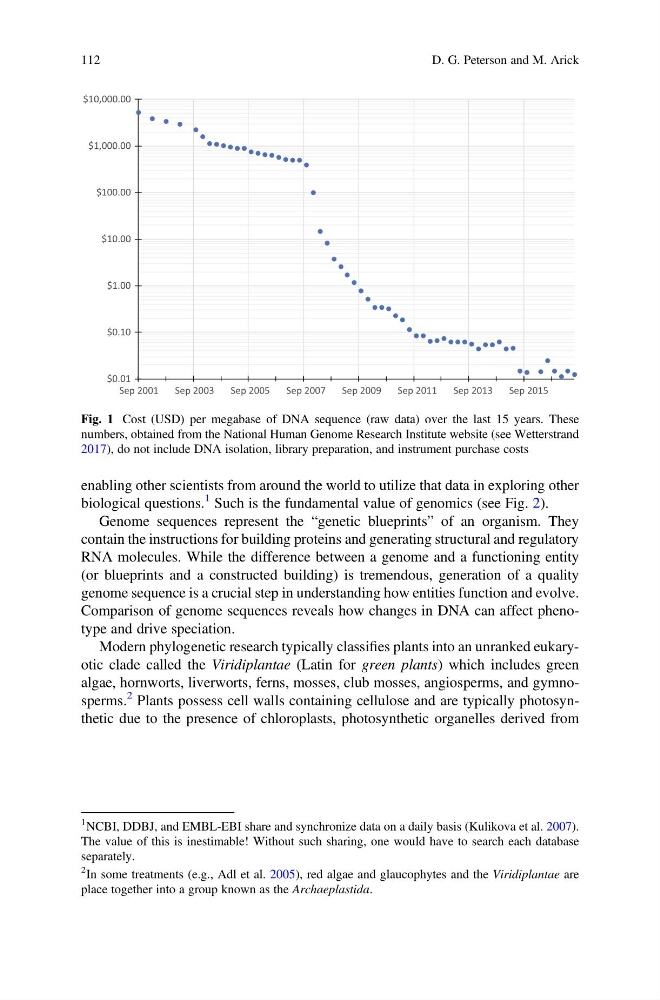
Fig. 1 Cost (USD) per megabase of DNA sequence (raw data) over the last 15 years. These
numbers, obtained from the National Human Genome Research Institute website (see Wetterstrand
2017), do not include DNA isolation, library preparation, and instrument purchase costs
1 NCBI, DDBJ, and EMBL-EBI share and synchronize data on a daily basis (Kulikova et al. 2007).
The value of this is inestimable! Without such sharing, one would have to search each database
separately.
2 In some treatments (e.g., Adl et al. 2005), red algae and glaucophytes and the Viridiplantae are
place together into a group known as the Archaeplastida.
112
D. G. Peterson and M. Arick
biological questions.
1 Such is the fundamental value of genomics (see Fig. 2).
Genome sequences represent the “genetic blueprints” of an organism. They
contain the instructions for building proteins and generating structural and regulatory
RNA molecules. While the difference between a genome and a functioning entity
(or blueprints and a constructed building) is tremendous, generation of a quality
genome sequence is a crucial step in understanding how entities function and evolve.
Comparison of genome sequences reveals how changes in DNA can affect phenotype and drive speciation.
Modern phylogenetic research typically classifies plants into an unranked eukaryotic clade called the Viridiplantae (Latin for green plants) which includes green
algae, hornworts, liverworts, ferns, mosses, club mosses, angiosperms, and gymnosperms.
2 Plants possess cell walls containing cellulose and are typically photosynthetic due to the presence of chloroplasts, photosynthetic organelles derived from
$0.01
$0.10
$1.00
$10.00
$100.00
$1,000.00
$10,000.00
Sep 2001
Sep 2003
Sep 2005
Sep 2007
Sep 2009
Sep 2011
Sep 2013
Sep 2015
Fig. 1 Cost (USD) per megabase of DNA sequence (raw data) over the last 15 years. These
numbers, obtained from the National Human Genome Research Institute website (see Wetterstrand
2017), do not include DNA isolation, library preparation, and instrument purchase costs
1 NCBI, DDBJ, and EMBL-EBI share and synchronize data on a daily basis (Kulikova et al. 2007).
The value of this is inestimable! Without such sharing, one would have to search each database
separately.
2 In some treatments (e.g., Adl et al. 2005), red algae and glaucophytes and the Viridiplantae are
place together into a group known as the Archaeplastida.
112
D. G. Peterson and M. Arick