

Δ f G
aq
ð Þ ¼ Δ f G
g
ð Þ þ RT ln H
ð Þ
ð6:1Þ
where Δ f G
(aq) is the standard aqueous-phase free energy of formation (J mol
À1 ),
Δ f G
(g) the standard gas-phase free energy of formation (J mol
À1 ), R the universal
gas constant (8.314 J mol
À1 K
À1 ) and T the absolute temperature (K).
For a given half-reaction, the standard free energy changes Δ r G
(aq) is calculated
using Eq. (6.2).
Δ r G
aq
ð Þ ¼
X
Δ f G
aq
ð Þ for products À
X
Δ f G
aq
ð Þ for reactants
ð6:2Þ
The value can then be adjusted to the desired reference state to calculate the
standard potential value E
(V) with Eq. (6.3) (Vogel et al. 1987).
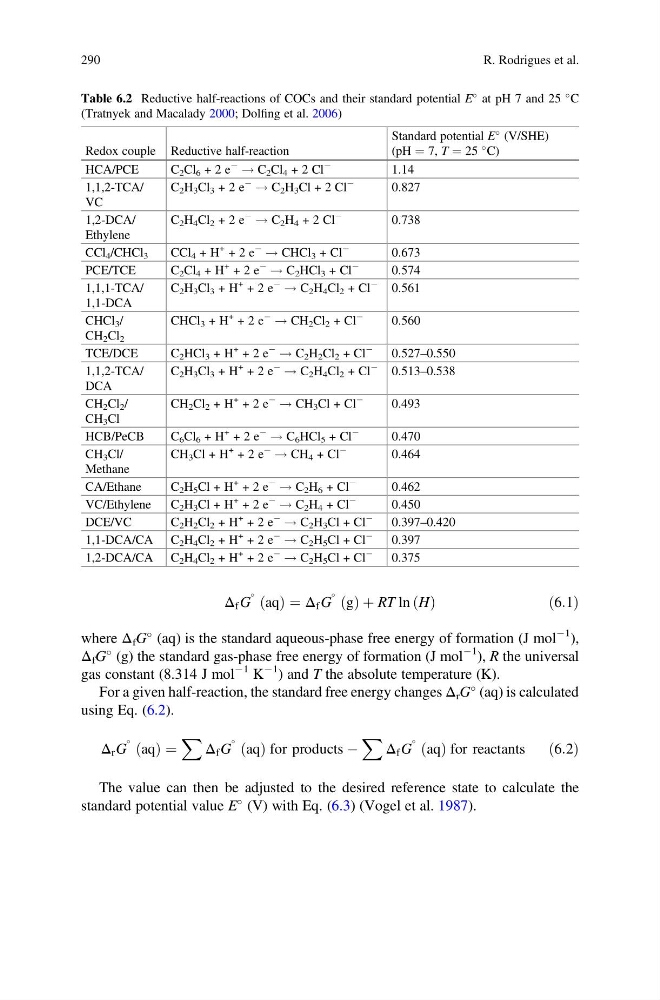
Table 6.2 Reductive half-reactions of COCs and their standard potential E
at pH 7 and 25
C
(Tratnyek and Macalady 2000; Dolfing et al. 2006)
Redox couple Reductive half-reaction
Standard potential E
(V/SHE)
(pH ¼ 7, T ¼ 25
C)
HCA/PCE
C 2 Cl 6 + 2 e
À ! C 2 Cl 4 + 2 Cl
À
1.14
1,1,2-TCA/
VC
C 2 H 3 Cl 3 + 2 e
À ! C 2 H 3 Cl + 2 Cl
À
0.827
1,2-DCA/
Ethylene
C 2 H 4 Cl 2 + 2 e
À ! C 2 H 4 + 2 Cl
À
0.738
CCl 4 /CHCl 3
CCl 4 + H
+ + 2 e
À ! CHCl 3 + Cl
À
0.673
PCE/TCE
C 2 Cl 4 + H
+ + 2 e
À ! C 2 HCl 3 + Cl
À
0.574
1,1,1-TCA/
1,1-DCA
C 2 H 3 Cl 3 + H
+ + 2 e
À ! C 2 H 4 Cl 2 + Cl
À
0.561
CHCl 3 /
CH 2 Cl 2
CHCl 3 + H
+ + 2 e
À ! CH 2 Cl 2 + Cl
À
0.560
TCE/DCE
C 2 HCl 3 + H
+ + 2 e
À ! C 2 H 2 Cl 2 + Cl
À
0.527–0.550
1,1,2-TCA/
DCA
C 2 H 3 Cl 3 + H
+ + 2 e
À ! C 2 H 4 Cl 2 + Cl
À
0.513–0.538
CH 2 Cl 2 /
CH 3 Cl
CH 2 Cl 2 + H
+ + 2 e
À ! CH 3 Cl + Cl
À
0.493
HCB/PeCB
C 6 Cl 6 + H
+ + 2 e
À ! C 6 HCl 5 + Cl
À
0.470
CH 3 Cl/
Methane
CH 3 Cl + H
+ + 2 e
À ! CH 4 + Cl
À
0.464
CA/Ethane
C 2 H 5 Cl + H
+ + 2 e
À ! C 2 H 6 + Cl
À
0.462
VC/Ethylene
C 2 H 3 Cl + H
+ + 2 e
À ! C 2 H 4 + Cl
À
0.450
DCE/VC
C 2 H 2 Cl 2 + H
+ + 2 e
À ! C 2 H 3 Cl + Cl
À
0.397–0.420
1,1-DCA/CA C 2 H 4 Cl 2 + H
+ + 2 e
À ! C 2 H 5 Cl + Cl
À
0.397
1,2-DCA/CA C 2 H 4 Cl 2 + H
+ + 2 e
À ! C 2 H 5 Cl + Cl
À
0.375
290
R. Rodrigues et al.
aq
ð Þ ¼ Δ f G
g
ð Þ þ RT ln H
ð Þ
ð6:1Þ
where Δ f G
(aq) is the standard aqueous-phase free energy of formation (J mol
À1 ),
Δ f G
(g) the standard gas-phase free energy of formation (J mol
À1 ), R the universal
gas constant (8.314 J mol
À1 K
À1 ) and T the absolute temperature (K).
For a given half-reaction, the standard free energy changes Δ r G
(aq) is calculated
using Eq. (6.2).
Δ r G
aq
ð Þ ¼
X
Δ f G
aq
ð Þ for products À
X
Δ f G
aq
ð Þ for reactants
ð6:2Þ
The value can then be adjusted to the desired reference state to calculate the
standard potential value E
(V) with Eq. (6.3) (Vogel et al. 1987).
Table 6.2 Reductive half-reactions of COCs and their standard potential E
at pH 7 and 25
C
(Tratnyek and Macalady 2000; Dolfing et al. 2006)
Redox couple Reductive half-reaction
Standard potential E
(V/SHE)
(pH ¼ 7, T ¼ 25
C)
HCA/PCE
C 2 Cl 6 + 2 e
À ! C 2 Cl 4 + 2 Cl
À
1.14
1,1,2-TCA/
VC
C 2 H 3 Cl 3 + 2 e
À ! C 2 H 3 Cl + 2 Cl
À
0.827
1,2-DCA/
Ethylene
C 2 H 4 Cl 2 + 2 e
À ! C 2 H 4 + 2 Cl
À
0.738
CCl 4 /CHCl 3
CCl 4 + H
+ + 2 e
À ! CHCl 3 + Cl
À
0.673
PCE/TCE
C 2 Cl 4 + H
+ + 2 e
À ! C 2 HCl 3 + Cl
À
0.574
1,1,1-TCA/
1,1-DCA
C 2 H 3 Cl 3 + H
+ + 2 e
À ! C 2 H 4 Cl 2 + Cl
À
0.561
CHCl 3 /
CH 2 Cl 2
CHCl 3 + H
+ + 2 e
À ! CH 2 Cl 2 + Cl
À
0.560
TCE/DCE
C 2 HCl 3 + H
+ + 2 e
À ! C 2 H 2 Cl 2 + Cl
À
0.527–0.550
1,1,2-TCA/
DCA
C 2 H 3 Cl 3 + H
+ + 2 e
À ! C 2 H 4 Cl 2 + Cl
À
0.513–0.538
CH 2 Cl 2 /
CH 3 Cl
CH 2 Cl 2 + H
+ + 2 e
À ! CH 3 Cl + Cl
À
0.493
HCB/PeCB
C 6 Cl 6 + H
+ + 2 e
À ! C 6 HCl 5 + Cl
À
0.470
CH 3 Cl/
Methane
CH 3 Cl + H
+ + 2 e
À ! CH 4 + Cl
À
0.464
CA/Ethane
C 2 H 5 Cl + H
+ + 2 e
À ! C 2 H 6 + Cl
À
0.462
VC/Ethylene
C 2 H 3 Cl + H
+ + 2 e
À ! C 2 H 4 + Cl
À
0.450
DCE/VC
C 2 H 2 Cl 2 + H
+ + 2 e
À ! C 2 H 3 Cl + Cl
À
0.397–0.420
1,1-DCA/CA C 2 H 4 Cl 2 + H
+ + 2 e
À ! C 2 H 5 Cl + Cl
À
0.397
1,2-DCA/CA C 2 H 4 Cl 2 + H
+ + 2 e
À ! C 2 H 5 Cl + Cl
À
0.375
290
R. Rodrigues et al.