

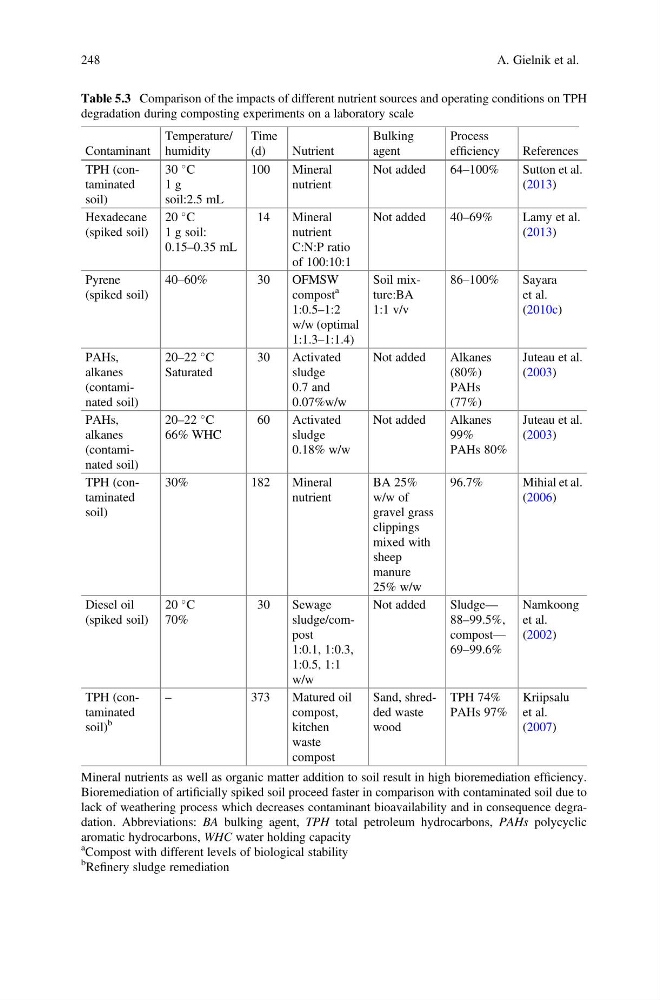
Table 5.3 Comparison of the impacts of different nutrient sources and operating conditions on TPH
degradation during composting experiments on a laboratory scale
Contaminant
Temperature/
humidity
Time
(d)
Nutrient
Bulking
agent
Process
efficiency
References
TPH (contaminated
soil)
30
C
1 g
soil:2.5 mL
100
Mineral
nutrient
Not added
64–100%
Sutton et al.
(2013)
Hexadecane
(spiked soil)
20
C
1 g soil:
0.15–0.35 mL
14
Mineral
nutrient
C:N:P ratio
of 100:10:1
Not added
40–69%
Lamy et al.
(2013)
Pyrene
(spiked soil)
40–60%
30
OFMSW
compost
a
1:0.5–1:2
w/w (optimal
1:1.3–1:1.4)
Soil mixture:BA
1:1 v/v
86–100%
Sayara
et al.
(2010c)
PAHs,
alkanes
(contaminated soil)
20–22
C
Saturated
30
Activated
sludge
0.7 and
0.07%w/w
Not added
Alkanes
(80%)
PAHs
(77%)
Juteau et al.
(2003)
PAHs,
alkanes
(contaminated soil)
20–22
C
66% WHC
60
Activated
sludge
0.18% w/w
Not added
Alkanes
99%
PAHs 80%
Juteau et al.
(2003)
TPH (contaminated
soil)
30%
182
Mineral
nutrient
BA 25%
w/w of
gravel grass
clippings
mixed with
sheep
manure
25% w/w
96.7%
Mihial et al.
(2006)
Diesel oil
(spiked soil)
20
C
70%
30
Sewage
sludge/compost
1:0.1, 1:0.3,
1:0.5, 1:1
w/w
Not added
Sludge—
88–99.5%,
compost—
69–99.6%
Namkoong
et al.
(2002)
TPH (contaminated
soil)
b
–
373
Matured oil
compost,
kitchen
waste
compost
Sand, shredded waste
wood
TPH 74%
PAHs 97%
Kriipsalu
et al.
(2007)
Mineral nutrients as well as organic matter addition to soil result in high bioremediation efficiency.
Bioremediation of artificially spiked soil proceed faster in comparison with contaminated soil due to
lack of weathering process which decreases contaminant bioavailability and in consequence degradation. Abbreviations: BA bulking agent, TPH total petroleum hydrocarbons, PAHs polycyclic
aromatic hydrocarbons, WHC water holding capacity
a Compost with different levels of biological stability
b
Refinery sludge remediation
248
A. Gielnik et al.
degradation during composting experiments on a laboratory scale
Contaminant
Temperature/
humidity
Time
(d)
Nutrient
Bulking
agent
Process
efficiency
References
TPH (contaminated
soil)
30
C
1 g
soil:2.5 mL
100
Mineral
nutrient
Not added
64–100%
Sutton et al.
(2013)
Hexadecane
(spiked soil)
20
C
1 g soil:
0.15–0.35 mL
14
Mineral
nutrient
C:N:P ratio
of 100:10:1
Not added
40–69%
Lamy et al.
(2013)
Pyrene
(spiked soil)
40–60%
30
OFMSW
compost
a
1:0.5–1:2
w/w (optimal
1:1.3–1:1.4)
Soil mixture:BA
1:1 v/v
86–100%
Sayara
et al.
(2010c)
PAHs,
alkanes
(contaminated soil)
20–22
C
Saturated
30
Activated
sludge
0.7 and
0.07%w/w
Not added
Alkanes
(80%)
PAHs
(77%)
Juteau et al.
(2003)
PAHs,
alkanes
(contaminated soil)
20–22
C
66% WHC
60
Activated
sludge
0.18% w/w
Not added
Alkanes
99%
PAHs 80%
Juteau et al.
(2003)
TPH (contaminated
soil)
30%
182
Mineral
nutrient
BA 25%
w/w of
gravel grass
clippings
mixed with
sheep
manure
25% w/w
96.7%
Mihial et al.
(2006)
Diesel oil
(spiked soil)
20
C
70%
30
Sewage
sludge/compost
1:0.1, 1:0.3,
1:0.5, 1:1
w/w
Not added
Sludge—
88–99.5%,
compost—
69–99.6%
Namkoong
et al.
(2002)
TPH (contaminated
soil)
b
–
373
Matured oil
compost,
kitchen
waste
compost
Sand, shredded waste
wood
TPH 74%
PAHs 97%
Kriipsalu
et al.
(2007)
Mineral nutrients as well as organic matter addition to soil result in high bioremediation efficiency.
Bioremediation of artificially spiked soil proceed faster in comparison with contaminated soil due to
lack of weathering process which decreases contaminant bioavailability and in consequence degradation. Abbreviations: BA bulking agent, TPH total petroleum hydrocarbons, PAHs polycyclic
aromatic hydrocarbons, WHC water holding capacity
a Compost with different levels of biological stability
b
Refinery sludge remediation
248
A. Gielnik et al.