

• Displaced cold water will mobilize the contaminants present at a higher concentration than the residual concentrations (pollutants as pure products).
• The hot water bank moves and reduces the viscosity of pollutants thereby
reducing their residual saturation.
• Steam induces volatilization, evaporation, and/or distillation of the volatile and
semi-volatile contaminants.
These phenomena are illustrated in Fig. 3.14. The residual concentrations after
the hot phase and hot water flushing vary based on viscosity, interfacial properties
(interfacial tensions, surface tension, contact angle), intrinsic permeabilities, and
applied gradients. The residual concentrations after steam injection depend mainly
on vapor pressure, Henry’s Law constant, and boiling points.
Remaining pollutants with a boiling point below water will largely be extracted.
As for the other compounds, pollution cleanup may be successful in some conditions
but with lower remediation rates (U.S. Army Corps of Engineers 2014).
The injection wells are usually spaced every 6–16 m. This spacing will be smaller
in less favorable conditions (i.e., high anisotropy, average permeability, and presence of semi-volatile compounds) (Kingston et al. 2014; Shan et al. 1992). Injection
wells are generally arranged in a square or triangular pattern. The volumes injected
are between 1 and 3 times the pore volume for the most volatile compounds. In less
favorable configurations (i.e., less permeable soils and more volatile compounds),
this volume can go up to 8 or even 20 times the pore volume. Most of the injections
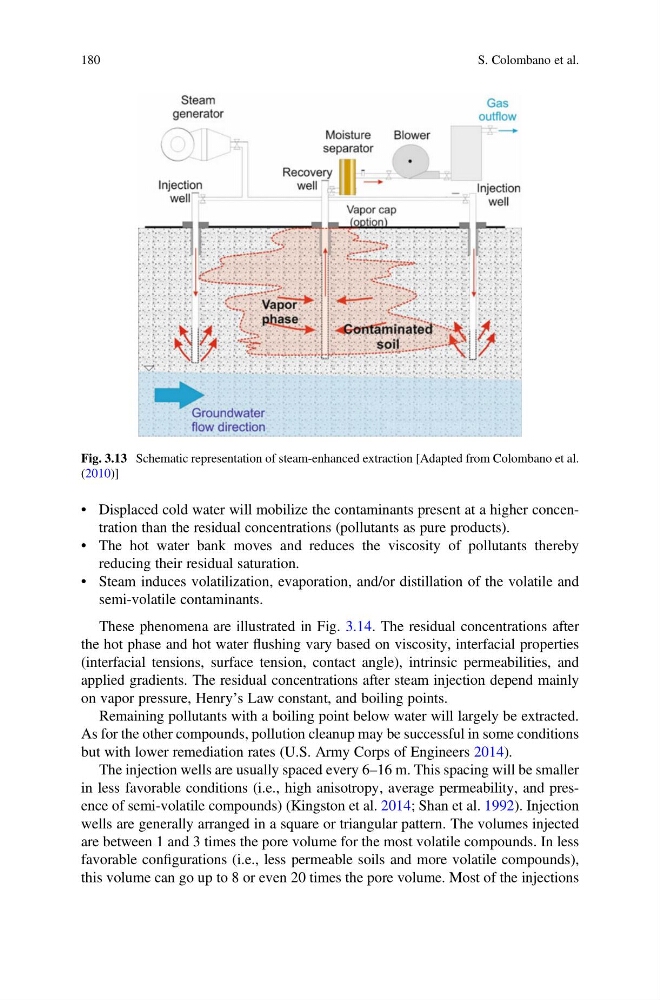
Fig. 3.13 Schematic representation of steam-enhanced extraction [Adapted from Colombano et al.
(2010)]
180
S. Colombano et al.
• The hot water bank moves and reduces the viscosity of pollutants thereby
reducing their residual saturation.
• Steam induces volatilization, evaporation, and/or distillation of the volatile and
semi-volatile contaminants.
These phenomena are illustrated in Fig. 3.14. The residual concentrations after
the hot phase and hot water flushing vary based on viscosity, interfacial properties
(interfacial tensions, surface tension, contact angle), intrinsic permeabilities, and
applied gradients. The residual concentrations after steam injection depend mainly
on vapor pressure, Henry’s Law constant, and boiling points.
Remaining pollutants with a boiling point below water will largely be extracted.
As for the other compounds, pollution cleanup may be successful in some conditions
but with lower remediation rates (U.S. Army Corps of Engineers 2014).
The injection wells are usually spaced every 6–16 m. This spacing will be smaller
in less favorable conditions (i.e., high anisotropy, average permeability, and presence of semi-volatile compounds) (Kingston et al. 2014; Shan et al. 1992). Injection
wells are generally arranged in a square or triangular pattern. The volumes injected
are between 1 and 3 times the pore volume for the most volatile compounds. In less
favorable configurations (i.e., less permeable soils and more volatile compounds),
this volume can go up to 8 or even 20 times the pore volume. Most of the injections
Fig. 3.13 Schematic representation of steam-enhanced extraction [Adapted from Colombano et al.
(2010)]
180
S. Colombano et al.