

last plateau, set at 7.8 m
3 h
À1 , caused a substantial drop of about 5 m, but the
subsequent rise in the water/DNAPL interface of only a few extra centimeters
allowed to reach a stable level until the test was concluded.
The DNAPL accumulation is nevertheless significant for flow rates set between
2 and 5 m
3 h
À1 . A higher flow rate does not seem to be justified. Moreover, if the
DNAPL/water interface level is too high, it causes DNAPL to impregnate the aquifer
zone which had not previously been impacted.
The tests have been reproduced at three different pumping flow rates (2.4, 4.8,
and 7.8 m
3 h
À1 ); during these tests, the DNAPL/water interface was continuously
monitored (Fig. 2.54).
Even at high flow rates, the DNAPL feed is constant. The choice of an upwelling
flow rate between 2 and 5 m
3 h
À1 is confirmed for this compartment.
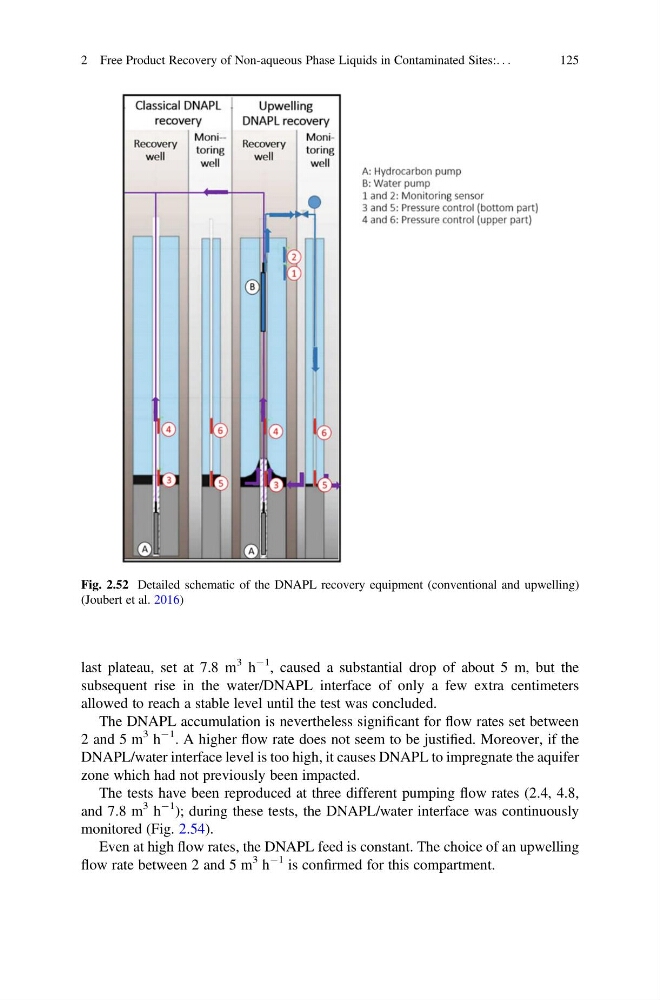
Fig. 2.52 Detailed schematic of the DNAPL recovery equipment (conventional and upwelling)
(Joubert et al. 2016)
2 Free Product Recovery of Non-aqueous Phase Liquids in Contaminated Sites:. . .
125
3 h
À1 , caused a substantial drop of about 5 m, but the
subsequent rise in the water/DNAPL interface of only a few extra centimeters
allowed to reach a stable level until the test was concluded.
The DNAPL accumulation is nevertheless significant for flow rates set between
2 and 5 m
3 h
À1 . A higher flow rate does not seem to be justified. Moreover, if the
DNAPL/water interface level is too high, it causes DNAPL to impregnate the aquifer
zone which had not previously been impacted.
The tests have been reproduced at three different pumping flow rates (2.4, 4.8,
and 7.8 m
3 h
À1 ); during these tests, the DNAPL/water interface was continuously
monitored (Fig. 2.54).
Even at high flow rates, the DNAPL feed is constant. The choice of an upwelling
flow rate between 2 and 5 m
3 h
À1 is confirmed for this compartment.
Fig. 2.52 Detailed schematic of the DNAPL recovery equipment (conventional and upwelling)
(Joubert et al. 2016)
2 Free Product Recovery of Non-aqueous Phase Liquids in Contaminated Sites:. . .
125