

contaminants from the solid matrix, and reducing product viscosity). Indeed, releasing a source of pure product (mass flow) will depend not only on groundwater
characteristics and the primary physical and chemical characteristics of DNAPL, but
also on the characteristics of each source: (1) magnitudes (particularly in the
DNAPL/water interface); (2) ganglia-to-pool mass (GTP) ratio; (3) how the pores
are connected (permeability); and (4) residual saturations (Miller et al. 1990; Imhoff
et al. 1993; Nambi and Powers 2003; Falta et al. 2005a, b; Grant and Gerhard
2007a, b; Carey and McBean 2010a, b; Alexandra et al. 2012).
Table 2.8 Functional role for commonly used remediation technologies in generalized sequential
treatment strategy (Williamson 2014)
Mobile DNAPL extraction
technologies
Source zone primary treatment
technologies
Source zone polishing
technologies
Hydraulic displacement
Excavation
In situ chemical oxidation
In situ thermal treatment
In situ thermal treatment
In situ bioremediation
Surfactant-enhanced
extraction
Surfactant/co-solvent flushing
In situ chemical reduction
In situ chemical oxidation
In situ air sparging
In situ bioremediation
Natural attenuation
In situ chemical reduction
Soil mixing with ZVI or other
reagent
In situ air sparging
ZVI zero valent iron
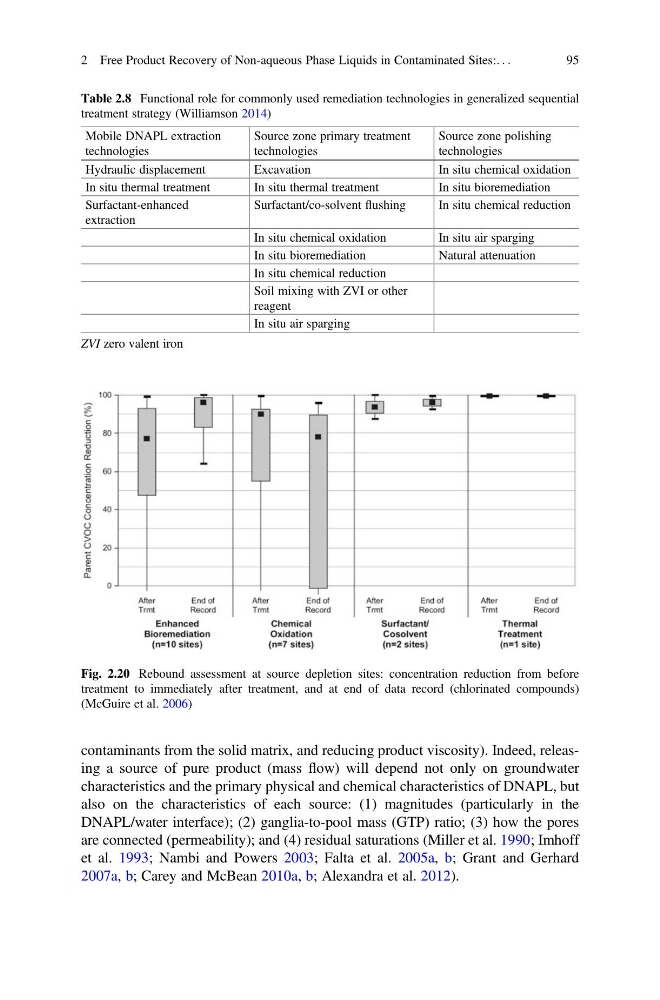
Fig. 2.20 Rebound assessment at source depletion sites: concentration reduction from before
treatment to immediately after treatment, and at end of data record (chlorinated compounds)
(McGuire et al. 2006)
2 Free Product Recovery of Non-aqueous Phase Liquids in Contaminated Sites:. . .
95
characteristics and the primary physical and chemical characteristics of DNAPL, but
also on the characteristics of each source: (1) magnitudes (particularly in the
DNAPL/water interface); (2) ganglia-to-pool mass (GTP) ratio; (3) how the pores
are connected (permeability); and (4) residual saturations (Miller et al. 1990; Imhoff
et al. 1993; Nambi and Powers 2003; Falta et al. 2005a, b; Grant and Gerhard
2007a, b; Carey and McBean 2010a, b; Alexandra et al. 2012).
Table 2.8 Functional role for commonly used remediation technologies in generalized sequential
treatment strategy (Williamson 2014)
Mobile DNAPL extraction
technologies
Source zone primary treatment
technologies
Source zone polishing
technologies
Hydraulic displacement
Excavation
In situ chemical oxidation
In situ thermal treatment
In situ thermal treatment
In situ bioremediation
Surfactant-enhanced
extraction
Surfactant/co-solvent flushing
In situ chemical reduction
In situ chemical oxidation
In situ air sparging
In situ bioremediation
Natural attenuation
In situ chemical reduction
Soil mixing with ZVI or other
reagent
In situ air sparging
ZVI zero valent iron
Fig. 2.20 Rebound assessment at source depletion sites: concentration reduction from before
treatment to immediately after treatment, and at end of data record (chlorinated compounds)
(McGuire et al. 2006)
2 Free Product Recovery of Non-aqueous Phase Liquids in Contaminated Sites:. . .
95