

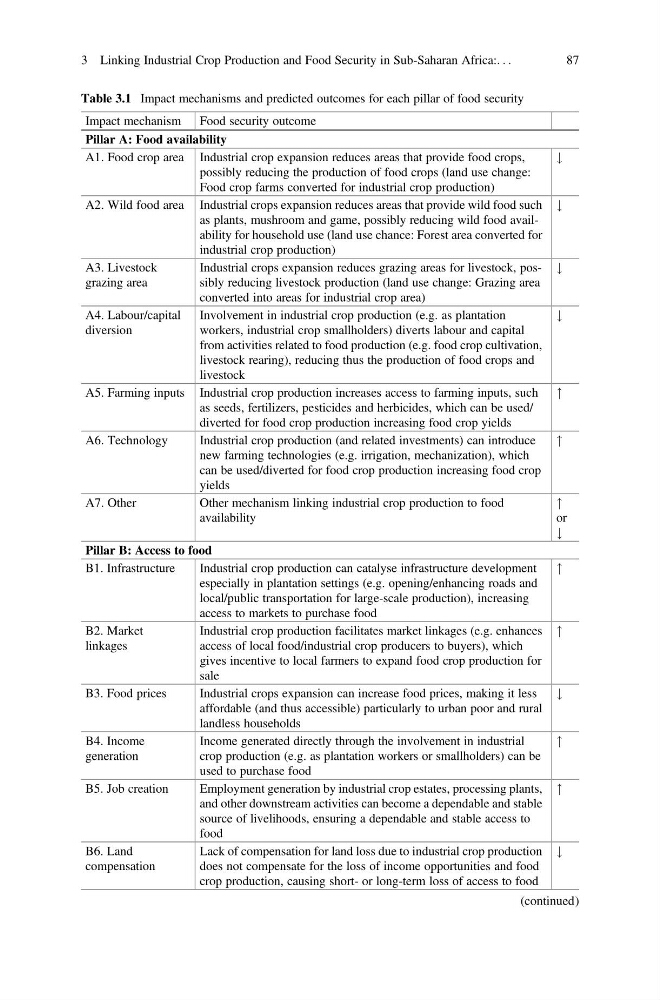
Table 3.1 Impact mechanisms and predicted outcomes for each pillar of food security
Impact mechanism Food security outcome
Pillar A: Food availability
A1. Food crop area Industrial crop expansion reduces areas that provide food crops,
possibly reducing the production of food crops (land use change:
Food crop farms converted for industrial crop production)
#
A2. Wild food area Industrial crops expansion reduces areas that provide wild food such
as plants, mushroom and game, possibly reducing wild food availability for household use (land use chance: Forest area converted for
industrial crop production)
#
A3. Livestock
grazing area
Industrial crops expansion reduces grazing areas for livestock, possibly reducing livestock production (land use change: Grazing area
converted into areas for industrial crop area)
#
A4. Labour/capital
diversion
Involvement in industrial crop production (e.g. as plantation
workers, industrial crop smallholders) diverts labour and capital
from activities related to food production (e.g. food crop cultivation,
livestock rearing), reducing thus the production of food crops and
livestock
#
A5. Farming inputs Industrial crop production increases access to farming inputs, such
as seeds, fertilizers, pesticides and herbicides, which can be used/
diverted for food crop production increasing food crop yields
"
A6. Technology
Industrial crop production (and related investments) can introduce
new farming technologies (e.g. irrigation, mechanization), which
can be used/diverted for food crop production increasing food crop
yields
"
A7. Other
Other mechanism linking industrial crop production to food
availability
"
or
#
Pillar B: Access to food
B1. Infrastructure
Industrial crop production can catalyse infrastructure development
especially in plantation settings (e.g. opening/enhancing roads and
local/public transportation for large-scale production), increasing
access to markets to purchase food
"
B2. Market
linkages
Industrial crop production facilitates market linkages (e.g. enhances
access of local food/industrial crop producers to buyers), which
gives incentive to local farmers to expand food crop production for
sale
"
B3. Food prices
Industrial crops expansion can increase food prices, making it less
affordable (and thus accessible) particularly to urban poor and rural
landless households
#
B4. Income
generation
Income generated directly through the involvement in industrial
crop production (e.g. as plantation workers or smallholders) can be
used to purchase food
"
B5. Job creation
Employment generation by industrial crop estates, processing plants,
and other downstream activities can become a dependable and stable
source of livelihoods, ensuring a dependable and stable access to
food
"
B6. Land
compensation
Lack of compensation for land loss due to industrial crop production
does not compensate for the loss of income opportunities and food
crop production, causing short- or long-term loss of access to food
#
(continued)
3 Linking Industrial Crop Production and Food Security in Sub-Saharan Africa:. . .
87
Impact mechanism Food security outcome
Pillar A: Food availability
A1. Food crop area Industrial crop expansion reduces areas that provide food crops,
possibly reducing the production of food crops (land use change:
Food crop farms converted for industrial crop production)
#
A2. Wild food area Industrial crops expansion reduces areas that provide wild food such
as plants, mushroom and game, possibly reducing wild food availability for household use (land use chance: Forest area converted for
industrial crop production)
#
A3. Livestock
grazing area
Industrial crops expansion reduces grazing areas for livestock, possibly reducing livestock production (land use change: Grazing area
converted into areas for industrial crop area)
#
A4. Labour/capital
diversion
Involvement in industrial crop production (e.g. as plantation
workers, industrial crop smallholders) diverts labour and capital
from activities related to food production (e.g. food crop cultivation,
livestock rearing), reducing thus the production of food crops and
livestock
#
A5. Farming inputs Industrial crop production increases access to farming inputs, such
as seeds, fertilizers, pesticides and herbicides, which can be used/
diverted for food crop production increasing food crop yields
"
A6. Technology
Industrial crop production (and related investments) can introduce
new farming technologies (e.g. irrigation, mechanization), which
can be used/diverted for food crop production increasing food crop
yields
"
A7. Other
Other mechanism linking industrial crop production to food
availability
"
or
#
Pillar B: Access to food
B1. Infrastructure
Industrial crop production can catalyse infrastructure development
especially in plantation settings (e.g. opening/enhancing roads and
local/public transportation for large-scale production), increasing
access to markets to purchase food
"
B2. Market
linkages
Industrial crop production facilitates market linkages (e.g. enhances
access of local food/industrial crop producers to buyers), which
gives incentive to local farmers to expand food crop production for
sale
"
B3. Food prices
Industrial crops expansion can increase food prices, making it less
affordable (and thus accessible) particularly to urban poor and rural
landless households
#
B4. Income
generation
Income generated directly through the involvement in industrial
crop production (e.g. as plantation workers or smallholders) can be
used to purchase food
"
B5. Job creation
Employment generation by industrial crop estates, processing plants,
and other downstream activities can become a dependable and stable
source of livelihoods, ensuring a dependable and stable access to
food
"
B6. Land
compensation
Lack of compensation for land loss due to industrial crop production
does not compensate for the loss of income opportunities and food
crop production, causing short- or long-term loss of access to food
#
(continued)
3 Linking Industrial Crop Production and Food Security in Sub-Saharan Africa:. . .
87