

information on climate change and sustainability issues, in addition to the Masters
programmes (MSc./MPhil.) in Climate Change and Sustainable Development
(CCSD). The UG provides approximately USD 22,800 (GHS 120,000)
6 per year
towards the running costs of the centre, in addition to government subventions for
staff time costs.
8.3.2 Industry
8.3.2.1 Policies and Regulatory Frameworks
The Ghanaian industrial sector mainly consists of privately owned micro (55%) and
small (39%) firms (Ackah et al. 2016). Over 90% of these firms operate in the
manufacturing sector, which also accounts for the largest job creation among the
industrial sub-sectors. The Ghana Industrial Policy (GIP) (2011) is based on national
development agendas and was formulated to enhance productivity, efficiency and
growth in the sector (especially the manufacturing sub-sector). The GIP acknowledges the limited existing research capacity and application of science, technology
and innovation in the industrial sector. It prescribes the need to strengthen linkages
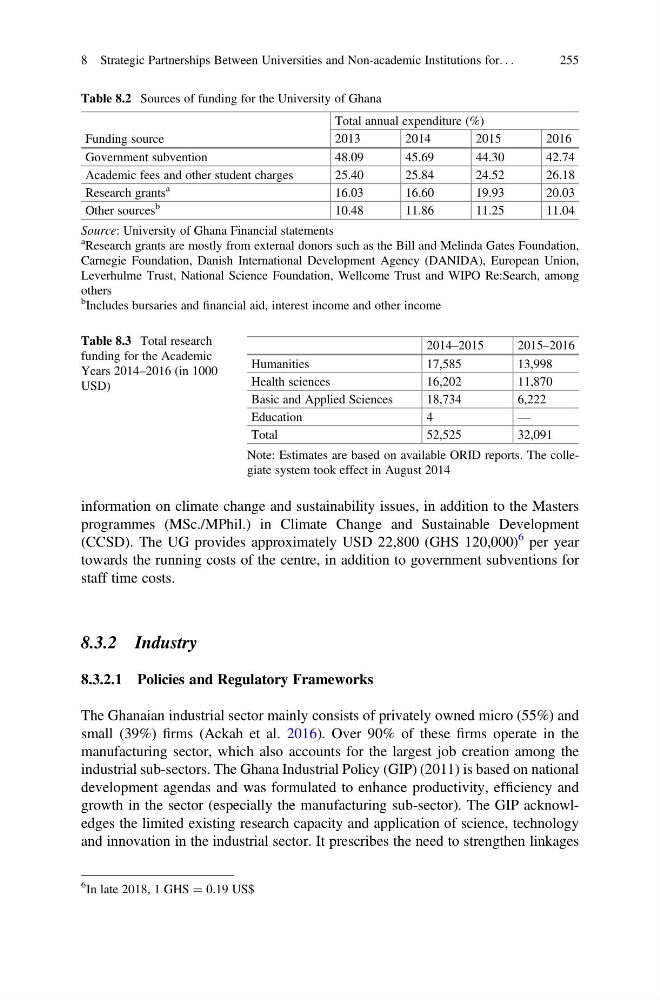
Table 8.2 Sources of funding for the University of Ghana
Funding source
Total annual expenditure (%)
2013
2014
2015
2016
Government subvention
48.09
45.69
44.30
42.74
Academic fees and other student charges
25.40
25.84
24.52
26.18
Research grants
a
16.03
16.60
19.93
20.03
Other sources
b
10.48
11.86
11.25
11.04
Source: University of Ghana Financial statements
a Research grants are mostly from external donors such as the Bill and Melinda Gates Foundation,
Carnegie Foundation, Danish International Development Agency (DANIDA), European Union,
Leverhulme Trust, National Science Foundation, Wellcome Trust and WIPO Re:Search, among
others
b
Includes bursaries and financial aid, interest income and other income
Table 8.3 Total research
funding for the Academic
Years 2014–2016 (in 1000
USD)
2014–2015
2015–2016
Humanities
17,585
13,998
Health sciences
16,202
11,870
Basic and Applied Sciences
18,734
6,222
Education
4
—
Total
52,525
32,091
Note: Estimates are based on available ORID reports. The collegiate system took effect in August 2014
6 In late 2018, 1 GHS ¼ 0.19 US$
8 Strategic Partnerships Between Universities and Non-academic Institutions for. . .
255
programmes (MSc./MPhil.) in Climate Change and Sustainable Development
(CCSD). The UG provides approximately USD 22,800 (GHS 120,000)
6 per year
towards the running costs of the centre, in addition to government subventions for
staff time costs.
8.3.2 Industry
8.3.2.1 Policies and Regulatory Frameworks
The Ghanaian industrial sector mainly consists of privately owned micro (55%) and
small (39%) firms (Ackah et al. 2016). Over 90% of these firms operate in the
manufacturing sector, which also accounts for the largest job creation among the
industrial sub-sectors. The Ghana Industrial Policy (GIP) (2011) is based on national
development agendas and was formulated to enhance productivity, efficiency and
growth in the sector (especially the manufacturing sub-sector). The GIP acknowledges the limited existing research capacity and application of science, technology
and innovation in the industrial sector. It prescribes the need to strengthen linkages
Table 8.2 Sources of funding for the University of Ghana
Funding source
Total annual expenditure (%)
2013
2014
2015
2016
Government subvention
48.09
45.69
44.30
42.74
Academic fees and other student charges
25.40
25.84
24.52
26.18
Research grants
a
16.03
16.60
19.93
20.03
Other sources
b
10.48
11.86
11.25
11.04
Source: University of Ghana Financial statements
a Research grants are mostly from external donors such as the Bill and Melinda Gates Foundation,
Carnegie Foundation, Danish International Development Agency (DANIDA), European Union,
Leverhulme Trust, National Science Foundation, Wellcome Trust and WIPO Re:Search, among
others
b
Includes bursaries and financial aid, interest income and other income
Table 8.3 Total research
funding for the Academic
Years 2014–2016 (in 1000
USD)
2014–2015
2015–2016
Humanities
17,585
13,998
Health sciences
16,202
11,870
Basic and Applied Sciences
18,734
6,222
Education
4
—
Total
52,525
32,091
Note: Estimates are based on available ORID reports. The collegiate system took effect in August 2014
6 In late 2018, 1 GHS ¼ 0.19 US$
8 Strategic Partnerships Between Universities and Non-academic Institutions for. . .
255