

studies have also identified that men dominate employment opportunities along
industrial crop value chains, maintaining thus, traditional societal structures and
household roles for women (Lazzarini 2016; Waswa et al. 2009a, 2009b; Moseley
2001). Even though such outcomes might not be socially desirable (Sect. 3.4.2), they
still seem to have possible positive effects related to food utilization.
3.3.2.5 Food Stability
Most of the studies related to the “food stability” pillar focus on two specific
mechanisms, namely women empowerment (D6) and environmental stability
(D7) (Table 3.8). Engagement in industrial crop value chains is occasionally associated with women empowerment. For example, some studies have identified that
females involved in industrial crop value chains often assume greater control in
intra-household income allocation decisions (e.g. Adams et al. 2016; Banye 2015).
Furthermore, involvement in industrial crop value chains can enhance training
opportunities for women (Williamson et al. 2005; Suleman et al. 2014) and the
development of women groups that can negotiate crop prices from a stronger
position (e.g. Favretto et al. 2014; Annan 2013).
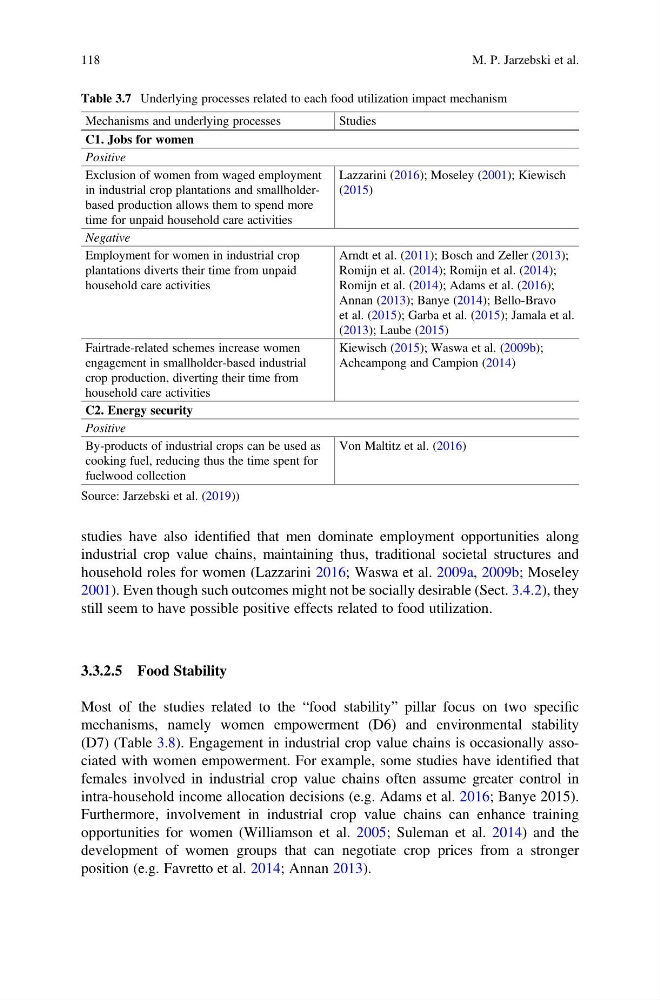
Table 3.7 Underlying processes related to each food utilization impact mechanism
Mechanisms and underlying processes
Studies
C1. Jobs for women
Positive
Exclusion of women from waged employment
in industrial crop plantations and smallholderbased production allows them to spend more
time for unpaid household care activities
Lazzarini (2016); Moseley (2001); Kiewisch
(2015)
Negative
Employment for women in industrial crop
plantations diverts their time from unpaid
household care activities
Arndt et al. (2011); Bosch and Zeller (2013);
Romijn et al. (2014); Romijn et al. (2014);
Romijn et al. (2014); Adams et al. (2016);
Annan (2013); Banye (2014); Bello-Bravo
et al. (2015); Garba et al. (2015); Jamala et al.
(2013); Laube (2015)
Fairtrade-related schemes increase women
engagement in smallholder-based industrial
crop production, diverting their time from
household care activities
Kiewisch (2015); Waswa et al. (2009b);
Acheampong and Campion (2014)
C2. Energy security
Positive
By-products of industrial crops can be used as
cooking fuel, reducing thus the time spent for
fuelwood collection
Von Maltitz et al. (2016)
Source: Jarzebski et al. (2019))
118
M. P. Jarzebski et al.
industrial crop value chains, maintaining thus, traditional societal structures and
household roles for women (Lazzarini 2016; Waswa et al. 2009a, 2009b; Moseley
2001). Even though such outcomes might not be socially desirable (Sect. 3.4.2), they
still seem to have possible positive effects related to food utilization.
3.3.2.5 Food Stability
Most of the studies related to the “food stability” pillar focus on two specific
mechanisms, namely women empowerment (D6) and environmental stability
(D7) (Table 3.8). Engagement in industrial crop value chains is occasionally associated with women empowerment. For example, some studies have identified that
females involved in industrial crop value chains often assume greater control in
intra-household income allocation decisions (e.g. Adams et al. 2016; Banye 2015).
Furthermore, involvement in industrial crop value chains can enhance training
opportunities for women (Williamson et al. 2005; Suleman et al. 2014) and the
development of women groups that can negotiate crop prices from a stronger
position (e.g. Favretto et al. 2014; Annan 2013).
Table 3.7 Underlying processes related to each food utilization impact mechanism
Mechanisms and underlying processes
Studies
C1. Jobs for women
Positive
Exclusion of women from waged employment
in industrial crop plantations and smallholderbased production allows them to spend more
time for unpaid household care activities
Lazzarini (2016); Moseley (2001); Kiewisch
(2015)
Negative
Employment for women in industrial crop
plantations diverts their time from unpaid
household care activities
Arndt et al. (2011); Bosch and Zeller (2013);
Romijn et al. (2014); Romijn et al. (2014);
Romijn et al. (2014); Adams et al. (2016);
Annan (2013); Banye (2014); Bello-Bravo
et al. (2015); Garba et al. (2015); Jamala et al.
(2013); Laube (2015)
Fairtrade-related schemes increase women
engagement in smallholder-based industrial
crop production, diverting their time from
household care activities
Kiewisch (2015); Waswa et al. (2009b);
Acheampong and Campion (2014)
C2. Energy security
Positive
By-products of industrial crops can be used as
cooking fuel, reducing thus the time spent for
fuelwood collection
Von Maltitz et al. (2016)
Source: Jarzebski et al. (2019))
118
M. P. Jarzebski et al.