

76
H. A. Tajarudin et al.
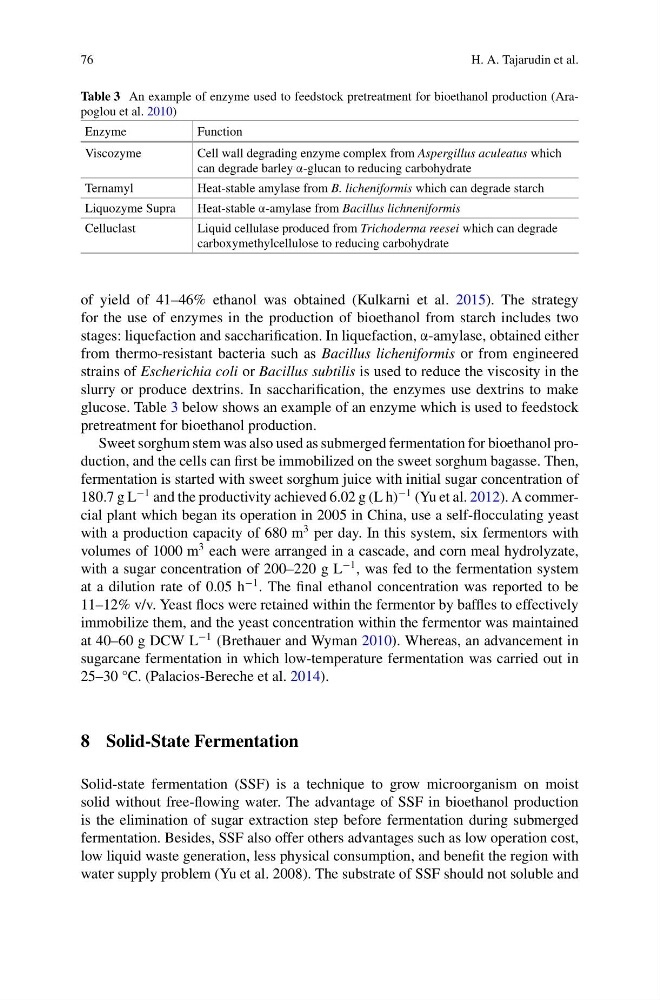
Table 3 An example of enzyme used to feedstock pretreatment for bioethanol production (Arapoglou et al. 2010)
Enzyme
Function
Viscozyme
Cell wall degrading enzyme complex from Aspergillus aculeatus which
can degrade barley α-glucan to reducing carbohydrate
Ternamyl
Heat-stable amylase from B. licheniformis which can degrade starch
Liquozyme Supra
Heat-stable α-amylase from Bacillus lichneniformis
Celluclast
Liquid cellulase produced from Trichoderma reesei which can degrade
carboxymethylcellulose to reducing carbohydrate
of yield of 41–46% ethanol was obtained (Kulkarni et al. 2015). The strategy
for the use of enzymes in the production of bioethanol from starch includes two
stages: liquefaction and saccharification. In liquefaction, α-amylase, obtained either
from thermo-resistant bacteria such as Bacillus licheniformis or from engineered
strains of Escherichia coli or Bacillus subtilis is used to reduce the viscosity in the
slurry or produce dextrins. In saccharification, the enzymes use dextrins to make
glucose. Table 3 below shows an example of an enzyme which is used to feedstock
pretreatment for bioethanol production.
Sweet sorghum stem was also used as submerged fermentation for bioethanol production, and the cells can first be immobilized on the sweet sorghum bagasse. Then,
fermentation is started with sweet sorghum juice with initial sugar concentration of
180.7 g L
−1 and the productivity achieved 6.02 g (L h)
−1 (Yu et al. 2012). A commercial plant which began its operation in 2005 in China, use a self-flocculating yeast
with a production capacity of 680 m
3 per day. In this system, six fermentors with
volumes of 1000 m
3 each were arranged in a cascade, and corn meal hydrolyzate,
with a sugar concentration of 200–220 g L
−1 , was fed to the fermentation system
at a dilution rate of 0.05 h
−1 . The final ethanol concentration was reported to be
11–12% v/v. Yeast flocs were retained within the fermentor by baffles to effectively
immobilize them, and the yeast concentration within the fermentor was maintained
at 40–60 g DCW L
−1 (Brethauer and Wyman 2010). Whereas, an advancement in
sugarcane fermentation in which low-temperature fermentation was carried out in
25–30 °C. (Palacios-Bereche et al. 2014).
8 Solid-State Fermentation
Solid-state fermentation (SSF) is a technique to grow microorganism on moist
solid without free-flowing water. The advantage of SSF in bioethanol production
is the elimination of sugar extraction step before fermentation during submerged
fermentation. Besides, SSF also offer others advantages such as low operation cost,
low liquid waste generation, less physical consumption, and benefit the region with
water supply problem (Yu et al. 2008). The substrate of SSF should not soluble and
H. A. Tajarudin et al.
Table 3 An example of enzyme used to feedstock pretreatment for bioethanol production (Arapoglou et al. 2010)
Enzyme
Function
Viscozyme
Cell wall degrading enzyme complex from Aspergillus aculeatus which
can degrade barley α-glucan to reducing carbohydrate
Ternamyl
Heat-stable amylase from B. licheniformis which can degrade starch
Liquozyme Supra
Heat-stable α-amylase from Bacillus lichneniformis
Celluclast
Liquid cellulase produced from Trichoderma reesei which can degrade
carboxymethylcellulose to reducing carbohydrate
of yield of 41–46% ethanol was obtained (Kulkarni et al. 2015). The strategy
for the use of enzymes in the production of bioethanol from starch includes two
stages: liquefaction and saccharification. In liquefaction, α-amylase, obtained either
from thermo-resistant bacteria such as Bacillus licheniformis or from engineered
strains of Escherichia coli or Bacillus subtilis is used to reduce the viscosity in the
slurry or produce dextrins. In saccharification, the enzymes use dextrins to make
glucose. Table 3 below shows an example of an enzyme which is used to feedstock
pretreatment for bioethanol production.
Sweet sorghum stem was also used as submerged fermentation for bioethanol production, and the cells can first be immobilized on the sweet sorghum bagasse. Then,
fermentation is started with sweet sorghum juice with initial sugar concentration of
180.7 g L
−1 and the productivity achieved 6.02 g (L h)
−1 (Yu et al. 2012). A commercial plant which began its operation in 2005 in China, use a self-flocculating yeast
with a production capacity of 680 m
3 per day. In this system, six fermentors with
volumes of 1000 m
3 each were arranged in a cascade, and corn meal hydrolyzate,
with a sugar concentration of 200–220 g L
−1 , was fed to the fermentation system
at a dilution rate of 0.05 h
−1 . The final ethanol concentration was reported to be
11–12% v/v. Yeast flocs were retained within the fermentor by baffles to effectively
immobilize them, and the yeast concentration within the fermentor was maintained
at 40–60 g DCW L
−1 (Brethauer and Wyman 2010). Whereas, an advancement in
sugarcane fermentation in which low-temperature fermentation was carried out in
25–30 °C. (Palacios-Bereche et al. 2014).
8 Solid-State Fermentation
Solid-state fermentation (SSF) is a technique to grow microorganism on moist
solid without free-flowing water. The advantage of SSF in bioethanol production
is the elimination of sugar extraction step before fermentation during submerged
fermentation. Besides, SSF also offer others advantages such as low operation cost,
low liquid waste generation, less physical consumption, and benefit the region with
water supply problem (Yu et al. 2008). The substrate of SSF should not soluble and