

The Green Vision of Technical University of Crete’s Campus
21
0
1000
2000
3000
4000
5000
6000
3.00
3.20
3.40
3.60
3.80
4.00
4.20
4.40
4.60
No of students
Energy ConsumpƟon [GWh]
Year
Energy ConsumpƟon
No of students
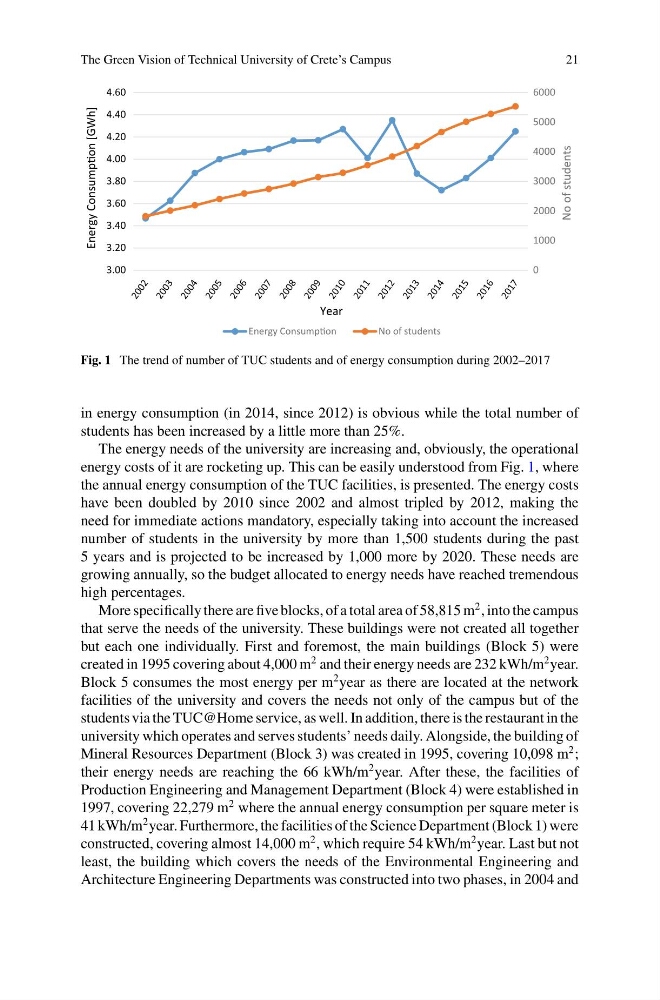
Fig. 1 The trend of number of TUC students and of energy consumption during 2002–2017
in energy consumption (in 2014, since 2012) is obvious while the total number of
students has been increased by a little more than 25%.
The energy needs of the university are increasing and, obviously, the operational
energy costs of it are rocketing up. This can be easily understood from Fig. 1, where
the annual energy consumption of the TUC facilities, is presented. The energy costs
have been doubled by 2010 since 2002 and almost tripled by 2012, making the
need for immediate actions mandatory, especially taking into account the increased
number of students in the university by more than 1,500 students during the past
5 years and is projected to be increased by 1,000 more by 2020. These needs are
growing annually, so the budget allocated to energy needs have reached tremendous
high percentages.
More specifically there are five blocks, of a total area of 58,815 m
2 , into the campus
that serve the needs of the university. These buildings were not created all together
but each one individually. First and foremost, the main buildings (Block 5) were
created in 1995 covering about 4,000 m
2 and their energy needs are 232 kWh/m
2 year.
Block 5 consumes the most energy per m
2 year as there are located at the network
facilities of the university and covers the needs not only of the campus but of the
students via the TUC@Home service, as well. In addition, there is the restaurant in the
university which operates and serves students’ needs daily. Alongside, the building of
Mineral Resources Department (Block 3) was created in 1995, covering 10,098 m
2 ;
their energy needs are reaching the 66 kWh/m
2 year. After these, the facilities of
Production Engineering and Management Department (Block 4) were established in
1997, covering 22,279 m
2 where the annual energy consumption per square meter is
41 kWh/m
2 year. Furthermore, the facilities of the Science Department (Block 1) were
constructed, covering almost 14,000 m
2 , which require 54 kWh/m
2 year. Last but not
least, the building which covers the needs of the Environmental Engineering and
Architecture Engineering Departments was constructed into two phases, in 2004 and
21
0
1000
2000
3000
4000
5000
6000
3.00
3.20
3.40
3.60
3.80
4.00
4.20
4.40
4.60
No of students
Energy ConsumpƟon [GWh]
Year
Energy ConsumpƟon
No of students
Fig. 1 The trend of number of TUC students and of energy consumption during 2002–2017
in energy consumption (in 2014, since 2012) is obvious while the total number of
students has been increased by a little more than 25%.
The energy needs of the university are increasing and, obviously, the operational
energy costs of it are rocketing up. This can be easily understood from Fig. 1, where
the annual energy consumption of the TUC facilities, is presented. The energy costs
have been doubled by 2010 since 2002 and almost tripled by 2012, making the
need for immediate actions mandatory, especially taking into account the increased
number of students in the university by more than 1,500 students during the past
5 years and is projected to be increased by 1,000 more by 2020. These needs are
growing annually, so the budget allocated to energy needs have reached tremendous
high percentages.
More specifically there are five blocks, of a total area of 58,815 m
2 , into the campus
that serve the needs of the university. These buildings were not created all together
but each one individually. First and foremost, the main buildings (Block 5) were
created in 1995 covering about 4,000 m
2 and their energy needs are 232 kWh/m
2 year.
Block 5 consumes the most energy per m
2 year as there are located at the network
facilities of the university and covers the needs not only of the campus but of the
students via the TUC@Home service, as well. In addition, there is the restaurant in the
university which operates and serves students’ needs daily. Alongside, the building of
Mineral Resources Department (Block 3) was created in 1995, covering 10,098 m
2 ;
their energy needs are reaching the 66 kWh/m
2 year. After these, the facilities of
Production Engineering and Management Department (Block 4) were established in
1997, covering 22,279 m
2 where the annual energy consumption per square meter is
41 kWh/m
2 year. Furthermore, the facilities of the Science Department (Block 1) were
constructed, covering almost 14,000 m
2 , which require 54 kWh/m
2 year. Last but not
least, the building which covers the needs of the Environmental Engineering and
Architecture Engineering Departments was constructed into two phases, in 2004 and