

20
N. Sifakis et al.
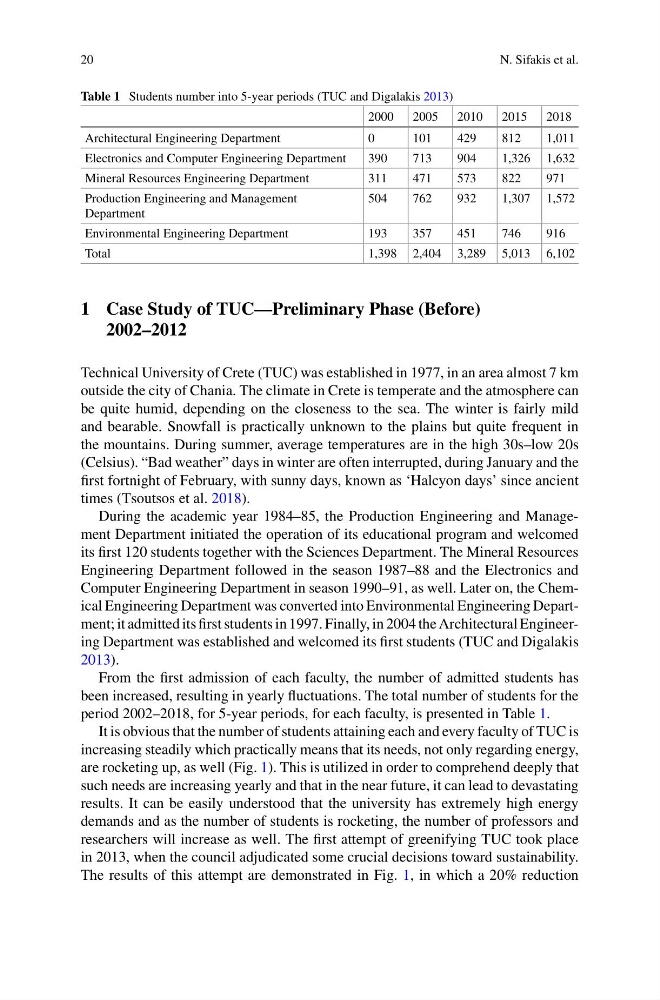
Table 1 Students number into 5-year periods (TUC and Digalakis 2013)
2000
2005
2010
2015
2018
Architectural Engineering Department
0
101
429
812
1,011
Electronics and Computer Engineering Department
390
713
904
1,326 1,632
Mineral Resources Engineering Department
311
471
573
822
971
Production Engineering and Management
Department
504
762
932
1,307 1,572
Environmental Engineering Department
193
357
451
746
916
Total
1,398 2,404 3,289 5,013 6,102
1 Case Study of TUC—Preliminary Phase (Before)
2002–2012
Technical University of Crete (TUC) was established in 1977, in an area almost 7 km
outside the city of Chania. The climate in Crete is temperate and the atmosphere can
be quite humid, depending on the closeness to the sea. The winter is fairly mild
and bearable. Snowfall is practically unknown to the plains but quite frequent in
the mountains. During summer, average temperatures are in the high 30s–low 20s
(Celsius). “Bad weather” days in winter are often interrupted, during January and the
first fortnight of February, with sunny days, known as ‘Halcyon days’ since ancient
times (Tsoutsos et al. 2018).
During the academic year 1984–85, the Production Engineering and Management Department initiated the operation of its educational program and welcomed
its first 120 students together with the Sciences Department. The Mineral Resources
Engineering Department followed in the season 1987–88 and the Electronics and
Computer Engineering Department in season 1990–91, as well. Later on, the Chemical Engineering Department was converted into Environmental Engineering Department; it admitted its first students in 1997. Finally, in 2004 the Architectural Engineering Department was established and welcomed its first students (TUC and Digalakis
2013).
From the first admission of each faculty, the number of admitted students has
been increased, resulting in yearly fluctuations. The total number of students for the
period 2002–2018, for 5-year periods, for each faculty, is presented in Table 1.
It is obvious that the number of students attaining each and every faculty of TUC is
increasing steadily which practically means that its needs, not only regarding energy,
are rocketing up, as well (Fig. 1). This is utilized in order to comprehend deeply that
such needs are increasing yearly and that in the near future, it can lead to devastating
results. It can be easily understood that the university has extremely high energy
demands and as the number of students is rocketing, the number of professors and
researchers will increase as well. The first attempt of greenifying TUC took place
in 2013, when the council adjudicated some crucial decisions toward sustainability.
The results of this attempt are demonstrated in Fig. 1, in which a 20% reduction
N. Sifakis et al.
Table 1 Students number into 5-year periods (TUC and Digalakis 2013)
2000
2005
2010
2015
2018
Architectural Engineering Department
0
101
429
812
1,011
Electronics and Computer Engineering Department
390
713
904
1,326 1,632
Mineral Resources Engineering Department
311
471
573
822
971
Production Engineering and Management
Department
504
762
932
1,307 1,572
Environmental Engineering Department
193
357
451
746
916
Total
1,398 2,404 3,289 5,013 6,102
1 Case Study of TUC—Preliminary Phase (Before)
2002–2012
Technical University of Crete (TUC) was established in 1977, in an area almost 7 km
outside the city of Chania. The climate in Crete is temperate and the atmosphere can
be quite humid, depending on the closeness to the sea. The winter is fairly mild
and bearable. Snowfall is practically unknown to the plains but quite frequent in
the mountains. During summer, average temperatures are in the high 30s–low 20s
(Celsius). “Bad weather” days in winter are often interrupted, during January and the
first fortnight of February, with sunny days, known as ‘Halcyon days’ since ancient
times (Tsoutsos et al. 2018).
During the academic year 1984–85, the Production Engineering and Management Department initiated the operation of its educational program and welcomed
its first 120 students together with the Sciences Department. The Mineral Resources
Engineering Department followed in the season 1987–88 and the Electronics and
Computer Engineering Department in season 1990–91, as well. Later on, the Chemical Engineering Department was converted into Environmental Engineering Department; it admitted its first students in 1997. Finally, in 2004 the Architectural Engineering Department was established and welcomed its first students (TUC and Digalakis
2013).
From the first admission of each faculty, the number of admitted students has
been increased, resulting in yearly fluctuations. The total number of students for the
period 2002–2018, for 5-year periods, for each faculty, is presented in Table 1.
It is obvious that the number of students attaining each and every faculty of TUC is
increasing steadily which practically means that its needs, not only regarding energy,
are rocketing up, as well (Fig. 1). This is utilized in order to comprehend deeply that
such needs are increasing yearly and that in the near future, it can lead to devastating
results. It can be easily understood that the university has extremely high energy
demands and as the number of students is rocketing, the number of professors and
researchers will increase as well. The first attempt of greenifying TUC took place
in 2013, when the council adjudicated some crucial decisions toward sustainability.
The results of this attempt are demonstrated in Fig. 1, in which a 20% reduction