

Sustainable Waste Management in Higher Education ...
167
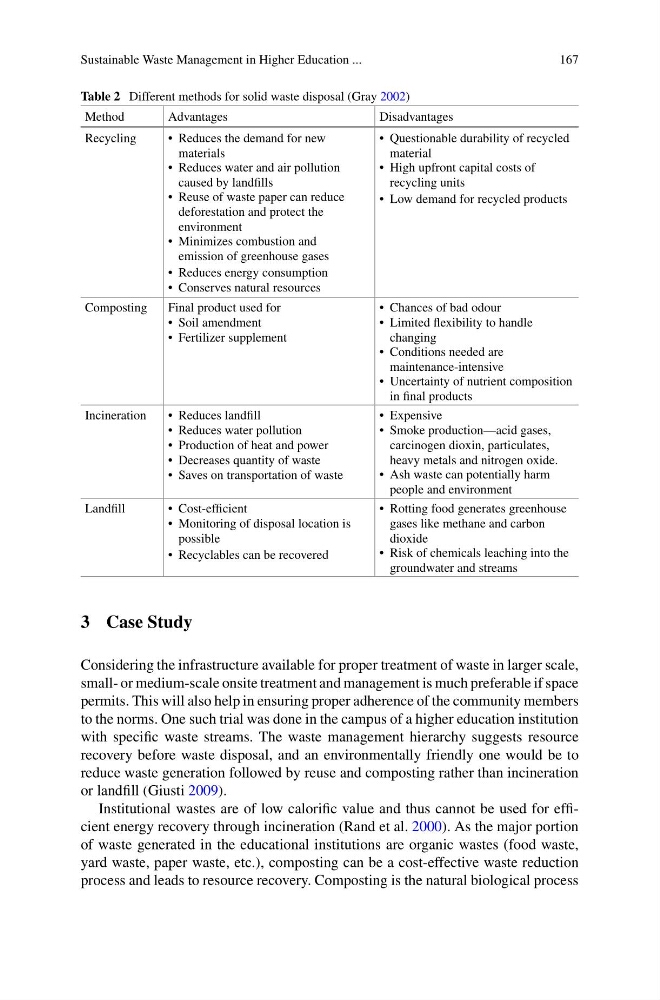
Table 2 Different methods for solid waste disposal (Gray 2002)
Method
Advantages
Disadvantages
Recycling
• Reduces the demand for new
materials
• Reduces water and air pollution
caused by landfills
• Reuse of waste paper can reduce
deforestation and protect the
environment
• Minimizes combustion and
emission of greenhouse gases
• Reduces energy consumption
• Conserves natural resources
• Questionable durability of recycled
material
• High upfront capital costs of
recycling units
• Low demand for recycled products
Composting
Final product used for
• Soil amendment
• Fertilizer supplement
• Chances of bad odour
• Limited flexibility to handle
changing
• Conditions needed are
maintenance-intensive
• Uncertainty of nutrient composition
in final products
Incineration
• Reduces landfill
• Reduces water pollution
• Production of heat and power
• Decreases quantity of waste
• Saves on transportation of waste
• Expensive
• Smoke production—acid gases,
carcinogen dioxin, particulates,
heavy metals and nitrogen oxide.
• Ash waste can potentially harm
people and environment
Landfill
• Cost-efficient
• Monitoring of disposal location is
possible
• Recyclables can be recovered
• Rotting food generates greenhouse
gases like methane and carbon
dioxide
• Risk of chemicals leaching into the
groundwater and streams
3 Case Study
Considering the infrastructure available for proper treatment of waste in larger scale,
small- or medium-scale onsite treatment and management is much preferable if space
permits. This will also help in ensuring proper adherence of the community members
to the norms. One such trial was done in the campus of a higher education institution
with specific waste streams. The waste management hierarchy suggests resource
recovery before waste disposal, and an environmentally friendly one would be to
reduce waste generation followed by reuse and composting rather than incineration
or landfill (Giusti 2009).
Institutional wastes are of low calorific value and thus cannot be used for efficient energy recovery through incineration (Rand et al. 2000). As the major portion
of waste generated in the educational institutions are organic wastes (food waste,
yard waste, paper waste, etc.), composting can be a cost-effective waste reduction
process and leads to resource recovery. Composting is the natural biological process
167
Table 2 Different methods for solid waste disposal (Gray 2002)
Method
Advantages
Disadvantages
Recycling
• Reduces the demand for new
materials
• Reduces water and air pollution
caused by landfills
• Reuse of waste paper can reduce
deforestation and protect the
environment
• Minimizes combustion and
emission of greenhouse gases
• Reduces energy consumption
• Conserves natural resources
• Questionable durability of recycled
material
• High upfront capital costs of
recycling units
• Low demand for recycled products
Composting
Final product used for
• Soil amendment
• Fertilizer supplement
• Chances of bad odour
• Limited flexibility to handle
changing
• Conditions needed are
maintenance-intensive
• Uncertainty of nutrient composition
in final products
Incineration
• Reduces landfill
• Reduces water pollution
• Production of heat and power
• Decreases quantity of waste
• Saves on transportation of waste
• Expensive
• Smoke production—acid gases,
carcinogen dioxin, particulates,
heavy metals and nitrogen oxide.
• Ash waste can potentially harm
people and environment
Landfill
• Cost-efficient
• Monitoring of disposal location is
possible
• Recyclables can be recovered
• Rotting food generates greenhouse
gases like methane and carbon
dioxide
• Risk of chemicals leaching into the
groundwater and streams
3 Case Study
Considering the infrastructure available for proper treatment of waste in larger scale,
small- or medium-scale onsite treatment and management is much preferable if space
permits. This will also help in ensuring proper adherence of the community members
to the norms. One such trial was done in the campus of a higher education institution
with specific waste streams. The waste management hierarchy suggests resource
recovery before waste disposal, and an environmentally friendly one would be to
reduce waste generation followed by reuse and composting rather than incineration
or landfill (Giusti 2009).
Institutional wastes are of low calorific value and thus cannot be used for efficient energy recovery through incineration (Rand et al. 2000). As the major portion
of waste generated in the educational institutions are organic wastes (food waste,
yard waste, paper waste, etc.), composting can be a cost-effective waste reduction
process and leads to resource recovery. Composting is the natural biological process