

94
R. Abdulla et al.
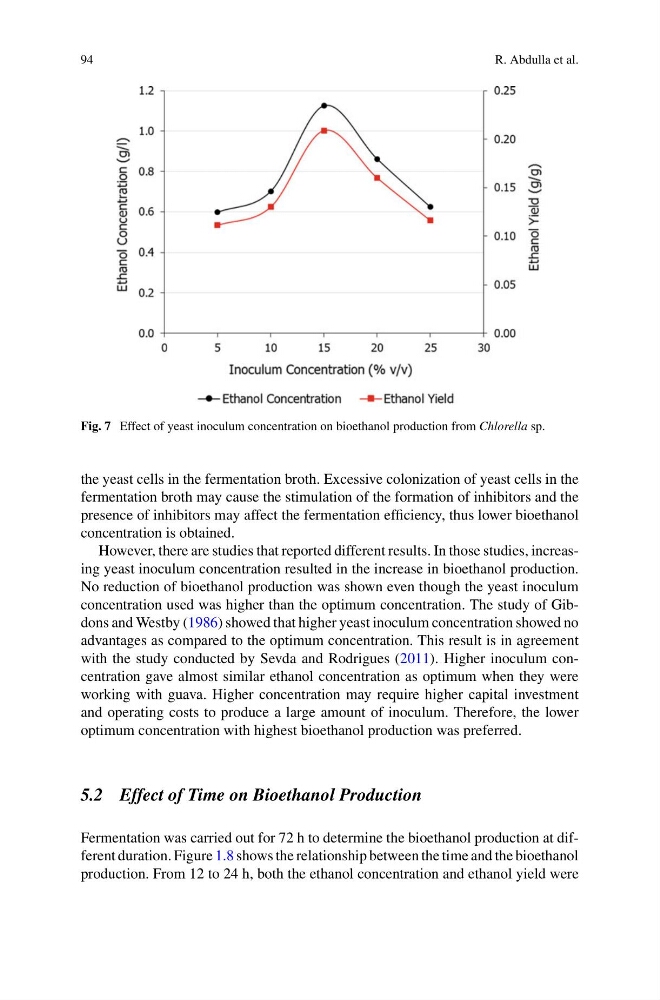
Fig. 7 Effect of yeast inoculum concentration on bioethanol production from Chlorella sp.
the yeast cells in the fermentation broth. Excessive colonization of yeast cells in the
fermentation broth may cause the stimulation of the formation of inhibitors and the
presence of inhibitors may affect the fermentation efficiency, thus lower bioethanol
concentration is obtained.
However, there are studies that reported different results. In those studies, increasing yeast inoculum concentration resulted in the increase in bioethanol production.
No reduction of bioethanol production was shown even though the yeast inoculum
concentration used was higher than the optimum concentration. The study of Gibdons and Westby (1986) showed that higher yeast inoculum concentration showed no
advantages as compared to the optimum concentration. This result is in agreement
with the study conducted by Sevda and Rodrigues (2011). Higher inoculum concentration gave almost similar ethanol concentration as optimum when they were
working with guava. Higher concentration may require higher capital investment
and operating costs to produce a large amount of inoculum. Therefore, the lower
optimum concentration with highest bioethanol production was preferred.
5.2 Effect of Time on Bioethanol Production
Fermentation was carried out for 72 h to determine the bioethanol production at different duration. Figure 1.8 shows the relationship between the time and the bioethanol
production. From 12 to 24 h, both the ethanol concentration and ethanol yield were
R. Abdulla et al.
Fig. 7 Effect of yeast inoculum concentration on bioethanol production from Chlorella sp.
the yeast cells in the fermentation broth. Excessive colonization of yeast cells in the
fermentation broth may cause the stimulation of the formation of inhibitors and the
presence of inhibitors may affect the fermentation efficiency, thus lower bioethanol
concentration is obtained.
However, there are studies that reported different results. In those studies, increasing yeast inoculum concentration resulted in the increase in bioethanol production.
No reduction of bioethanol production was shown even though the yeast inoculum
concentration used was higher than the optimum concentration. The study of Gibdons and Westby (1986) showed that higher yeast inoculum concentration showed no
advantages as compared to the optimum concentration. This result is in agreement
with the study conducted by Sevda and Rodrigues (2011). Higher inoculum concentration gave almost similar ethanol concentration as optimum when they were
working with guava. Higher concentration may require higher capital investment
and operating costs to produce a large amount of inoculum. Therefore, the lower
optimum concentration with highest bioethanol production was preferred.
5.2 Effect of Time on Bioethanol Production
Fermentation was carried out for 72 h to determine the bioethanol production at different duration. Figure 1.8 shows the relationship between the time and the bioethanol
production. From 12 to 24 h, both the ethanol concentration and ethanol yield were