

environment and in the resulting wastewater sludges. These contaminants are comprised of lawfully produced and retailed chemicals and pharmaceuticals through
illicit drugs and, more recently, high-profile contaminants such as microbeads which
are used as exfoliating agents in hundreds of personal care products globally. The
perceived and actual impact of these physical contaminants and chemical compounds, particularly those which persist in the environment, bioaccumulate in both
humans and the environment (particularly as they become concentrated in higher
quantities and move up the food chain), and evidence of ecotoxicity, is growing.
Contaminants from everyday products like shampoos, toothpaste and makeup are
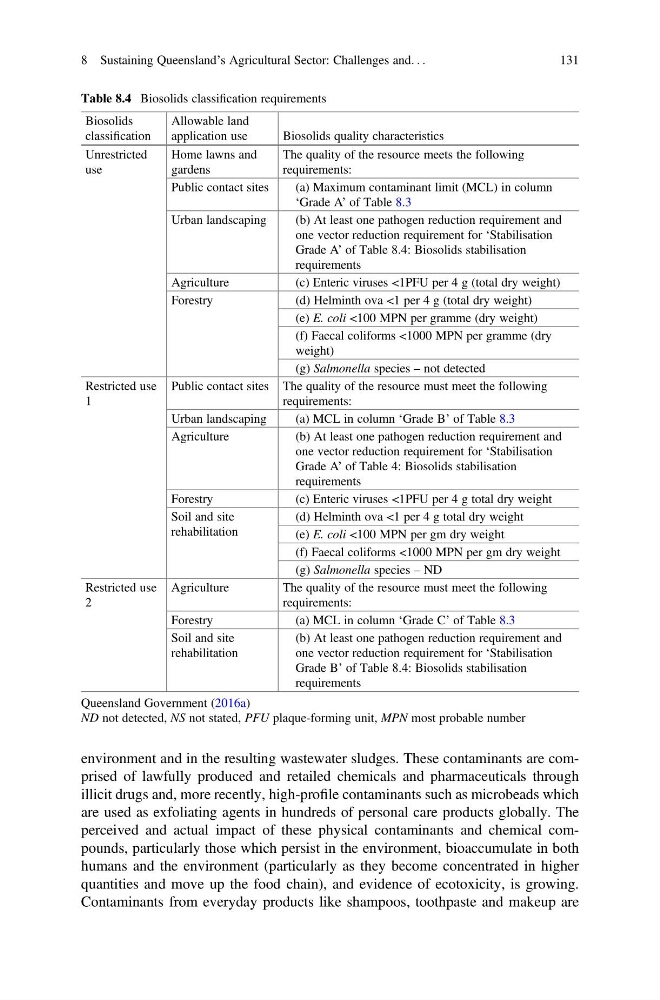
Table 8.4 Biosolids classification requirements
Biosolids
classification
Allowable land
application use
Biosolids quality characteristics
Unrestricted
use
Home lawns and
gardens
The quality of the resource meets the following
requirements:
Public contact sites
(a) Maximum contaminant limit (MCL) in column
‘Grade A’ of Table 8.3
Urban landscaping
(b) At least one pathogen reduction requirement and
one vector reduction requirement for ‘Stabilisation
Grade A’ of Table 8.4: Biosolids stabilisation
requirements
Agriculture
(c) Enteric viruses <1PFU per 4 g (total dry weight)
Forestry
(d) Helminth ova <1 per 4 g (total dry weight)
(e) E. coli <100 MPN per gramme (dry weight)
(f) Faecal coliforms <1000 MPN per gramme (dry
weight)
(g) Salmonella species – not detected
Restricted use
1
Public contact sites The quality of the resource must meet the following
requirements:
Urban landscaping
(a) MCL in column ‘Grade B’ of Table 8.3
Agriculture
(b) At least one pathogen reduction requirement and
one vector reduction requirement for ‘Stabilisation
Grade A’ of Table 4: Biosolids stabilisation
requirements
Forestry
(c) Enteric viruses <1PFU per 4 g total dry weight
Soil and site
rehabilitation
(d) Helminth ova <1 per 4 g total dry weight
(e) E. coli <100 MPN per gm dry weight
(f) Faecal coliforms <1000 MPN per gm dry weight
(g) Salmonella species – ND
Restricted use
2
Agriculture
The quality of the resource must meet the following
requirements:
Forestry
(a) MCL in column ‘Grade C’ of Table 8.3
Soil and site
rehabilitation
(b) At least one pathogen reduction requirement and
one vector reduction requirement for ‘Stabilisation
Grade B’ of Table 8.4: Biosolids stabilisation
requirements
Queensland Government (2016a)
ND not detected, NS not stated, PFU plaque-forming unit, MPN most probable number
8 Sustaining Queensland’s Agricultural Sector: Challenges and. . .
131
illicit drugs and, more recently, high-profile contaminants such as microbeads which
are used as exfoliating agents in hundreds of personal care products globally. The
perceived and actual impact of these physical contaminants and chemical compounds, particularly those which persist in the environment, bioaccumulate in both
humans and the environment (particularly as they become concentrated in higher
quantities and move up the food chain), and evidence of ecotoxicity, is growing.
Contaminants from everyday products like shampoos, toothpaste and makeup are
Table 8.4 Biosolids classification requirements
Biosolids
classification
Allowable land
application use
Biosolids quality characteristics
Unrestricted
use
Home lawns and
gardens
The quality of the resource meets the following
requirements:
Public contact sites
(a) Maximum contaminant limit (MCL) in column
‘Grade A’ of Table 8.3
Urban landscaping
(b) At least one pathogen reduction requirement and
one vector reduction requirement for ‘Stabilisation
Grade A’ of Table 8.4: Biosolids stabilisation
requirements
Agriculture
(c) Enteric viruses <1PFU per 4 g (total dry weight)
Forestry
(d) Helminth ova <1 per 4 g (total dry weight)
(e) E. coli <100 MPN per gramme (dry weight)
(f) Faecal coliforms <1000 MPN per gramme (dry
weight)
(g) Salmonella species – not detected
Restricted use
1
Public contact sites The quality of the resource must meet the following
requirements:
Urban landscaping
(a) MCL in column ‘Grade B’ of Table 8.3
Agriculture
(b) At least one pathogen reduction requirement and
one vector reduction requirement for ‘Stabilisation
Grade A’ of Table 4: Biosolids stabilisation
requirements
Forestry
(c) Enteric viruses <1PFU per 4 g total dry weight
Soil and site
rehabilitation
(d) Helminth ova <1 per 4 g total dry weight
(e) E. coli <100 MPN per gm dry weight
(f) Faecal coliforms <1000 MPN per gm dry weight
(g) Salmonella species – ND
Restricted use
2
Agriculture
The quality of the resource must meet the following
requirements:
Forestry
(a) MCL in column ‘Grade C’ of Table 8.3
Soil and site
rehabilitation
(b) At least one pathogen reduction requirement and
one vector reduction requirement for ‘Stabilisation
Grade B’ of Table 8.4: Biosolids stabilisation
requirements
Queensland Government (2016a)
ND not detected, NS not stated, PFU plaque-forming unit, MPN most probable number
8 Sustaining Queensland’s Agricultural Sector: Challenges and. . .
131