

605
our pertinacity, meaning and value dangles like a puppet, an extra in a short-lived
extravaganza. Is it a meaningless event? We can imagine that such a question is
Barthe’s perfect neutral, like a moth falling asleep on a wall; a dangling modifier
ad infinitum, regardless of ancillary components such as free will or predetermination. The prime mover in this gallery of vagaries remains forever elusive. Our
consciousness may spin out of control, but it will not change the valency of such
unknowns.
64.3 The Onrush of a Global Existential Crisis
Throughout 2019–2020, Democratic presidential primary hopefuls, and environmental activists worldwide (mostly youth), spoke passionately from venue to venue
of an “existential climate crisis.” How did the legacy of Søren Kierkegaard and
Jean-Paul Sartre suddenly blossom? By what pathways of social unrest did such a
weight of cumulative anxieties affirm an overnight linguistic lingua franca to characterize the urgency of 2020?
One might fix its center in Tuscany, around the city of Volterra, during the oldest
period of the Etruscan culture, at the height of the Villanovan renaissance (900–700);
a period in which the veneration of ancestors reached its zenith, not to be matched
until medieval death cults emerged on Rapa Nui (Easter Island). Sartre asked the
leading question on the subject in his Being and Nothingness: “But what exactly is
necessary in order for these concepts of disintegration to be able to receive even a
pretense of existence, in order for them to be able to appear for an instant to
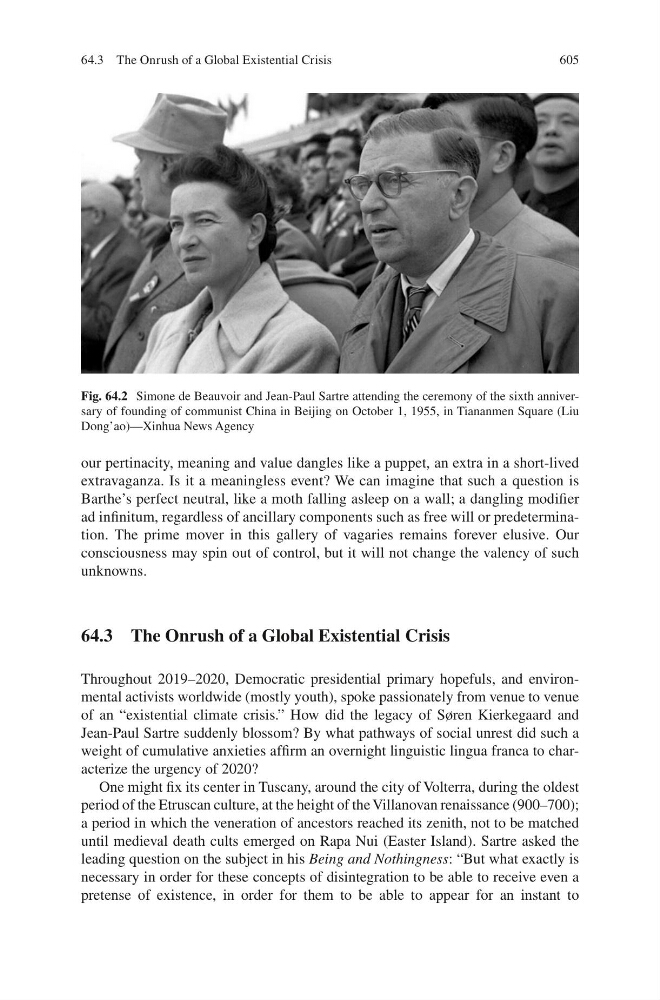
Fig. 64.2 Simone de Beauvoir and Jean-Paul Sartre attending the ceremony of the sixth anniversary of founding of communist China in Beijing on October 1, 1955, in Tiananmen Square (Liu
Dong’ao)—Xinhua News Agency
64.3 The Onrush of a Global Existential Crisis
our pertinacity, meaning and value dangles like a puppet, an extra in a short-lived
extravaganza. Is it a meaningless event? We can imagine that such a question is
Barthe’s perfect neutral, like a moth falling asleep on a wall; a dangling modifier
ad infinitum, regardless of ancillary components such as free will or predetermination. The prime mover in this gallery of vagaries remains forever elusive. Our
consciousness may spin out of control, but it will not change the valency of such
unknowns.
64.3 The Onrush of a Global Existential Crisis
Throughout 2019–2020, Democratic presidential primary hopefuls, and environmental activists worldwide (mostly youth), spoke passionately from venue to venue
of an “existential climate crisis.” How did the legacy of Søren Kierkegaard and
Jean-Paul Sartre suddenly blossom? By what pathways of social unrest did such a
weight of cumulative anxieties affirm an overnight linguistic lingua franca to characterize the urgency of 2020?
One might fix its center in Tuscany, around the city of Volterra, during the oldest
period of the Etruscan culture, at the height of the Villanovan renaissance (900–700);
a period in which the veneration of ancestors reached its zenith, not to be matched
until medieval death cults emerged on Rapa Nui (Easter Island). Sartre asked the
leading question on the subject in his Being and Nothingness: “But what exactly is
necessary in order for these concepts of disintegration to be able to receive even a
pretense of existence, in order for them to be able to appear for an instant to
Fig. 64.2 Simone de Beauvoir and Jean-Paul Sartre attending the ceremony of the sixth anniversary of founding of communist China in Beijing on October 1, 1955, in Tiananmen Square (Liu
Dong’ao)—Xinhua News Agency
64.3 The Onrush of a Global Existential Crisis