

324
appealing to his ardent followers, the Emperor Gallienus and his bride Salonina, to
finance what he called the City of Philosophers, predicated upon the ideals of Plato’s
Republic (see Chap. 8). Somehow, by the puzzles inherent to human evolution and
its geographical tidings, that Utopia would finally arise at the Temple of the Dragon
at Peace, or Garden of Crossing Tiger Cubs, best, and most singularly known as
Ryoan-ji, a temple within the Myōshin-ji Rinzai school of Zen Buddhism (which
has over 3400 other temples and gardens throughout Japan). Ryoan-ji alone invites
that ultimate resolution to the dialectics Plotinus, and nearly every other outstanding
artist, activist, and scientist has ever posited: a “sermon in stone” as the late landscape esthetician Loraine Kuck described the sand garden at Ryoan-ji (Fig. 36.2).
2
As Kuck points out, there are numerous possibilities with respect to who designed
the Ryoan-ji garden, which is the size of about one large diner or (Kuck’s analogy)
“tennis court” or thirty-by-seventy-eight feet of stark, flat, astonishing veranda, a
dry landscape. It is also unclear who actually built the garden. Among the landscape
architect candidates hired by Masamoto (“the young Lord Hosokawa”) to rebuild
the temple following the war are Tokuho Zengetsu.
3
Or, perhaps the greatest Zen
landscape master of the Muromachi artistic renaissance (1336–1573) in Japan,
Sesshū Tōyō (1420–1506); or the two workmen who actually are documented to
2 See The World of the Japanese Garden – From Chinese Origins to Modern Landscape Art, by
Loraine Kuck, with color photographs by Takeji Iwamiya, Weatherhill, New York & Tokyo, 1980,
Chapter XVII, pp. 163–171.
3 ibid., p. 169.
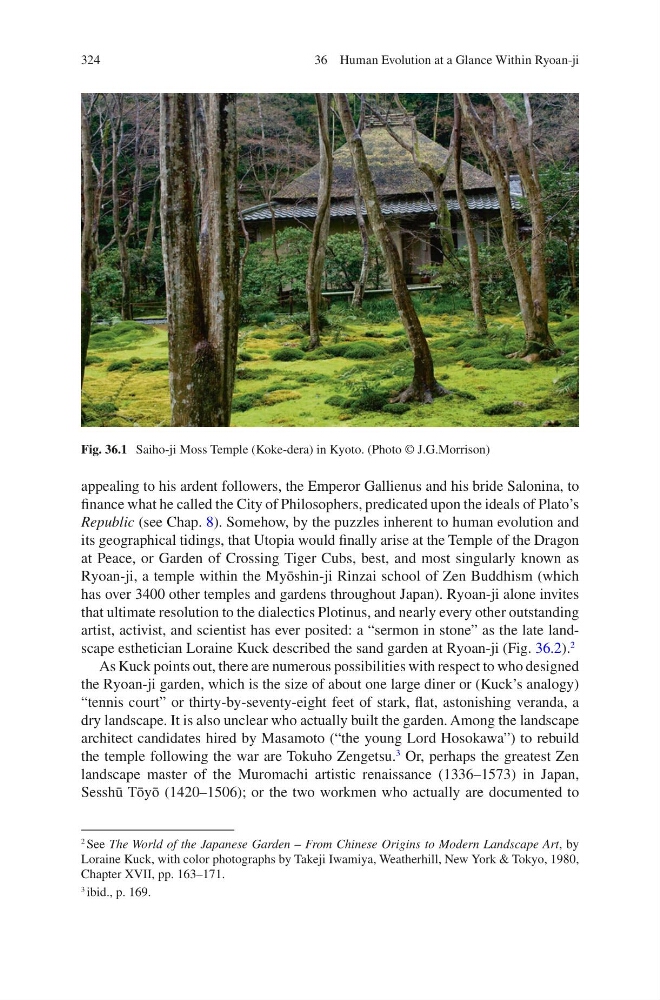
Fig. 36.1 Saiho-ji Moss Temple (Koke-dera) in Kyoto. (Photo © J.G.Morrison)
36 Human Evolution at a Glance Within Ryoan-ji
appealing to his ardent followers, the Emperor Gallienus and his bride Salonina, to
finance what he called the City of Philosophers, predicated upon the ideals of Plato’s
Republic (see Chap. 8). Somehow, by the puzzles inherent to human evolution and
its geographical tidings, that Utopia would finally arise at the Temple of the Dragon
at Peace, or Garden of Crossing Tiger Cubs, best, and most singularly known as
Ryoan-ji, a temple within the Myōshin-ji Rinzai school of Zen Buddhism (which
has over 3400 other temples and gardens throughout Japan). Ryoan-ji alone invites
that ultimate resolution to the dialectics Plotinus, and nearly every other outstanding
artist, activist, and scientist has ever posited: a “sermon in stone” as the late landscape esthetician Loraine Kuck described the sand garden at Ryoan-ji (Fig. 36.2).
2
As Kuck points out, there are numerous possibilities with respect to who designed
the Ryoan-ji garden, which is the size of about one large diner or (Kuck’s analogy)
“tennis court” or thirty-by-seventy-eight feet of stark, flat, astonishing veranda, a
dry landscape. It is also unclear who actually built the garden. Among the landscape
architect candidates hired by Masamoto (“the young Lord Hosokawa”) to rebuild
the temple following the war are Tokuho Zengetsu.
3
Or, perhaps the greatest Zen
landscape master of the Muromachi artistic renaissance (1336–1573) in Japan,
Sesshū Tōyō (1420–1506); or the two workmen who actually are documented to
2 See The World of the Japanese Garden – From Chinese Origins to Modern Landscape Art, by
Loraine Kuck, with color photographs by Takeji Iwamiya, Weatherhill, New York & Tokyo, 1980,
Chapter XVII, pp. 163–171.
3 ibid., p. 169.
Fig. 36.1 Saiho-ji Moss Temple (Koke-dera) in Kyoto. (Photo © J.G.Morrison)
36 Human Evolution at a Glance Within Ryoan-ji