

304
or geographic coordinate); an outcome that more readily acknowledges the bad
news, or what Tim Flannery and Peter Schouten described as “a gap in nature.”
Their particular volume is heartbreakingly insightful in terms of—to take the novel
coronavirus peak/flattening dichotomy—describing the “last record” of numerous
extinct species, like the Piopio of New Zealand, “last record: 1902.”
10
They make
clear that the islands in the Caribbean hotspot, following Columbus’ journey of
1492, resulted not only in decimated islands but a depauperate documentation, at
best: “Many species, such as the putative macaws of Hispaniola and curious nesophontes [also known as West Indies shrews, the last of their sole monotypic genus]
insectivores, vanished even before an adequate description was made of them. Many
of the native rodents, such as hutias and rice rats, did not merit the briefest description by the Spanish chroniclers….”
11
Even the pre-Spanish conquest indigenes had
their own mysterious Nahuatl taxonomies, including a “Mexican bull” which to this
day remains unidentified. Flannery and Schouten commence their chronicles with
the “Upland Moa” circa 1500, then leaping in 1681 to the Dodo, 1827—the “Gongan
Giant Skink,” all the way to the “Pink-headed Duck” in 1936, and the “Atitlán
Grebe” in 1989.
As for early New World zoological documentation, some emerged as the result
of Cortes’ troops’ observations (i.e., military explorer Bernal Diaz del Castillo’s
Historia verdadera de la conquista de la Nueva España, 1632), and then a record
10 A Gap in Nature -Discovering The World’s Extinct Animals, by Tim Flannery and Peter Schouten,
Text Publishing, Melbourne, Australia, 2001, pp. 102–103
11 ibid., p. xvii.
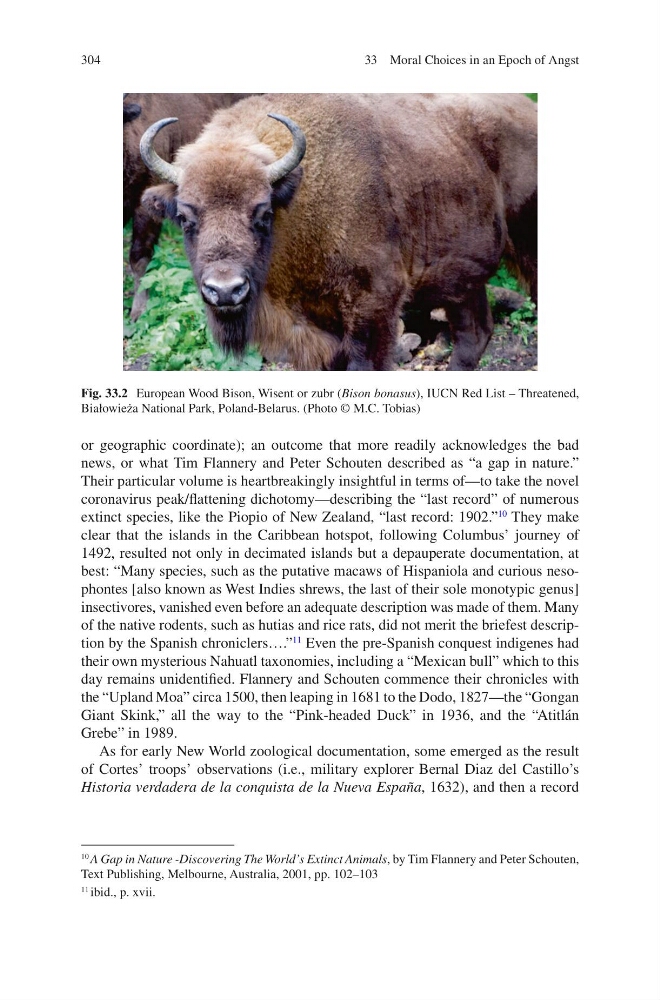
Fig. 33.2 European Wood Bison, Wisent or zubr (Bison bonasus), IUCN Red List – Threatened,
Białowieża National Park, Poland-Belarus. (Photo © M.C. Tobias)
33 Moral Choices in an Epoch of Angst
or geographic coordinate); an outcome that more readily acknowledges the bad
news, or what Tim Flannery and Peter Schouten described as “a gap in nature.”
Their particular volume is heartbreakingly insightful in terms of—to take the novel
coronavirus peak/flattening dichotomy—describing the “last record” of numerous
extinct species, like the Piopio of New Zealand, “last record: 1902.”
10
They make
clear that the islands in the Caribbean hotspot, following Columbus’ journey of
1492, resulted not only in decimated islands but a depauperate documentation, at
best: “Many species, such as the putative macaws of Hispaniola and curious nesophontes [also known as West Indies shrews, the last of their sole monotypic genus]
insectivores, vanished even before an adequate description was made of them. Many
of the native rodents, such as hutias and rice rats, did not merit the briefest description by the Spanish chroniclers….”
11
Even the pre-Spanish conquest indigenes had
their own mysterious Nahuatl taxonomies, including a “Mexican bull” which to this
day remains unidentified. Flannery and Schouten commence their chronicles with
the “Upland Moa” circa 1500, then leaping in 1681 to the Dodo, 1827—the “Gongan
Giant Skink,” all the way to the “Pink-headed Duck” in 1936, and the “Atitlán
Grebe” in 1989.
As for early New World zoological documentation, some emerged as the result
of Cortes’ troops’ observations (i.e., military explorer Bernal Diaz del Castillo’s
Historia verdadera de la conquista de la Nueva España, 1632), and then a record
10 A Gap in Nature -Discovering The World’s Extinct Animals, by Tim Flannery and Peter Schouten,
Text Publishing, Melbourne, Australia, 2001, pp. 102–103
11 ibid., p. xvii.
Fig. 33.2 European Wood Bison, Wisent or zubr (Bison bonasus), IUCN Red List – Threatened,
Białowieża National Park, Poland-Belarus. (Photo © M.C. Tobias)
33 Moral Choices in an Epoch of Angst