

287
Curiously, if an idea is equal to a catastrophe, then it is safe to assume that anything
can happen, and any variable is likely to act counter-predictively (free will/won’t).
Applied to evolution, catastrophe is more subjective than real, notwithstanding
its vivid apparel, all that most would prefer to avoid; and the famed critique in 1877
by geologist Clarence King, who would, 2 years later, become founding director of
the US Geological Survey, on the theories of Georges Cuvier, “Catastrophism and
Evolution”
3
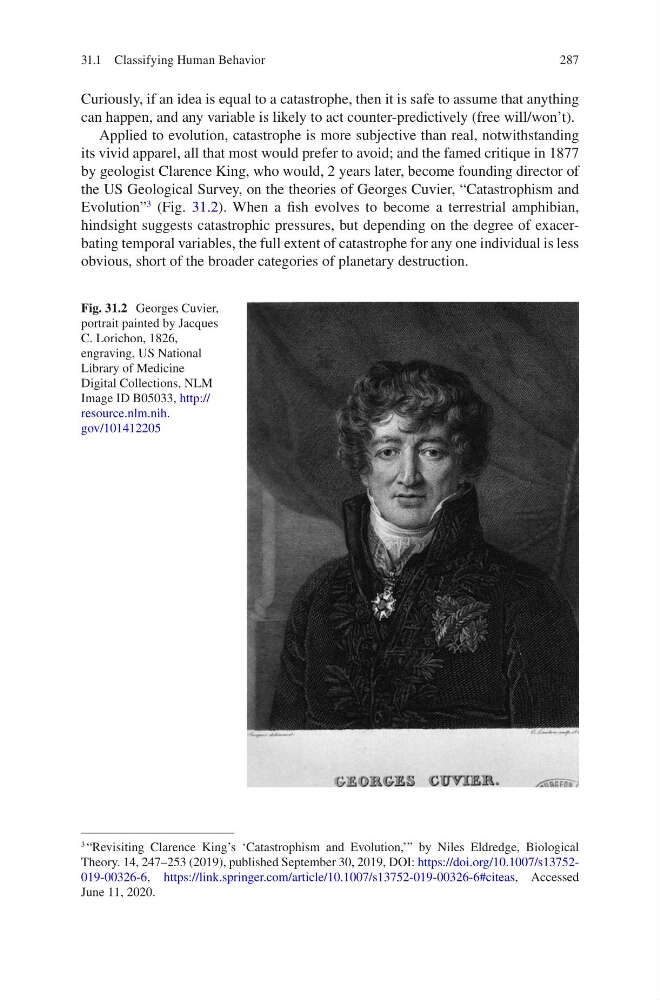
(Fig. 31.2). When a fish evolves to become a terrestrial amphibian,
hindsight suggests catastrophic pressures, but depending on the degree of exacerbating temporal variables, the full extent of catastrophe for any one individual is less
obvious, short of the broader categories of planetary destruction.
3 “Revisiting Clarence King’s ‘Catastrophism and Evolution,’” by Niles Eldredge, Biological
Theory. 14, 247–253 (2019), published September 30, 2019, DOI: https://doi.org/10.1007/s13752019-00326-6, https://link.springer.com/article/10.1007/s13752-019-00326-6#citeas, Accessed
June 11, 2020.
Fig. 31.2 Georges Cuvier,
portrait painted by Jacques
C. Lorichon, 1826,
engraving, US National
Library of Medicine
Digital Collections, NLM
Image ID B05033, http://
resource.nlm.nih.
gov/101412205
31.1 Classifying Human Behavior
Curiously, if an idea is equal to a catastrophe, then it is safe to assume that anything
can happen, and any variable is likely to act counter-predictively (free will/won’t).
Applied to evolution, catastrophe is more subjective than real, notwithstanding
its vivid apparel, all that most would prefer to avoid; and the famed critique in 1877
by geologist Clarence King, who would, 2 years later, become founding director of
the US Geological Survey, on the theories of Georges Cuvier, “Catastrophism and
Evolution”
3
(Fig. 31.2). When a fish evolves to become a terrestrial amphibian,
hindsight suggests catastrophic pressures, but depending on the degree of exacerbating temporal variables, the full extent of catastrophe for any one individual is less
obvious, short of the broader categories of planetary destruction.
3 “Revisiting Clarence King’s ‘Catastrophism and Evolution,’” by Niles Eldredge, Biological
Theory. 14, 247–253 (2019), published September 30, 2019, DOI: https://doi.org/10.1007/s13752019-00326-6, https://link.springer.com/article/10.1007/s13752-019-00326-6#citeas, Accessed
June 11, 2020.
Fig. 31.2 Georges Cuvier,
portrait painted by Jacques
C. Lorichon, 1826,
engraving, US National
Library of Medicine
Digital Collections, NLM
Image ID B05033, http://
resource.nlm.nih.
gov/101412205
31.1 Classifying Human Behavior