

286
While the formal theory of mathematical catastrophe is often credited to the
French topologist René Frédéric Thom (1923–2002), he, in turn, borrowed from the
basic nomenclature of analytic geometry—cones, arcs, curves—as well as classical
mechanics and symplectic surfaces, a combined set of assumptions that were later
enshrined as an actual theorem (the Thom Conjecture).
2
Basically, when any sudden
shift in a normal system with dependent or independent variables occurs, one can
conceptually think of it as a catastrophic change; the rate transition can be measured, and one can chart its physical pathways, in physics, biology, or in the pure
languages of mathematics, where the physical is simply a representational idea.
2 Morgan, John; Szabó, Zoltán; Taubes, Clifford (1996). “A product formula for the Seiberg-Witten
invariants and the generalized Thom conjecture”. Journal of Differential Geometry. 44 (4): 706–
788. doi: https://doi.org/10.4310/jdg/1214459408. MR 1438191. With the onset of the remarkable
advent of the Bereitschaftspotential (readiness potential), to be discussed later on – a combining of
the principles of electromyograms, electroencephalograms, event-related potentials in neurophysiology, the “computer of average transients,” and other forms of brain research, it would be determined that, for example, if one committed suicide with a gun (effectively), you would be dead at
least 2/3rds of a second before your body even realized it. Hence, a natural, overwhelming catastrophe – like an oncoming asteroid, or massive tsunami – would probably, in essence, be painless.
See, Lavazza, Andrea; De Caro, Mario (2009). “Not so Fast. On Some Bold Neuroscientific Claims
Concerning Human Agency”. Neuroethics. 3: 23–41. doi: https://doi.org/10.1007/s12152-0099053-9. See also Kornhuber, H.H.; Deecke, L. (1990). Readiness for movement – The
Bereitschaftspotential-Story, Current Contents Life Sciences 33: 14.
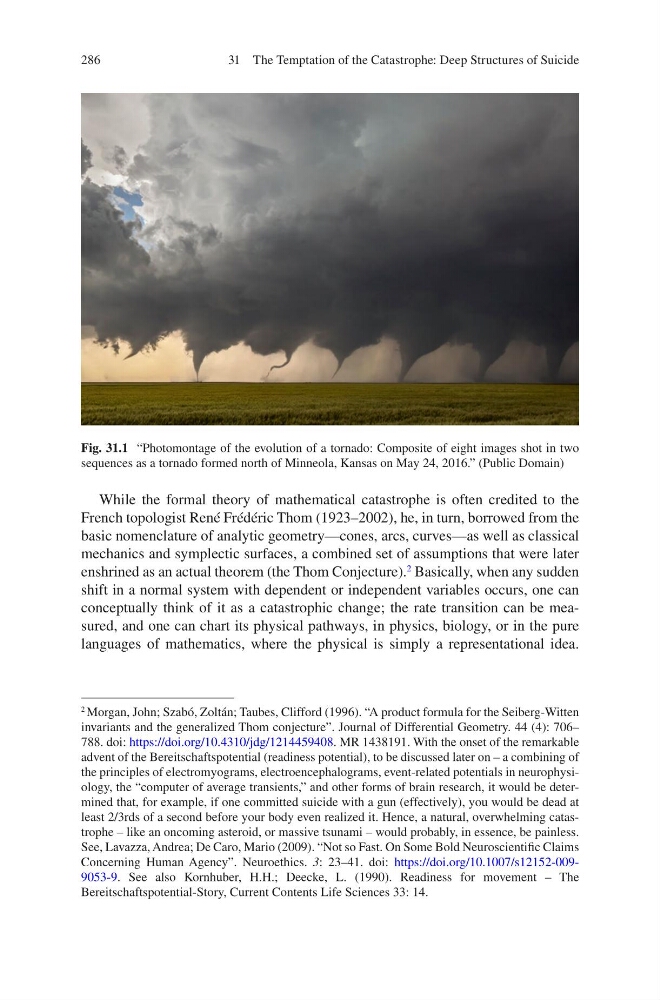
Fig. 31.1 “Photomontage of the evolution of a tornado: Composite of eight images shot in two
sequences as a tornado formed north of Minneola, Kansas on May 24, 2016.” (Public Domain)
31 The Temptation of the Catastrophe: Deep Structures of Suicide
While the formal theory of mathematical catastrophe is often credited to the
French topologist René Frédéric Thom (1923–2002), he, in turn, borrowed from the
basic nomenclature of analytic geometry—cones, arcs, curves—as well as classical
mechanics and symplectic surfaces, a combined set of assumptions that were later
enshrined as an actual theorem (the Thom Conjecture).
2
Basically, when any sudden
shift in a normal system with dependent or independent variables occurs, one can
conceptually think of it as a catastrophic change; the rate transition can be measured, and one can chart its physical pathways, in physics, biology, or in the pure
languages of mathematics, where the physical is simply a representational idea.
2 Morgan, John; Szabó, Zoltán; Taubes, Clifford (1996). “A product formula for the Seiberg-Witten
invariants and the generalized Thom conjecture”. Journal of Differential Geometry. 44 (4): 706–
788. doi: https://doi.org/10.4310/jdg/1214459408. MR 1438191. With the onset of the remarkable
advent of the Bereitschaftspotential (readiness potential), to be discussed later on – a combining of
the principles of electromyograms, electroencephalograms, event-related potentials in neurophysiology, the “computer of average transients,” and other forms of brain research, it would be determined that, for example, if one committed suicide with a gun (effectively), you would be dead at
least 2/3rds of a second before your body even realized it. Hence, a natural, overwhelming catastrophe – like an oncoming asteroid, or massive tsunami – would probably, in essence, be painless.
See, Lavazza, Andrea; De Caro, Mario (2009). “Not so Fast. On Some Bold Neuroscientific Claims
Concerning Human Agency”. Neuroethics. 3: 23–41. doi: https://doi.org/10.1007/s12152-0099053-9. See also Kornhuber, H.H.; Deecke, L. (1990). Readiness for movement – The
Bereitschaftspotential-Story, Current Contents Life Sciences 33: 14.
Fig. 31.1 “Photomontage of the evolution of a tornado: Composite of eight images shot in two
sequences as a tornado formed north of Minneola, Kansas on May 24, 2016.” (Public Domain)
31 The Temptation of the Catastrophe: Deep Structures of Suicide