

27.3.5 Termites: A Complex Microbial Community
Termites are detritivore insects with a complex social cast structure that originated in
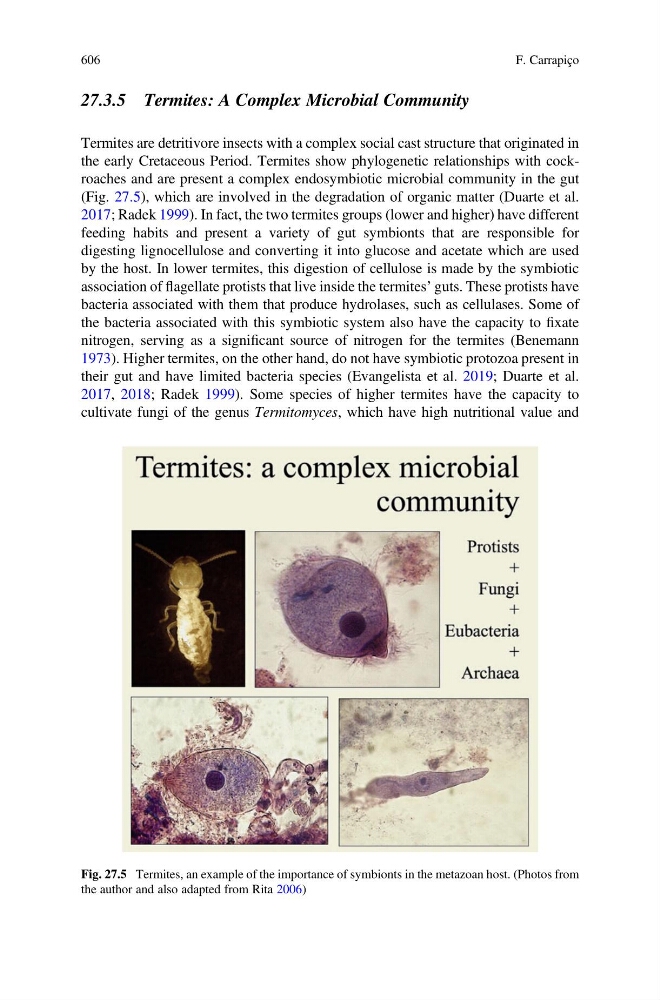
the early Cretaceous Period. Termites show phylogenetic relationships with cockroaches and are present a complex endosymbiotic microbial community in the gut
(Fig. 27.5), which are involved in the degradation of organic matter (Duarte et al.
2017; Radek 1999). In fact, the two termites groups (lower and higher) have different
feeding habits and present a variety of gut symbionts that are responsible for
digesting lignocellulose and converting it into glucose and acetate which are used
by the host. In lower termites, this digestion of cellulose is made by the symbiotic
association of flagellate protists that live inside the termites’ guts. These protists have
bacteria associated with them that produce hydrolases, such as cellulases. Some of
the bacteria associated with this symbiotic system also have the capacity to fixate
nitrogen, serving as a significant source of nitrogen for the termites (Benemann
1973). Higher termites, on the other hand, do not have symbiotic protozoa present in
their gut and have limited bacteria species (Evangelista et al. 2019; Duarte et al.
2017, 2018; Radek 1999). Some species of higher termites have the capacity to
cultivate fungi of the genus Termitomyces, which have high nutritional value and
Fig. 27.5 Termites, an example of the importance of symbionts in the metazoan host. (Photos from
the author and also adapted from Rita 2006)
606
F. Carrapiço