

26.8.1 Endosymbiotic Sulfur-Oxidizing Bacteria
There are interesting examples of host animals having developed endosymbiotic
associations with chemoautrophic microorganisms. One of these is Riftia pachyptila,
which is a species of vestimentiferan tubeworm that lives on the sea floor near
hydrothermal vents. The Riftia depend upon receiving fixed carbon that is supplied
by endosymbiotic sulfur-oxidizing bacteria housed in an organ called a trophosome.
Juvenile Riftia accumulate these bacteria from the water by ingestion. An ensuing
process similar to infection results in the bacteria becoming housed intracellularly
within bacteriosomes. The trophosome arises from the animals midgut and the
remainder of the worms intestinal system is absent in adults. Several species of
endosymbiont bacteria have this type of association with Riftia. These symbionts all
are members of the phylum proteobacteria, some belonging to the class
gammaproteobacteria and others belonging to the class epsilonproteobacteria.
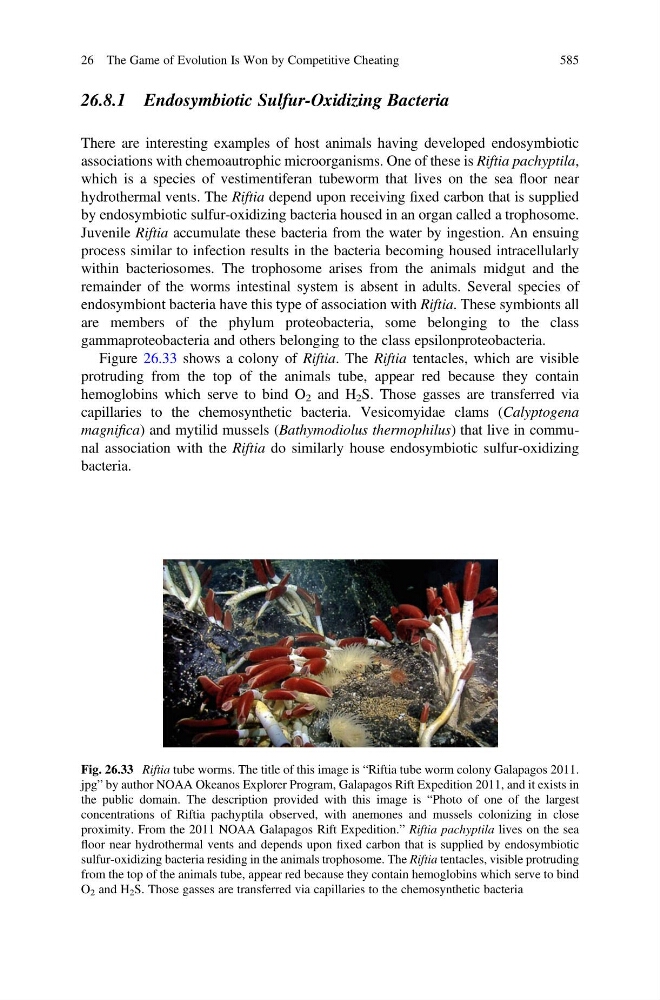
Figure 26.33 shows a colony of Riftia. The Riftia tentacles, which are visible
protruding from the top of the animals tube, appear red because they contain
hemoglobins which serve to bind O 2 and H 2 S. Those gasses are transferred via
capillaries to the chemosynthetic bacteria. Vesicomyidae clams (Calyptogena
magnifica) and mytilid mussels (Bathymodiolus thermophilus) that live in communal association with the Riftia do similarly house endosymbiotic sulfur-oxidizing
bacteria.
Fig. 26.33 Riftia tube worms. The title of this image is “Riftia tube worm colony Galapagos 2011.
jpg” by author NOAA Okeanos Explorer Program, Galapagos Rift Expedition 2011, and it exists in
the public domain. The description provided with this image is “Photo of one of the largest
concentrations of Riftia pachyptila observed, with anemones and mussels colonizing in close
proximity. From the 2011 NOAA Galapagos Rift Expedition.” Riftia pachyptila lives on the sea
floor near hydrothermal vents and depends upon fixed carbon that is supplied by endosymbiotic
sulfur-oxidizing bacteria residing in the animals trophosome. The Riftia tentacles, visible protruding
from the top of the animals tube, appear red because they contain hemoglobins which serve to bind
O 2 and H 2 S. Those gasses are transferred via capillaries to the chemosynthetic bacteria
26 The Game of Evolution Is Won by Competitive Cheating
585
There are interesting examples of host animals having developed endosymbiotic
associations with chemoautrophic microorganisms. One of these is Riftia pachyptila,
which is a species of vestimentiferan tubeworm that lives on the sea floor near
hydrothermal vents. The Riftia depend upon receiving fixed carbon that is supplied
by endosymbiotic sulfur-oxidizing bacteria housed in an organ called a trophosome.
Juvenile Riftia accumulate these bacteria from the water by ingestion. An ensuing
process similar to infection results in the bacteria becoming housed intracellularly
within bacteriosomes. The trophosome arises from the animals midgut and the
remainder of the worms intestinal system is absent in adults. Several species of
endosymbiont bacteria have this type of association with Riftia. These symbionts all
are members of the phylum proteobacteria, some belonging to the class
gammaproteobacteria and others belonging to the class epsilonproteobacteria.
Figure 26.33 shows a colony of Riftia. The Riftia tentacles, which are visible
protruding from the top of the animals tube, appear red because they contain
hemoglobins which serve to bind O 2 and H 2 S. Those gasses are transferred via
capillaries to the chemosynthetic bacteria. Vesicomyidae clams (Calyptogena
magnifica) and mytilid mussels (Bathymodiolus thermophilus) that live in communal association with the Riftia do similarly house endosymbiotic sulfur-oxidizing
bacteria.
Fig. 26.33 Riftia tube worms. The title of this image is “Riftia tube worm colony Galapagos 2011.
jpg” by author NOAA Okeanos Explorer Program, Galapagos Rift Expedition 2011, and it exists in
the public domain. The description provided with this image is “Photo of one of the largest
concentrations of Riftia pachyptila observed, with anemones and mussels colonizing in close
proximity. From the 2011 NOAA Galapagos Rift Expedition.” Riftia pachyptila lives on the sea
floor near hydrothermal vents and depends upon fixed carbon that is supplied by endosymbiotic
sulfur-oxidizing bacteria residing in the animals trophosome. The Riftia tentacles, visible protruding
from the top of the animals tube, appear red because they contain hemoglobins which serve to bind
O 2 and H 2 S. Those gasses are transferred via capillaries to the chemosynthetic bacteria
26 The Game of Evolution Is Won by Competitive Cheating
585