

terrestial plant families. Thus, it would seem that this type of symbiosis which once
represented evolutionary cheating has become tremendously successful. In contrast
to the popularity of arbuscular mycorrhizae, ectomycorrhizae may form with only a
small percentage of plants.
26.8 Gastrointestinal Symbiont Microbes
Animals have gastrointestinal tracts where all of us maintain symbiont microbes. A
few of those microbes are endosymbionts housed intracellularly within specialized
tissues and organs. Most of the gastrointestinal symbiont microbes reside in the
lumen, and often those symbionts are part of a biofilm.
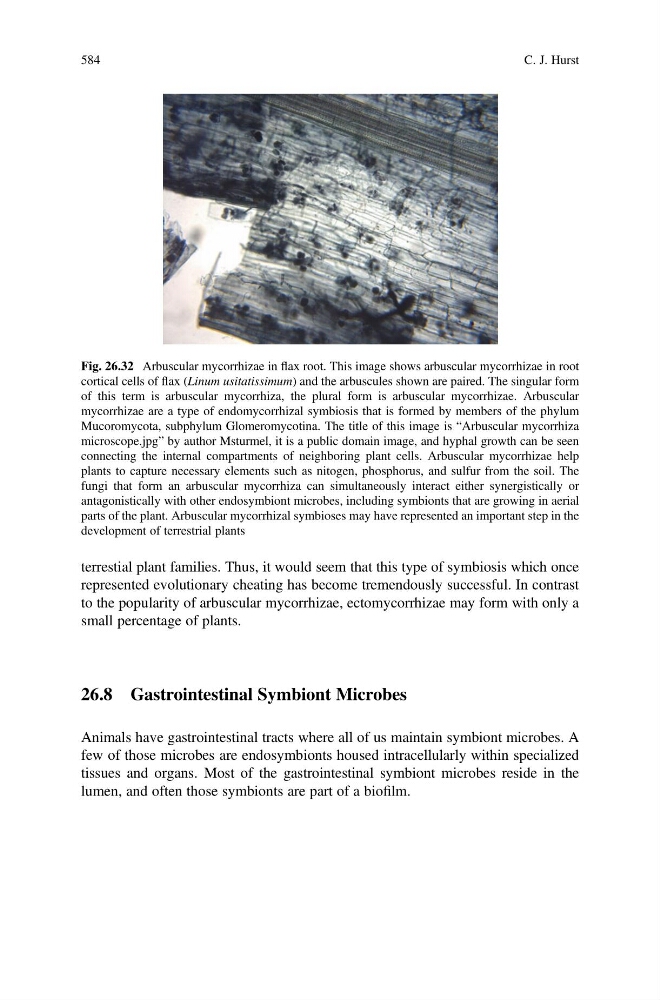
Fig. 26.32 Arbuscular mycorrhizae in flax root. This image shows arbuscular mycorrhizae in root
cortical cells of flax (Linum usitatissimum) and the arbuscules shown are paired. The singular form
of this term is arbuscular mycorrhiza, the plural form is arbuscular mycorrhizae. Arbuscular
mycorrhizae are a type of endomycorrhizal symbiosis that is formed by members of the phylum
Mucoromycota, subphylum Glomeromycotina. The title of this image is “Arbuscular mycorrhiza
microscope.jpg” by author Msturmel, it is a public domain image, and hyphal growth can be seen
connecting the internal compartments of neighboring plant cells. Arbuscular mycorrhizae help
plants to capture necessary elements such as nitogen, phosphorus, and sulfur from the soil. The
fungi that form an arbuscular mycorrhiza can simultaneously interact either synergistically or
antagonistically with other endosymbiont microbes, including symbionts that are growing in aerial
parts of the plant. Arbuscular mycorrhizal symbioses may have represented an important step in the
development of terrestrial plants
584
C. J. Hurst
represented evolutionary cheating has become tremendously successful. In contrast
to the popularity of arbuscular mycorrhizae, ectomycorrhizae may form with only a
small percentage of plants.
26.8 Gastrointestinal Symbiont Microbes
Animals have gastrointestinal tracts where all of us maintain symbiont microbes. A
few of those microbes are endosymbionts housed intracellularly within specialized
tissues and organs. Most of the gastrointestinal symbiont microbes reside in the
lumen, and often those symbionts are part of a biofilm.
Fig. 26.32 Arbuscular mycorrhizae in flax root. This image shows arbuscular mycorrhizae in root
cortical cells of flax (Linum usitatissimum) and the arbuscules shown are paired. The singular form
of this term is arbuscular mycorrhiza, the plural form is arbuscular mycorrhizae. Arbuscular
mycorrhizae are a type of endomycorrhizal symbiosis that is formed by members of the phylum
Mucoromycota, subphylum Glomeromycotina. The title of this image is “Arbuscular mycorrhiza
microscope.jpg” by author Msturmel, it is a public domain image, and hyphal growth can be seen
connecting the internal compartments of neighboring plant cells. Arbuscular mycorrhizae help
plants to capture necessary elements such as nitogen, phosphorus, and sulfur from the soil. The
fungi that form an arbuscular mycorrhiza can simultaneously interact either synergistically or
antagonistically with other endosymbiont microbes, including symbionts that are growing in aerial
parts of the plant. Arbuscular mycorrhizal symbioses may have represented an important step in the
development of terrestrial plants
584
C. J. Hurst