

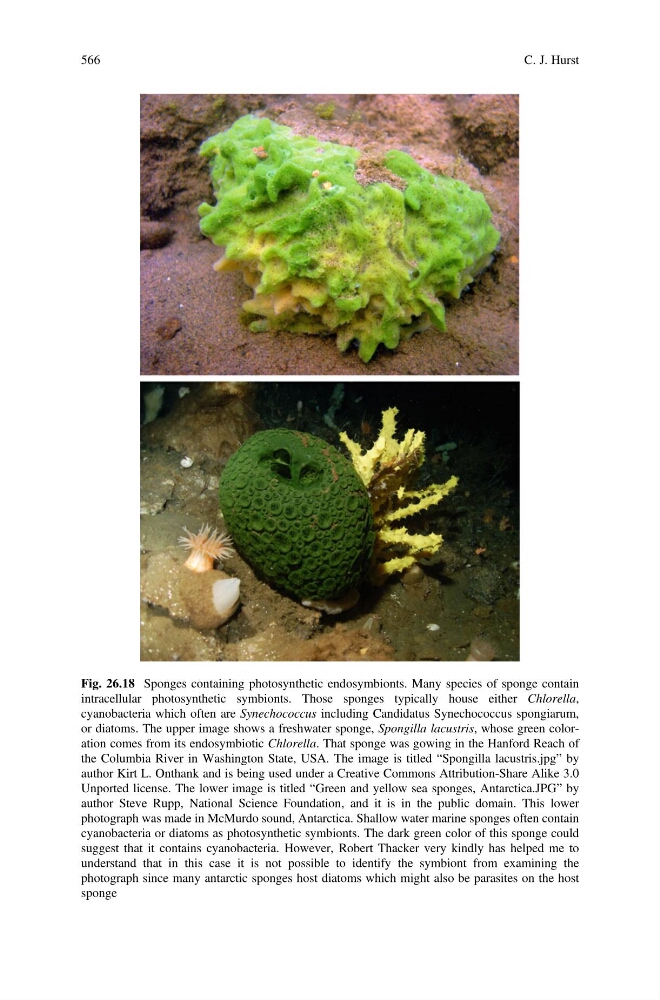
Fig. 26.18 Sponges containing photosynthetic endosymbionts. Many species of sponge contain
intracellular photosynthetic symbionts. Those sponges typically house either Chlorella,
cyanobacteria which often are Synechococcus including Candidatus Synechococcus spongiarum,
or diatoms. The upper image shows a freshwater sponge, Spongilla lacustris, whose green coloration comes from its endosymbiotic Chlorella. That sponge was gowing in the Hanford Reach of
the Columbia River in Washington State, USA. The image is titled “Spongilla lacustris.jpg” by
author Kirt L. Onthank and is being used under a Creative Commons Attribution-Share Alike 3.0
Unported license. The lower image is titled “Green and yellow sea sponges, Antarctica.JPG” by
author Steve Rupp, National Science Foundation, and it is in the public domain. This lower
photograph was made in McMurdo sound, Antarctica. Shallow water marine sponges often contain
cyanobacteria or diatoms as photosynthetic symbionts. The dark green color of this sponge could
suggest that it contains cyanobacteria. However, Robert Thacker very kindly has helped me to
understand that in this case it is not possible to identify the symbiont from examining the
photograph since many antarctic sponges host diatoms which might also be parasites on the host
sponge
566
C. J. Hurst
intracellular photosynthetic symbionts. Those sponges typically house either Chlorella,
cyanobacteria which often are Synechococcus including Candidatus Synechococcus spongiarum,
or diatoms. The upper image shows a freshwater sponge, Spongilla lacustris, whose green coloration comes from its endosymbiotic Chlorella. That sponge was gowing in the Hanford Reach of
the Columbia River in Washington State, USA. The image is titled “Spongilla lacustris.jpg” by
author Kirt L. Onthank and is being used under a Creative Commons Attribution-Share Alike 3.0
Unported license. The lower image is titled “Green and yellow sea sponges, Antarctica.JPG” by
author Steve Rupp, National Science Foundation, and it is in the public domain. This lower
photograph was made in McMurdo sound, Antarctica. Shallow water marine sponges often contain
cyanobacteria or diatoms as photosynthetic symbionts. The dark green color of this sponge could
suggest that it contains cyanobacteria. However, Robert Thacker very kindly has helped me to
understand that in this case it is not possible to identify the symbiont from examining the
photograph since many antarctic sponges host diatoms which might also be parasites on the host
sponge
566
C. J. Hurst