

may be acquired from the environment. The Chlorella are endosymbiotically present
and viably reside individually within symbiosomes. These symbiosomes are intracellular vacuoles which protect the algae from being enzymatically attacked by the
host cell. For this association, the symbiosomes are located within the endodermal
epithelial cells of the host. Each of those endodermal epithelial cells may contain
approximately 20–40 symbiosomes, and each symbiosome typically contains a
single Chlorella cell. The algae provide products of photosynthesis in exchange
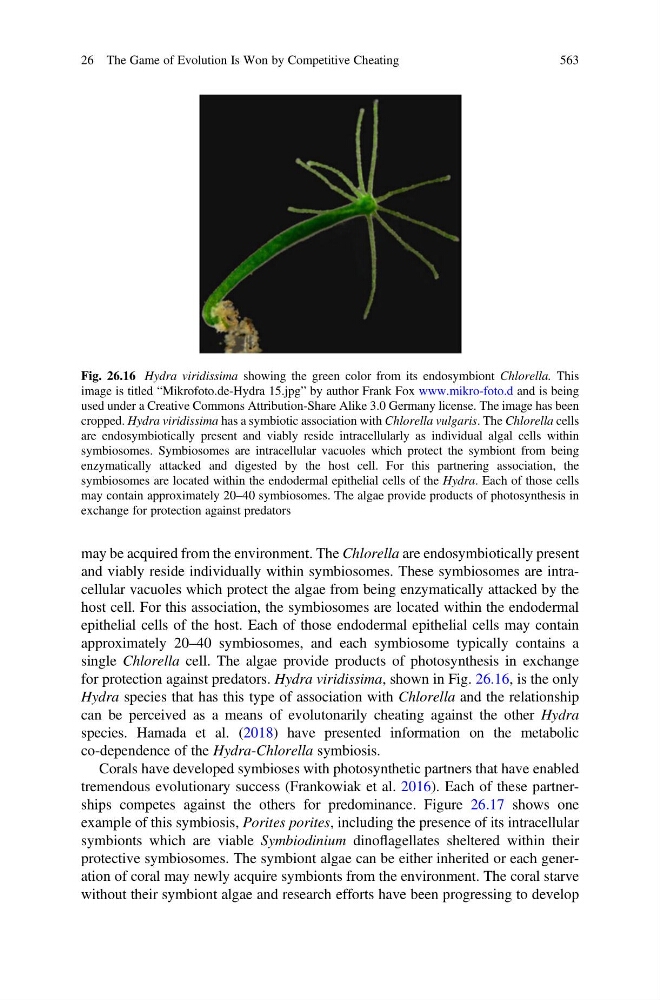
for protection against predators. Hydra viridissima, shown in Fig. 26.16, is the only
Hydra species that has this type of association with Chlorella and the relationship
can be perceived as a means of evolutonarily cheating against the other Hydra
species. Hamada et al. (2018) have presented information on the metabolic
co-dependence of the Hydra-Chlorella symbiosis.
Corals have developed symbioses with photosynthetic partners that have enabled
tremendous evolutionary success (Frankowiak et al. 2016). Each of these partnerships competes against the others for predominance. Figure 26.17 shows one
example of this symbiosis, Porites porites, including the presence of its intracellular
symbionts which are viable Symbiodinium dinoflagellates sheltered within their
protective symbiosomes. The symbiont algae can be either inherited or each generation of coral may newly acquire symbionts from the environment. The coral starve
without their symbiont algae and research efforts have been progressing to develop
Fig. 26.16 Hydra viridissima showing the green color from its endosymbiont Chlorella. This
image is titled “Mikrofoto.de-Hydra 15.jpg” by author Frank Fox www.mikro-foto.d and is being
used under a Creative Commons Attribution-Share Alike 3.0 Germany license. The image has been
cropped. Hydra viridissima has a symbiotic association with Chlorella vulgaris. The Chlorella cells
are endosymbiotically present and viably reside intracellularly as individual algal cells within
symbiosomes. Symbiosomes are intracellular vacuoles which protect the symbiont from being
enzymatically attacked and digested by the host cell. For this partnering association, the
symbiosomes are located within the endodermal epithelial cells of the Hydra. Each of those cells
may contain approximately 20–40 symbiosomes. The algae provide products of photosynthesis in
exchange for protection against predators
26 The Game of Evolution Is Won by Competitive Cheating
563
and viably reside individually within symbiosomes. These symbiosomes are intracellular vacuoles which protect the algae from being enzymatically attacked by the
host cell. For this association, the symbiosomes are located within the endodermal
epithelial cells of the host. Each of those endodermal epithelial cells may contain
approximately 20–40 symbiosomes, and each symbiosome typically contains a
single Chlorella cell. The algae provide products of photosynthesis in exchange
for protection against predators. Hydra viridissima, shown in Fig. 26.16, is the only
Hydra species that has this type of association with Chlorella and the relationship
can be perceived as a means of evolutonarily cheating against the other Hydra
species. Hamada et al. (2018) have presented information on the metabolic
co-dependence of the Hydra-Chlorella symbiosis.
Corals have developed symbioses with photosynthetic partners that have enabled
tremendous evolutionary success (Frankowiak et al. 2016). Each of these partnerships competes against the others for predominance. Figure 26.17 shows one
example of this symbiosis, Porites porites, including the presence of its intracellular
symbionts which are viable Symbiodinium dinoflagellates sheltered within their
protective symbiosomes. The symbiont algae can be either inherited or each generation of coral may newly acquire symbionts from the environment. The coral starve
without their symbiont algae and research efforts have been progressing to develop
Fig. 26.16 Hydra viridissima showing the green color from its endosymbiont Chlorella. This
image is titled “Mikrofoto.de-Hydra 15.jpg” by author Frank Fox www.mikro-foto.d and is being
used under a Creative Commons Attribution-Share Alike 3.0 Germany license. The image has been
cropped. Hydra viridissima has a symbiotic association with Chlorella vulgaris. The Chlorella cells
are endosymbiotically present and viably reside intracellularly as individual algal cells within
symbiosomes. Symbiosomes are intracellular vacuoles which protect the symbiont from being
enzymatically attacked and digested by the host cell. For this partnering association, the
symbiosomes are located within the endodermal epithelial cells of the Hydra. Each of those cells
may contain approximately 20–40 symbiosomes. The algae provide products of photosynthesis in
exchange for protection against predators
26 The Game of Evolution Is Won by Competitive Cheating
563