

internalized algae cells then persisted in growing, dividing and functioning within
the fungal hyphae. Perhaps lichens will follow this evolutionary path as a way of
changing their competitive balance. Alternatively, the algal and fungal symbionts
that form lichens may have tried internalization and found the idea to not have
offered a competitive advantage. The consequences of an unsuccessful effort at
evolutionary cheating likely would be a waste of energy and could be even worse
than never having tried.
26.5.2 Mutualistic Associations by Which Animals Have
Acquired Photosynthetic Symbionts
There are two approaches which animals have used to cheat the system by becoming
photosynthetic. One of these approaches is to establish an intracellular symbiosis
with intact, viable algal cells which the animals either have inherited or acquired by
ingestion. The other approach is termed kleptoplasty, a process by which the animals
ingest algae and then temporarily retain only the chloroplasts in a functional form.
Hydra viridissima has a symbiotic association with Chlorella vulgaris. The
symbiont algae generally are inherited although, at least experimentally, they also
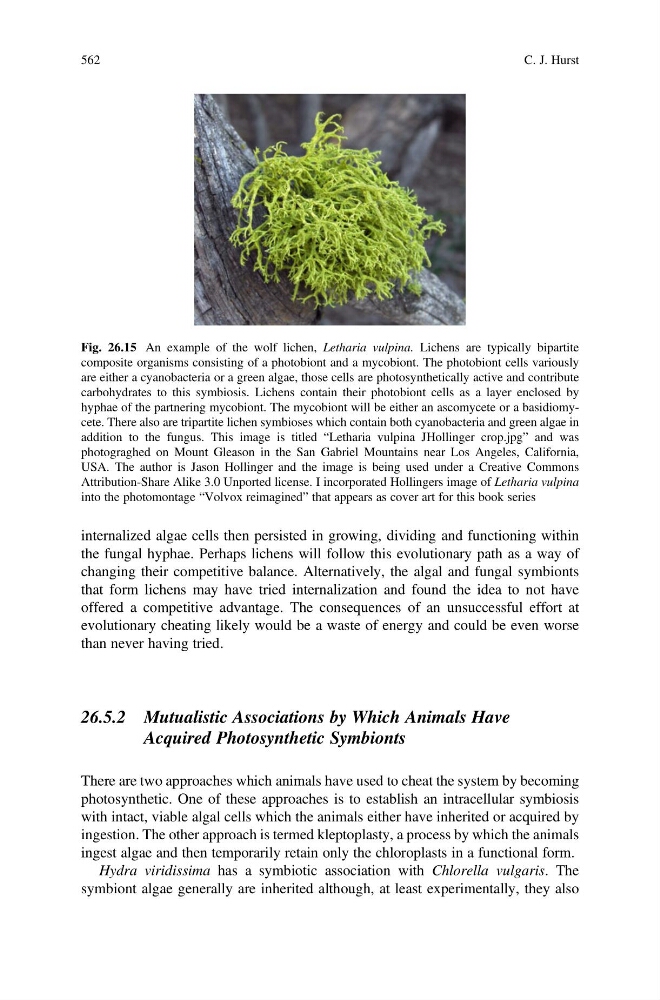
Fig. 26.15 An example of the wolf lichen, Letharia vulpina. Lichens are typically bipartite
composite organisms consisting of a photobiont and a mycobiont. The photobiont cells variously
are either a cyanobacteria or a green algae, those cells are photosynthetically active and contribute
carbohydrates to this symbiosis. Lichens contain their photobiont cells as a layer enclosed by
hyphae of the partnering mycobiont. The mycobiont will be either an ascomycete or a basidiomycete. There also are tripartite lichen symbioses which contain both cyanobacteria and green algae in
addition to the fungus. This image is titled “Letharia vulpina JHollinger crop.jpg” and was
photograghed on Mount Gleason in the San Gabriel Mountains near Los Angeles, California,
USA. The author is Jason Hollinger and the image is being used under a Creative Commons
Attribution-Share Alike 3.0 Unported license. I incorporated Hollingers image of Letharia vulpina
into the photomontage “Volvox reimagined” that appears as cover art for this book series
562
C. J. Hurst
the fungal hyphae. Perhaps lichens will follow this evolutionary path as a way of
changing their competitive balance. Alternatively, the algal and fungal symbionts
that form lichens may have tried internalization and found the idea to not have
offered a competitive advantage. The consequences of an unsuccessful effort at
evolutionary cheating likely would be a waste of energy and could be even worse
than never having tried.
26.5.2 Mutualistic Associations by Which Animals Have
Acquired Photosynthetic Symbionts
There are two approaches which animals have used to cheat the system by becoming
photosynthetic. One of these approaches is to establish an intracellular symbiosis
with intact, viable algal cells which the animals either have inherited or acquired by
ingestion. The other approach is termed kleptoplasty, a process by which the animals
ingest algae and then temporarily retain only the chloroplasts in a functional form.
Hydra viridissima has a symbiotic association with Chlorella vulgaris. The
symbiont algae generally are inherited although, at least experimentally, they also
Fig. 26.15 An example of the wolf lichen, Letharia vulpina. Lichens are typically bipartite
composite organisms consisting of a photobiont and a mycobiont. The photobiont cells variously
are either a cyanobacteria or a green algae, those cells are photosynthetically active and contribute
carbohydrates to this symbiosis. Lichens contain their photobiont cells as a layer enclosed by
hyphae of the partnering mycobiont. The mycobiont will be either an ascomycete or a basidiomycete. There also are tripartite lichen symbioses which contain both cyanobacteria and green algae in
addition to the fungus. This image is titled “Letharia vulpina JHollinger crop.jpg” and was
photograghed on Mount Gleason in the San Gabriel Mountains near Los Angeles, California,
USA. The author is Jason Hollinger and the image is being used under a Creative Commons
Attribution-Share Alike 3.0 Unported license. I incorporated Hollingers image of Letharia vulpina
into the photomontage “Volvox reimagined” that appears as cover art for this book series
562
C. J. Hurst