

down another pathway of cheating. The result of that indigestion may be life as an
organelle.
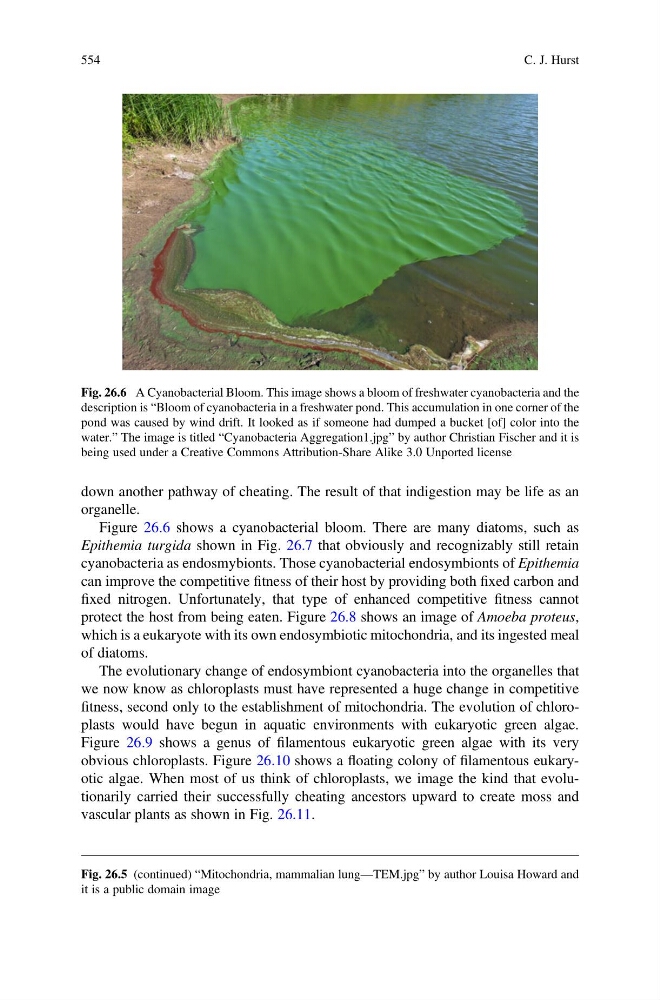
Figure 26.6 shows a cyanobacterial bloom. There are many diatoms, such as
Epithemia turgida shown in Fig. 26.7 that obviously and recognizably still retain
cyanobacteria as endosmybionts. Those cyanobacterial endosymbionts of Epithemia
can improve the competitive fitness of their host by providing both fixed carbon and
fixed nitrogen. Unfortunately, that type of enhanced competitive fitness cannot
protect the host from being eaten. Figure 26.8 shows an image of Amoeba proteus,
which is a eukaryote with its own endosymbiotic mitochondria, and its ingested meal
of diatoms.
The evolutionary change of endosymbiont cyanobacteria into the organelles that
we now know as chloroplasts must have represented a huge change in competitive
fitness, second only to the establishment of mitochondria. The evolution of chloroplasts would have begun in aquatic environments with eukaryotic green algae.
Figure 26.9 shows a genus of filamentous eukaryotic green algae with its very
obvious chloroplasts. Figure 26.10 shows a floating colony of filamentous eukaryotic algae. When most of us think of chloroplasts, we image the kind that evolutionarily carried their successfully cheating ancestors upward to create moss and
vascular plants as shown in Fig. 26.11.
Fig. 26.5 (continued) “Mitochondria, mammalian lung—TEM.jpg” by author Louisa Howard and
it is a public domain image
Fig. 26.6 A Cyanobacterial Bloom. This image shows a bloom of freshwater cyanobacteria and the
description is “Bloom of cyanobacteria in a freshwater pond. This accumulation in one corner of the
pond was caused by wind drift. It looked as if someone had dumped a bucket [of] color into the
water.” The image is titled “Cyanobacteria Aggregation1.jpg” by author Christian Fischer and it is
being used under a Creative Commons Attribution-Share Alike 3.0 Unported license
554
C. J. Hurst
organelle.
Figure 26.6 shows a cyanobacterial bloom. There are many diatoms, such as
Epithemia turgida shown in Fig. 26.7 that obviously and recognizably still retain
cyanobacteria as endosmybionts. Those cyanobacterial endosymbionts of Epithemia
can improve the competitive fitness of their host by providing both fixed carbon and
fixed nitrogen. Unfortunately, that type of enhanced competitive fitness cannot
protect the host from being eaten. Figure 26.8 shows an image of Amoeba proteus,
which is a eukaryote with its own endosymbiotic mitochondria, and its ingested meal
of diatoms.
The evolutionary change of endosymbiont cyanobacteria into the organelles that
we now know as chloroplasts must have represented a huge change in competitive
fitness, second only to the establishment of mitochondria. The evolution of chloroplasts would have begun in aquatic environments with eukaryotic green algae.
Figure 26.9 shows a genus of filamentous eukaryotic green algae with its very
obvious chloroplasts. Figure 26.10 shows a floating colony of filamentous eukaryotic algae. When most of us think of chloroplasts, we image the kind that evolutionarily carried their successfully cheating ancestors upward to create moss and
vascular plants as shown in Fig. 26.11.
Fig. 26.5 (continued) “Mitochondria, mammalian lung—TEM.jpg” by author Louisa Howard and
it is a public domain image
Fig. 26.6 A Cyanobacterial Bloom. This image shows a bloom of freshwater cyanobacteria and the
description is “Bloom of cyanobacteria in a freshwater pond. This accumulation in one corner of the
pond was caused by wind drift. It looked as if someone had dumped a bucket [of] color into the
water.” The image is titled “Cyanobacteria Aggregation1.jpg” by author Christian Fischer and it is
being used under a Creative Commons Attribution-Share Alike 3.0 Unported license
554
C. J. Hurst