

in which one member only takes and does not give, and even destroys. Frank (1877)
believed that his term symbiosis, which he actually stated in German as
‘Symbiotismus’, would represent the highest level of association of two beings,
with their cohabitation relationship being a connected existance that provides
one-of-a-kind services to each other. Frank believed that in such a relationship the
two organisms would seem to lose the concept of being separate individuals. Frank
suggested that the term ‘Homobium’ could be used to describe the combination of
those two symbiotic organisms.
In reality, a species usually exists in close symbiosis with more than one additional species, and so we need to think of the homobium as being a partnering of
more that just two species. We should understand that evolution acts not upon an
individual species, but upon the homobium of a host and its associated symbionts.
I have summarized the early history of philosophy and research into symbiosis as
the topic of a companion essay titled “Discovering the Symbiotic Nature of Microbial Life: Summarizing Milestone Publications from 1866 through 1947” and that
appears on pages 213–241 of this same volume. Our biosphere is in fact an
interconnecting network of symbiotic associations (Hunter 2006). My colleagues
and I previously have presented in this series a volume on the mechanistic benefits of
microbial symbiosis (Hurst 2016b) and a volume on the opportunistic pathogenicity
which occurs when normally benign commensal or mutualistic symbionts turn
against their host (Hurst 2016c).
Marshall Ward (Ward 1899) in Fig. 26.2 offered a belief that the term symbiosis
should be used to describe mutualistically beneficial relationships between two
species that could not survive without the support of one another. The opposite
would be antibiosis, which Ward defined as one species existing in lethal antagonism
against the other. Ward thought that both symbiosis and antibiosis began as random
encounters with no lasting committment to the interaction. He termed those random
encounters to represent disjunctive associations, as indicated in Fig. 26.3. Ward
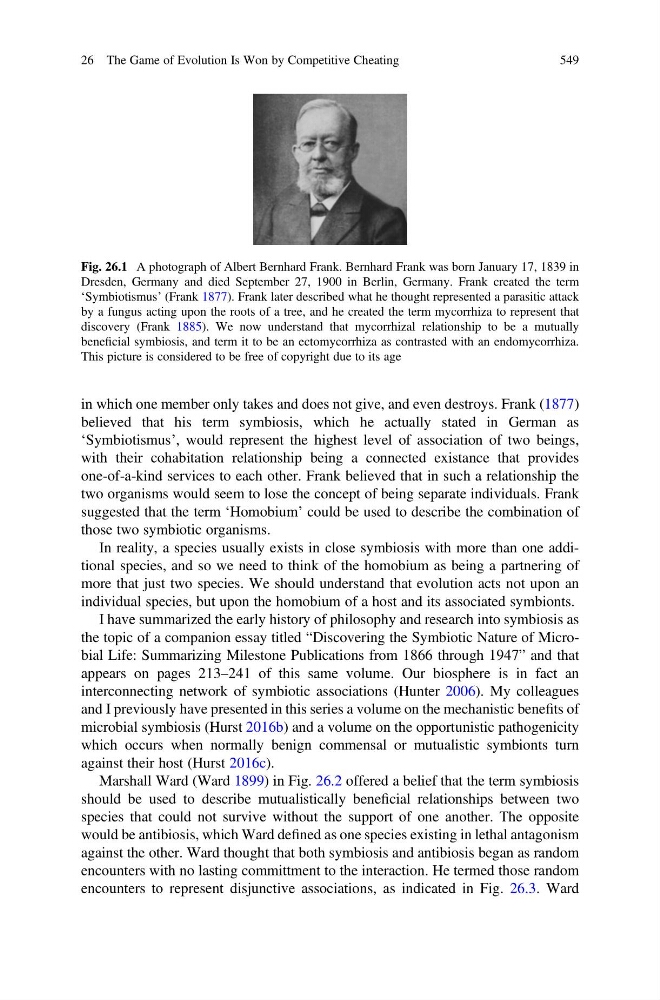
Fig. 26.1 A photograph of Albert Bernhard Frank. Bernhard Frank was born January 17, 1839 in
Dresden, Germany and died September 27, 1900 in Berlin, Germany. Frank created the term
‘Symbiotismus’ (Frank 1877). Frank later described what he thought represented a parasitic attack
by a fungus acting upon the roots of a tree, and he created the term mycorrhiza to represent that
discovery (Frank 1885). We now understand that mycorrhizal relationship to be a mutually
beneficial symbiosis, and term it to be an ectomycorrhiza as contrasted with an endomycorrhiza.
This picture is considered to be free of copyright due to its age
26 The Game of Evolution Is Won by Competitive Cheating
549
believed that his term symbiosis, which he actually stated in German as
‘Symbiotismus’, would represent the highest level of association of two beings,
with their cohabitation relationship being a connected existance that provides
one-of-a-kind services to each other. Frank believed that in such a relationship the
two organisms would seem to lose the concept of being separate individuals. Frank
suggested that the term ‘Homobium’ could be used to describe the combination of
those two symbiotic organisms.
In reality, a species usually exists in close symbiosis with more than one additional species, and so we need to think of the homobium as being a partnering of
more that just two species. We should understand that evolution acts not upon an
individual species, but upon the homobium of a host and its associated symbionts.
I have summarized the early history of philosophy and research into symbiosis as
the topic of a companion essay titled “Discovering the Symbiotic Nature of Microbial Life: Summarizing Milestone Publications from 1866 through 1947” and that
appears on pages 213–241 of this same volume. Our biosphere is in fact an
interconnecting network of symbiotic associations (Hunter 2006). My colleagues
and I previously have presented in this series a volume on the mechanistic benefits of
microbial symbiosis (Hurst 2016b) and a volume on the opportunistic pathogenicity
which occurs when normally benign commensal or mutualistic symbionts turn
against their host (Hurst 2016c).
Marshall Ward (Ward 1899) in Fig. 26.2 offered a belief that the term symbiosis
should be used to describe mutualistically beneficial relationships between two
species that could not survive without the support of one another. The opposite
would be antibiosis, which Ward defined as one species existing in lethal antagonism
against the other. Ward thought that both symbiosis and antibiosis began as random
encounters with no lasting committment to the interaction. He termed those random
encounters to represent disjunctive associations, as indicated in Fig. 26.3. Ward
Fig. 26.1 A photograph of Albert Bernhard Frank. Bernhard Frank was born January 17, 1839 in
Dresden, Germany and died September 27, 1900 in Berlin, Germany. Frank created the term
‘Symbiotismus’ (Frank 1877). Frank later described what he thought represented a parasitic attack
by a fungus acting upon the roots of a tree, and he created the term mycorrhiza to represent that
discovery (Frank 1885). We now understand that mycorrhizal relationship to be a mutually
beneficial symbiosis, and term it to be an ectomycorrhiza as contrasted with an endomycorrhiza.
This picture is considered to be free of copyright due to its age
26 The Game of Evolution Is Won by Competitive Cheating
549