

There are no artificial materials which meet this condition of self-renewability. In
contrast, natural systems have already been developed in this manner.
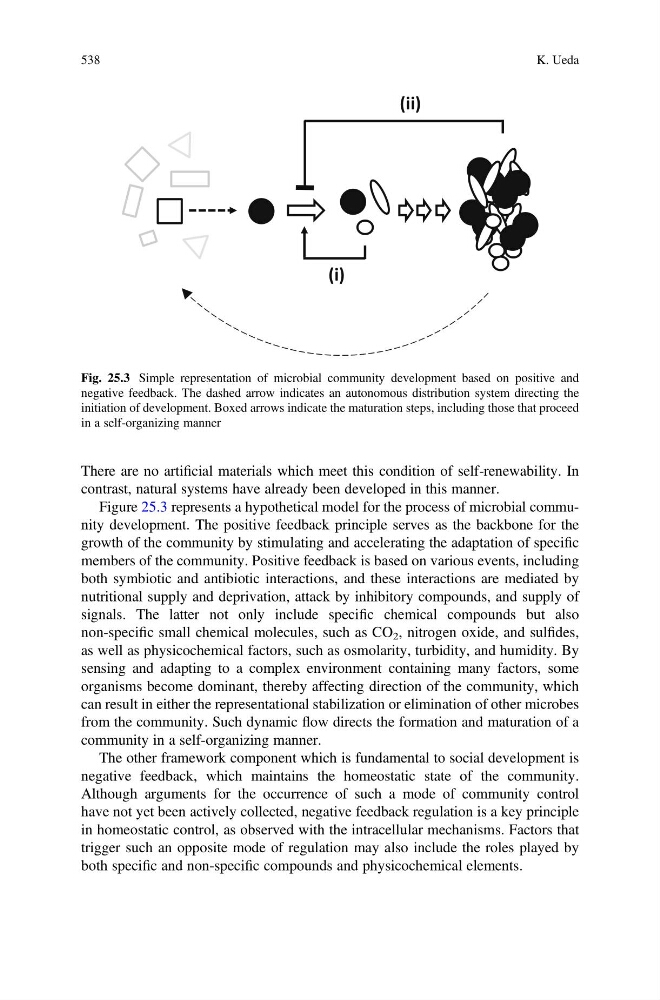
Figure 25.3 represents a hypothetical model for the process of microbial community development. The positive feedback principle serves as the backbone for the
growth of the community by stimulating and accelerating the adaptation of specific
members of the community. Positive feedback is based on various events, including
both symbiotic and antibiotic interactions, and these interactions are mediated by
nutritional supply and deprivation, attack by inhibitory compounds, and supply of
signals. The latter not only include specific chemical compounds but also
non-specific small chemical molecules, such as CO 2 , nitrogen oxide, and sulfides,
as well as physicochemical factors, such as osmolarity, turbidity, and humidity. By
sensing and adapting to a complex environment containing many factors, some
organisms become dominant, thereby affecting direction of the community, which
can result in either the representational stabilization or elimination of other microbes
from the community. Such dynamic flow directs the formation and maturation of a
community in a self-organizing manner.
The other framework component which is fundamental to social development is
negative feedback, which maintains the homeostatic state of the community.
Although arguments for the occurrence of such a mode of community control
have not yet been actively collected, negative feedback regulation is a key principle
in homeostatic control, as observed with the intracellular mechanisms. Factors that
trigger such an opposite mode of regulation may also include the roles played by
both specific and non-specific compounds and physicochemical elements.
(ii)
(i)
Fig. 25.3 Simple representation of microbial community development based on positive and
negative feedback. The dashed arrow indicates an autonomous distribution system directing the
initiation of development. Boxed arrows indicate the maturation steps, including those that proceed
in a self-organizing manner
538
K. Ueda
contrast, natural systems have already been developed in this manner.
Figure 25.3 represents a hypothetical model for the process of microbial community development. The positive feedback principle serves as the backbone for the
growth of the community by stimulating and accelerating the adaptation of specific
members of the community. Positive feedback is based on various events, including
both symbiotic and antibiotic interactions, and these interactions are mediated by
nutritional supply and deprivation, attack by inhibitory compounds, and supply of
signals. The latter not only include specific chemical compounds but also
non-specific small chemical molecules, such as CO 2 , nitrogen oxide, and sulfides,
as well as physicochemical factors, such as osmolarity, turbidity, and humidity. By
sensing and adapting to a complex environment containing many factors, some
organisms become dominant, thereby affecting direction of the community, which
can result in either the representational stabilization or elimination of other microbes
from the community. Such dynamic flow directs the formation and maturation of a
community in a self-organizing manner.
The other framework component which is fundamental to social development is
negative feedback, which maintains the homeostatic state of the community.
Although arguments for the occurrence of such a mode of community control
have not yet been actively collected, negative feedback regulation is a key principle
in homeostatic control, as observed with the intracellular mechanisms. Factors that
trigger such an opposite mode of regulation may also include the roles played by
both specific and non-specific compounds and physicochemical elements.
(ii)
(i)
Fig. 25.3 Simple representation of microbial community development based on positive and
negative feedback. The dashed arrow indicates an autonomous distribution system directing the
initiation of development. Boxed arrows indicate the maturation steps, including those that proceed
in a self-organizing manner
538
K. Ueda