

There is a serious downside to continuously using synthetic fertilizers, because the
nitrogen and phosphorus which they contain can decrease soil health, increase
emissions of greenhouse gasses including N 2 0, and the surface runoff of artificial
fertilizers leads to eutrophication of waterways (Khan et al. 2020). George T. Moore
(Moore 1905) made one of the pioneering efforts in that subject area when he studied
culturing and agriculturally applying root nodulation bacteria to assist productivity
of legume crops. Historically, people had used soil transfer to provide appropriate
microbes for achieving effective root nodulation in legumes. That nodulation
enables legumes to have a source of usable nitrogen. However the inadvertent
movement of pathogens associated with soil transfer can cause such plant diseases
as wilts and blights.
Microbial treatments could help us to reduce the use of pesticides that we
otherwise might apply for enhancing agricultural productivity. The use of pesticides
can decrease overall health of an ecosystem including the health of our own species
(Khan et al. 2020). Rachel Carsons book “Silent Spring” had a profound effect upon
humanity by helping us to recognize the ecological damage which can result from
usage of artificial pesticides (Carson 1962). One interesting possibility for reducing
the use of pesticides, such as dichlorodiphenyltrichloroethane (DDT) which was a
topic of Carson’s book, comes from our knowledge that a microsporidian symbiont
vertically transmitted in Anopheles arabiensis mosquitoes can impair the transmission of Plasmodium falciparum (Herren et al. 2020). Plasmodium falciparum is one
of the parasitic unicellular protozoa that cause the disease malaria.
Acknowledgements I thank Vladimir Bulatov and David Gatlin for generously provided me with
images to use in this chapter. I thank Aaron Margolin for a conversation during which he long ago
helped me to understand how the requirements of a niche direct evolution. Aaron would like my
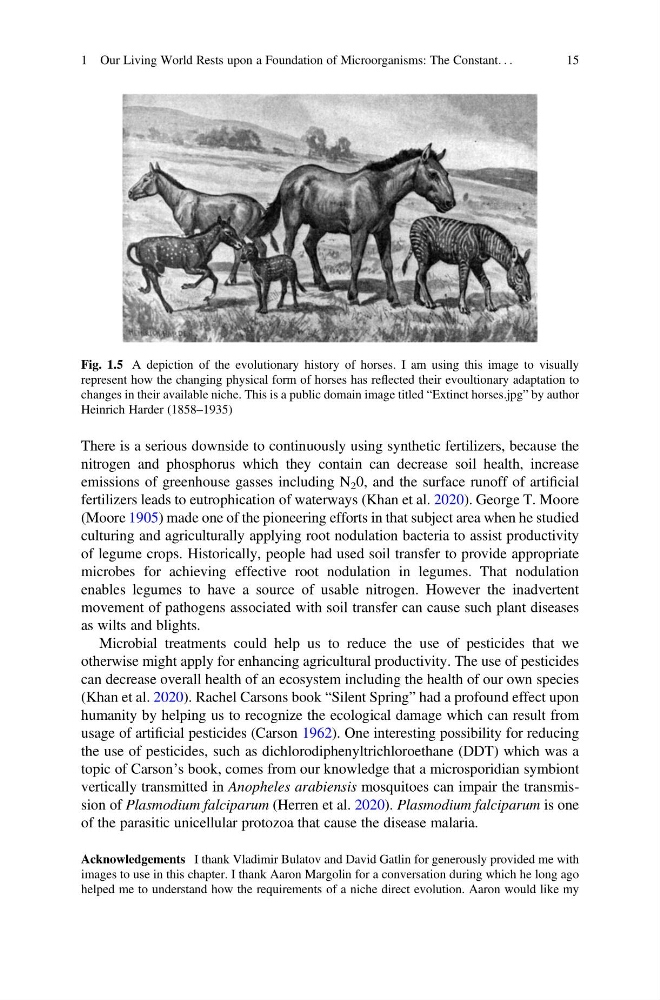
Fig. 1.5 A depiction of the evolutionary history of horses. I am using this image to visually
represent how the changing physical form of horses has reflected their evoultionary adaptation to
changes in their available niche. This is a public domain image titled “Extinct horses.jpg” by author
Heinrich Harder (1858–1935)
1 Our Living World Rests upon a Foundation of Microorganisms: The Constant. . .
15
nitrogen and phosphorus which they contain can decrease soil health, increase
emissions of greenhouse gasses including N 2 0, and the surface runoff of artificial
fertilizers leads to eutrophication of waterways (Khan et al. 2020). George T. Moore
(Moore 1905) made one of the pioneering efforts in that subject area when he studied
culturing and agriculturally applying root nodulation bacteria to assist productivity
of legume crops. Historically, people had used soil transfer to provide appropriate
microbes for achieving effective root nodulation in legumes. That nodulation
enables legumes to have a source of usable nitrogen. However the inadvertent
movement of pathogens associated with soil transfer can cause such plant diseases
as wilts and blights.
Microbial treatments could help us to reduce the use of pesticides that we
otherwise might apply for enhancing agricultural productivity. The use of pesticides
can decrease overall health of an ecosystem including the health of our own species
(Khan et al. 2020). Rachel Carsons book “Silent Spring” had a profound effect upon
humanity by helping us to recognize the ecological damage which can result from
usage of artificial pesticides (Carson 1962). One interesting possibility for reducing
the use of pesticides, such as dichlorodiphenyltrichloroethane (DDT) which was a
topic of Carson’s book, comes from our knowledge that a microsporidian symbiont
vertically transmitted in Anopheles arabiensis mosquitoes can impair the transmission of Plasmodium falciparum (Herren et al. 2020). Plasmodium falciparum is one
of the parasitic unicellular protozoa that cause the disease malaria.
Acknowledgements I thank Vladimir Bulatov and David Gatlin for generously provided me with
images to use in this chapter. I thank Aaron Margolin for a conversation during which he long ago
helped me to understand how the requirements of a niche direct evolution. Aaron would like my
Fig. 1.5 A depiction of the evolutionary history of horses. I am using this image to visually
represent how the changing physical form of horses has reflected their evoultionary adaptation to
changes in their available niche. This is a public domain image titled “Extinct horses.jpg” by author
Heinrich Harder (1858–1935)
1 Our Living World Rests upon a Foundation of Microorganisms: The Constant. . .
15