

the stratosphere and can affect Earth’s climate. Similar to the ability of dust storms to
attenuate UV light (~50%), the other aerosol sources can similarly attenuate UV and
thus provide some degree of UV shielding to associated microbial communities
(Herman et al. 1999).
One of the most visibly obvious locations for a microbial ecosystem in the
atmosphere is clouds. Clouds are an oasis-like environment where UV is attenuated
and water is plentiful and so are potential microbial nutrients (organic detritus,
nitrogen, methane, etc.) (Amato 2012; Hill et al. 2007). Temperature can also be a
limiting factor which is dependent on a cloud’s altitude. Clouds occur near surface to
~18 km in altitude, and temperature typically drops ~6
C km
À1 up to ~10 km and
then remains stable up to ~20 km (Alpers et al. 2004). This constitutes a temperature
range of near ground or ambient down to ~-60
C. These temperatures can vary in
mountainous regions where ambient temperatures at summits may reach typical
lower altitude temperatures. The ~2.7 km summit at Mt. Bachelor, Bend, Oregon,
USA, can reach ~32
C in the summer, while the average July maximum at the
~4.3 km summit at Pikes Peak, Colorado, is ~0.9
C. This temperature range
difference between Mt. Bachelor and Pikes Peak indicates that significant rates of
metabolism in clouds in the western United States are probably limited to an altitude
of under 4 km. Metabolism at higher altitudes may occur at reduced rates or by
specialized or yet to be identified adapted genera. Clouds typically have lifespans of
minutes to hours and may morph from one cloud type to another or dissipate. Cloud
propagation could influence the lifespan of cloud conditions within a given airmass
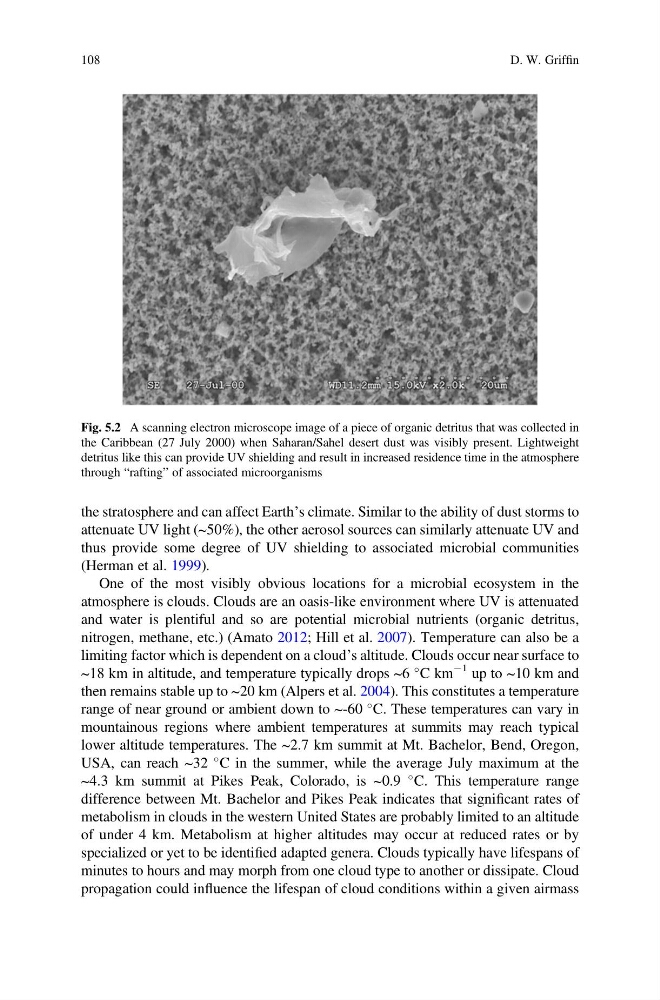
Fig. 5.2 A scanning electron microscope image of a piece of organic detritus that was collected in
the Caribbean (27 July 2000) when Saharan/Sahel desert dust was visibly present. Lightweight
detritus like this can provide UV shielding and result in increased residence time in the atmosphere
through “rafting” of associated microorganisms
108
D. W. Griffin
attenuate UV light (~50%), the other aerosol sources can similarly attenuate UV and
thus provide some degree of UV shielding to associated microbial communities
(Herman et al. 1999).
One of the most visibly obvious locations for a microbial ecosystem in the
atmosphere is clouds. Clouds are an oasis-like environment where UV is attenuated
and water is plentiful and so are potential microbial nutrients (organic detritus,
nitrogen, methane, etc.) (Amato 2012; Hill et al. 2007). Temperature can also be a
limiting factor which is dependent on a cloud’s altitude. Clouds occur near surface to
~18 km in altitude, and temperature typically drops ~6
C km
À1 up to ~10 km and
then remains stable up to ~20 km (Alpers et al. 2004). This constitutes a temperature
range of near ground or ambient down to ~-60
C. These temperatures can vary in
mountainous regions where ambient temperatures at summits may reach typical
lower altitude temperatures. The ~2.7 km summit at Mt. Bachelor, Bend, Oregon,
USA, can reach ~32
C in the summer, while the average July maximum at the
~4.3 km summit at Pikes Peak, Colorado, is ~0.9
C. This temperature range
difference between Mt. Bachelor and Pikes Peak indicates that significant rates of
metabolism in clouds in the western United States are probably limited to an altitude
of under 4 km. Metabolism at higher altitudes may occur at reduced rates or by
specialized or yet to be identified adapted genera. Clouds typically have lifespans of
minutes to hours and may morph from one cloud type to another or dissipate. Cloud
propagation could influence the lifespan of cloud conditions within a given airmass
Fig. 5.2 A scanning electron microscope image of a piece of organic detritus that was collected in
the Caribbean (27 July 2000) when Saharan/Sahel desert dust was visibly present. Lightweight
detritus like this can provide UV shielding and result in increased residence time in the atmosphere
through “rafting” of associated microorganisms
108
D. W. Griffin