

characterized the binding of a negative allosteric modulator of the
purinergic P2X3 receptor [22]. Moreover, the Monte Carlo simulation technique (Forced-Biased Metropolis Monte Carlo
simulated annealing) was aimed at identification of allosteric binding site of pregnenolone, an allosteric modulator of the cannabinoid 1 receptor (CB 1 ) [4].
2 Methods and Applications
2.1 Case Studies
“Protein Contact
Network” Analysis
2.1.1 Anti-VEGF Agents
PCN analysis has been applied in order to study equilibrium structures of VEGF-A, anti-VEGF agents (bevacizumab, ranibizumab,
and aflibercept), and related VEGF-A/anti-VEGF complexes
[9]. The correlation analysis between topological descriptors and
time for three independent replicas of simulated complexes was
carried out. The dGsolv (delta of solvation free energy) did not
change over the time, given that the correlation dGsolv vs. time was
not significant. Few topological descriptors showed correlations
with time and/or with each other; for example, the average shortest path (asp) positively correlated with time. Clustering of PCN
was also carried out and then complexes were represented as functional models. After partitioning of the protein contact network
into clusters, the structure of the complexes was represented as
functional modules [9]. The VEGFA dimer was divided into two
clusters that were found to be highly interconnected (Fig. 3).
VEGFR1d2_R2d3 (aflibercept binding domain)/VEGFA was
divided into four clusters; this cluster partitioning of the aflibercept/VEGFA complex revealed a conserved network for VEGFA
and two distinct domains corresponding to R1d2 and R2d3, forming long-range interactions with VEGFA. The partition into four
clusters of Fab-bevacizumab/VEGFA and ranibizumab/VEGFA
revealed for bound VEGFA a different cluster patterning,
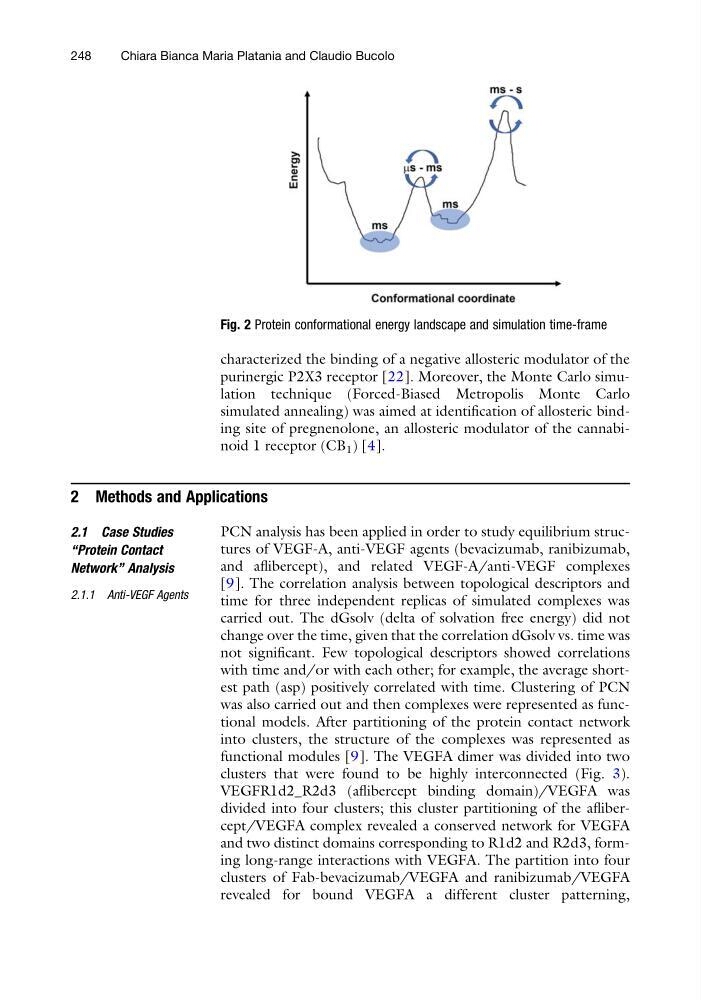
Fig. 2 Protein conformational energy landscape and simulation time-frame
248
Chiara Bianca Maria Platania and Claudio Bucolo
purinergic P2X3 receptor [22]. Moreover, the Monte Carlo simulation technique (Forced-Biased Metropolis Monte Carlo
simulated annealing) was aimed at identification of allosteric binding site of pregnenolone, an allosteric modulator of the cannabinoid 1 receptor (CB 1 ) [4].
2 Methods and Applications
2.1 Case Studies
“Protein Contact
Network” Analysis
2.1.1 Anti-VEGF Agents
PCN analysis has been applied in order to study equilibrium structures of VEGF-A, anti-VEGF agents (bevacizumab, ranibizumab,
and aflibercept), and related VEGF-A/anti-VEGF complexes
[9]. The correlation analysis between topological descriptors and
time for three independent replicas of simulated complexes was
carried out. The dGsolv (delta of solvation free energy) did not
change over the time, given that the correlation dGsolv vs. time was
not significant. Few topological descriptors showed correlations
with time and/or with each other; for example, the average shortest path (asp) positively correlated with time. Clustering of PCN
was also carried out and then complexes were represented as functional models. After partitioning of the protein contact network
into clusters, the structure of the complexes was represented as
functional modules [9]. The VEGFA dimer was divided into two
clusters that were found to be highly interconnected (Fig. 3).
VEGFR1d2_R2d3 (aflibercept binding domain)/VEGFA was
divided into four clusters; this cluster partitioning of the aflibercept/VEGFA complex revealed a conserved network for VEGFA
and two distinct domains corresponding to R1d2 and R2d3, forming long-range interactions with VEGFA. The partition into four
clusters of Fab-bevacizumab/VEGFA and ranibizumab/VEGFA
revealed for bound VEGFA a different cluster patterning,
Fig. 2 Protein conformational energy landscape and simulation time-frame
248
Chiara Bianca Maria Platania and Claudio Bucolo