

(GVHD), psoriasis, Crohn’s disease, and other inflammatory conditions [48–51].
The inhibition of DHFR by MTX has been extensively studied.
It has been shown via two-dimensional
1 H NMR methods that the
conformation of bound MTX to ecDHFR has the pteridine ring
rotated about the C6-C9 bond by about 180
relative to that of
bound DHF [52]. In this orientation, hydrogen bonds are formed
between the protein and the 2,4-diamino groups on the pyrimidine
ring portion of the molecule. Crystal structures also indicate that a
hydrogen bond between a protonated N1 and Asp27 is present.
This interaction is not present in the DHF complex. The enhanced
affinity of MTX over DHF has been attributed to this charged
interaction [52–54]. MTX also binds hDHFR in the same “nonproductive” orientation (Fig. 8) [56, 57].
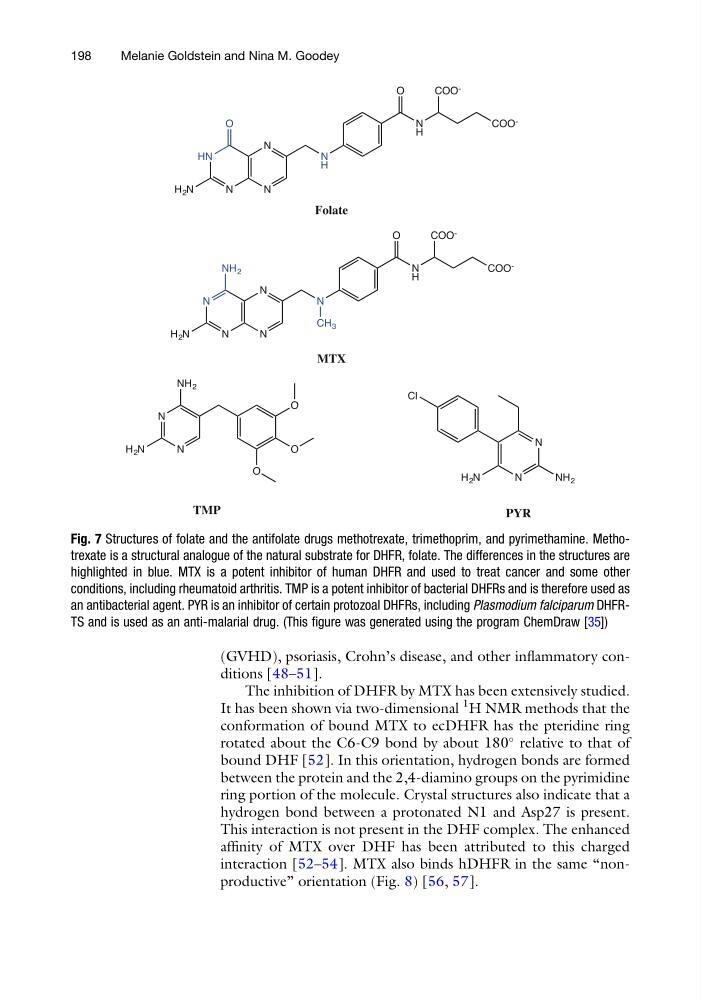
Fig. 7 Structures of folate and the antifolate drugs methotrexate, trimethoprim, and pyrimethamine. Methotrexate is a structural analogue of the natural substrate for DHFR, folate. The differences in the structures are
highlighted in blue. MTX is a potent inhibitor of human DHFR and used to treat cancer and some other
conditions, including rheumatoid arthritis. TMP is a potent inhibitor of bacterial DHFRs and is therefore used as
an antibacterial agent. PYR is an inhibitor of certain protozoal DHFRs, including Plasmodium falciparum DHFRTS and is used as an anti-malarial drug. (This figure was generated using the program ChemDraw [35])
198
Melanie Goldstein and Nina M. Goodey
The inhibition of DHFR by MTX has been extensively studied.
It has been shown via two-dimensional
1 H NMR methods that the
conformation of bound MTX to ecDHFR has the pteridine ring
rotated about the C6-C9 bond by about 180
relative to that of
bound DHF [52]. In this orientation, hydrogen bonds are formed
between the protein and the 2,4-diamino groups on the pyrimidine
ring portion of the molecule. Crystal structures also indicate that a
hydrogen bond between a protonated N1 and Asp27 is present.
This interaction is not present in the DHF complex. The enhanced
affinity of MTX over DHF has been attributed to this charged
interaction [52–54]. MTX also binds hDHFR in the same “nonproductive” orientation (Fig. 8) [56, 57].
Fig. 7 Structures of folate and the antifolate drugs methotrexate, trimethoprim, and pyrimethamine. Methotrexate is a structural analogue of the natural substrate for DHFR, folate. The differences in the structures are
highlighted in blue. MTX is a potent inhibitor of human DHFR and used to treat cancer and some other
conditions, including rheumatoid arthritis. TMP is a potent inhibitor of bacterial DHFRs and is therefore used as
an antibacterial agent. PYR is an inhibitor of certain protozoal DHFRs, including Plasmodium falciparum DHFRTS and is used as an anti-malarial drug. (This figure was generated using the program ChemDraw [35])
198
Melanie Goldstein and Nina M. Goodey