

201
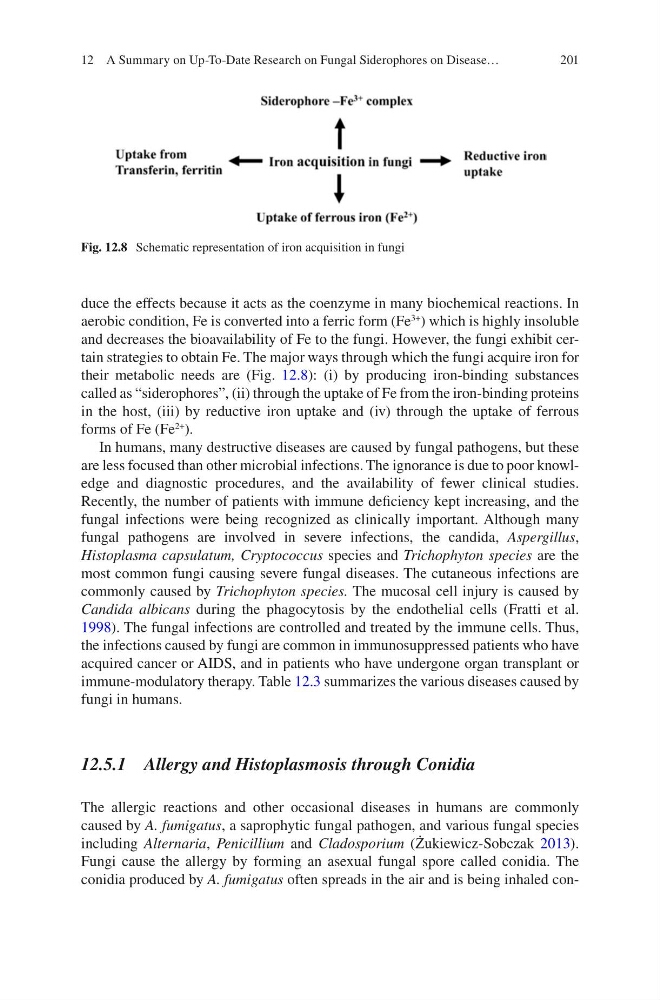
Fig. 12.8 Schematic representation of iron acquisition in fungi
duce the effects because it acts as the coenzyme in many biochemical reactions. In
aerobic condition, Fe is converted into a ferric form (Fe
3+
) which is highly insoluble
and decreases the bioavailability of Fe to the fungi. However, the fungi exhibit certain strategies to obtain Fe. The major ways through which the fungi acquire iron for
their metabolic needs are (Fig. 12.8): (i) by producing iron-binding substances
called as “siderophores”, (ii) through the uptake of Fe from the iron-binding proteins
in the host, (iii) by reductive iron uptake and (iv) through the uptake of ferrous
forms of Fe (Fe
2+
).
In humans, many destructive diseases are caused by fungal pathogens, but these
are less focused than other microbial infections. The ignorance is due to poor knowledge and diagnostic procedures, and the availability of fewer clinical studies.
Recently, the number of patients with immune deficiency kept increasing, and the
fungal infections were being recognized as clinically important. Although many
fungal pathogens are involved in severe infections, the candida, Aspergillus,
Histoplasma capsulatum, Cryptococcus species and Trichophyton species are the
most common fungi causing severe fungal diseases. The cutaneous infections are
commonly caused by Trichophyton species. The mucosal cell injury is caused by
Candida albicans during the phagocytosis by the endothelial cells (Fratti et al.
1998). The fungal infections are controlled and treated by the immune cells. Thus,
the infections caused by fungi are common in immunosuppressed patients who have
acquired cancer or AIDS, and in patients who have undergone organ transplant or
immune-modulatory therapy. Table 12.3 summarizes the various diseases caused by
fungi in humans.
12.5.1 Allergy and Histoplasmosis through Conidia
The allergic reactions and other occasional diseases in humans are commonly
caused by A. fumigatus, a saprophytic fungal pathogen, and various fungal species
including Alternaria, Penicillium and Cladosporium (Żukiewicz-Sobczak 2013).
Fungi cause the allergy by forming an asexual fungal spore called conidia. The
conidia produced by A. fumigatus often spreads in the air and is being inhaled con12 A Summary on Up-To-Date Research on Fungal Siderophores on Disease…
Fig. 12.8 Schematic representation of iron acquisition in fungi
duce the effects because it acts as the coenzyme in many biochemical reactions. In
aerobic condition, Fe is converted into a ferric form (Fe
3+
) which is highly insoluble
and decreases the bioavailability of Fe to the fungi. However, the fungi exhibit certain strategies to obtain Fe. The major ways through which the fungi acquire iron for
their metabolic needs are (Fig. 12.8): (i) by producing iron-binding substances
called as “siderophores”, (ii) through the uptake of Fe from the iron-binding proteins
in the host, (iii) by reductive iron uptake and (iv) through the uptake of ferrous
forms of Fe (Fe
2+
).
In humans, many destructive diseases are caused by fungal pathogens, but these
are less focused than other microbial infections. The ignorance is due to poor knowledge and diagnostic procedures, and the availability of fewer clinical studies.
Recently, the number of patients with immune deficiency kept increasing, and the
fungal infections were being recognized as clinically important. Although many
fungal pathogens are involved in severe infections, the candida, Aspergillus,
Histoplasma capsulatum, Cryptococcus species and Trichophyton species are the
most common fungi causing severe fungal diseases. The cutaneous infections are
commonly caused by Trichophyton species. The mucosal cell injury is caused by
Candida albicans during the phagocytosis by the endothelial cells (Fratti et al.
1998). The fungal infections are controlled and treated by the immune cells. Thus,
the infections caused by fungi are common in immunosuppressed patients who have
acquired cancer or AIDS, and in patients who have undergone organ transplant or
immune-modulatory therapy. Table 12.3 summarizes the various diseases caused by
fungi in humans.
12.5.1 Allergy and Histoplasmosis through Conidia
The allergic reactions and other occasional diseases in humans are commonly
caused by A. fumigatus, a saprophytic fungal pathogen, and various fungal species
including Alternaria, Penicillium and Cladosporium (Żukiewicz-Sobczak 2013).
Fungi cause the allergy by forming an asexual fungal spore called conidia. The
conidia produced by A. fumigatus often spreads in the air and is being inhaled con12 A Summary on Up-To-Date Research on Fungal Siderophores on Disease…