

200
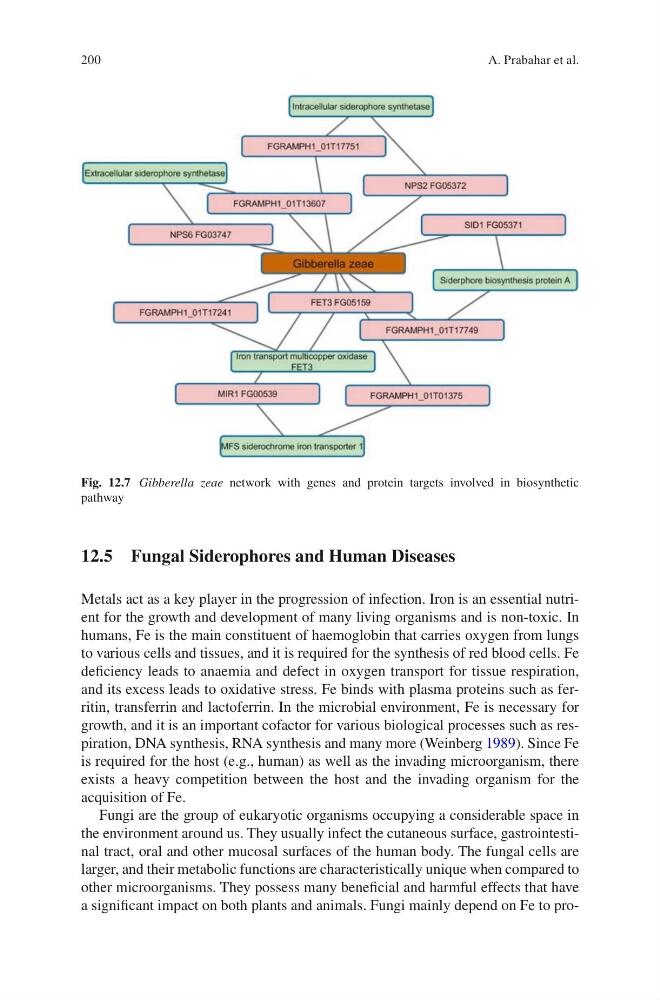
Fig. 12.7 Gibberella zeae network with genes and protein targets involved in biosynthetic
pathway
12.5 Fungal Siderophores and Human Diseases
Metals act as a key player in the progression of infection. Iron is an essential nutrient for the growth and development of many living organisms and is non-toxic. In
humans, Fe is the main constituent of haemoglobin that carries oxygen from lungs
to various cells and tissues, and it is required for the synthesis of red blood cells. Fe
deficiency leads to anaemia and defect in oxygen transport for tissue respiration,
and its excess leads to oxidative stress. Fe binds with plasma proteins such as ferritin, transferrin and lactoferrin. In the microbial environment, Fe is necessary for
growth, and it is an important cofactor for various biological processes such as respiration, DNA synthesis, RNA synthesis and many more (Weinberg 1989). Since Fe
is required for the host (e.g., human) as well as the invading microorganism, there
exists a heavy competition between the host and the invading organism for the
acquisition of Fe.
Fungi are the group of eukaryotic organisms occupying a considerable space in
the environment around us. They usually infect the cutaneous surface, gastrointestinal tract, oral and other mucosal surfaces of the human body. The fungal cells are
larger, and their metabolic functions are characteristically unique when compared to
other microorganisms. They possess many beneficial and harmful effects that have
a significant impact on both plants and animals. Fungi mainly depend on Fe to proA. Prabahar et al.
Fig. 12.7 Gibberella zeae network with genes and protein targets involved in biosynthetic
pathway
12.5 Fungal Siderophores and Human Diseases
Metals act as a key player in the progression of infection. Iron is an essential nutrient for the growth and development of many living organisms and is non-toxic. In
humans, Fe is the main constituent of haemoglobin that carries oxygen from lungs
to various cells and tissues, and it is required for the synthesis of red blood cells. Fe
deficiency leads to anaemia and defect in oxygen transport for tissue respiration,
and its excess leads to oxidative stress. Fe binds with plasma proteins such as ferritin, transferrin and lactoferrin. In the microbial environment, Fe is necessary for
growth, and it is an important cofactor for various biological processes such as respiration, DNA synthesis, RNA synthesis and many more (Weinberg 1989). Since Fe
is required for the host (e.g., human) as well as the invading microorganism, there
exists a heavy competition between the host and the invading organism for the
acquisition of Fe.
Fungi are the group of eukaryotic organisms occupying a considerable space in
the environment around us. They usually infect the cutaneous surface, gastrointestinal tract, oral and other mucosal surfaces of the human body. The fungal cells are
larger, and their metabolic functions are characteristically unique when compared to
other microorganisms. They possess many beneficial and harmful effects that have
a significant impact on both plants and animals. Fungi mainly depend on Fe to proA. Prabahar et al.