

214
9
pesticides on credit, purchase of cotton from farmers’ cooperatives, ginning and
transport of cotton fibre to international markets. In addition, the company runs
social programmes involving adult literacy, education of village cooperatives,
land- use planning, soil conservation, as well as other forms of rural development.
Different factors influence the price that farmers will receive for the cotton they
grow. First, prices fluctuate internationally, which reflect changes in weather, agricultural policies and demand. In the 1990s, there were relatively high prices on cotton,
but from the early 2000s, prices on the world cotton market started to fall. This price
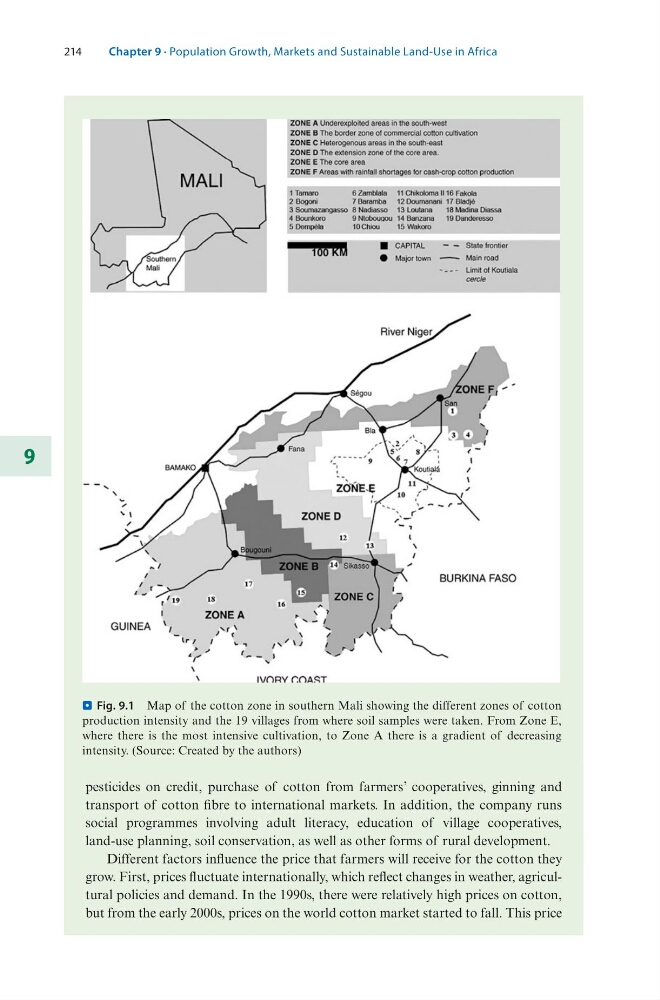
. Fig. 9.1 Map of the cotton zone in southern Mali showing the different zones of cotton
production intensity and the 19 villages from where soil samples were taken. From Zone E,
where there is the most intensive cultivation, to Zone A there is a gradient of decreasing
intensity. (Source: Created by the authors)
Chapter 9 · Population Growth, Markets and Sustainable Land-Use in Africa
9
pesticides on credit, purchase of cotton from farmers’ cooperatives, ginning and
transport of cotton fibre to international markets. In addition, the company runs
social programmes involving adult literacy, education of village cooperatives,
land- use planning, soil conservation, as well as other forms of rural development.
Different factors influence the price that farmers will receive for the cotton they
grow. First, prices fluctuate internationally, which reflect changes in weather, agricultural policies and demand. In the 1990s, there were relatively high prices on cotton,
but from the early 2000s, prices on the world cotton market started to fall. This price
. Fig. 9.1 Map of the cotton zone in southern Mali showing the different zones of cotton
production intensity and the 19 villages from where soil samples were taken. From Zone E,
where there is the most intensive cultivation, to Zone A there is a gradient of decreasing
intensity. (Source: Created by the authors)
Chapter 9 · Population Growth, Markets and Sustainable Land-Use in Africa