

20
in relation to environmental gradients and intensity of competition as a consequence
of shared resource requirements (Webb 2000a, 2002). The underlying conceptual
framework was formalized in terms of functional traits in individual case studies
(Cavender-Bares et al. 2004; Verdu and Pausas 2007). The tendency to oversimplify
the interpretation of phylogenetic patterns in communities, whereby phylogenetic
overdispersion was equated with the outcome of competitive exclusion and phylogenetic clustering was interpreted as evidence for environmental sorting, led to a
series of studies investigating the importance of scale (Cavender-Bares et al. 2006;
Swenson et al. 2006) and the role of Janzen-Connell-type mechanisms, i.e., densitydependent mortality due to pathogens and predators (Gilbert and Webb 2007; Parker
et al. 2015). Further developments revealed that the relationship between patterns
and ecological processes is context-dependent—in particular, with respect to spatial
scale (Emerson and Gillespie 2008; Cavender-Bares et al. 2009; Gerhold et al.
2015). Later studies revisited assumptions about the nature of competition and
expected evolutionary and ecological outcomes (Mayfield and Levine 2010).
Likewise, interpreting spectral dispersion will depend on the spatial resolution and
pixel (grain) size of remotely sensed imagery relative to plant size (Marconi et al.
2019) as well as on the consideration of specific spectral regions and their functional importance. When traits and spectral regions are highly phylogenetically
conserved (see Meireles et al., Chap. 7), trait, phylogenetic, and spectral data provide equivalent information. However, when some traits and spectral regions are
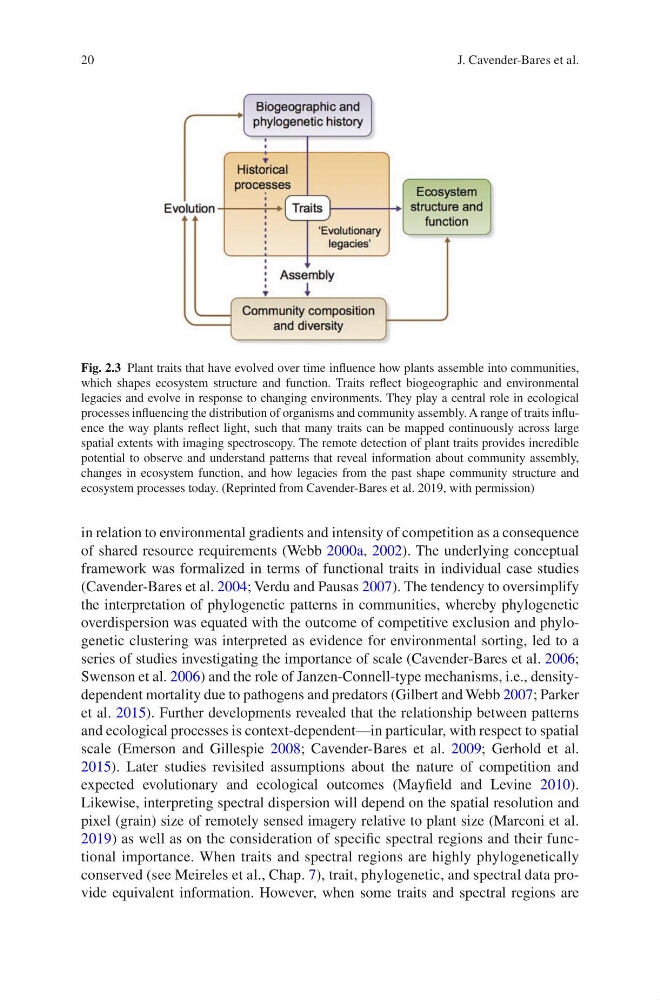
Fig. 2.3 Plant traits that have evolved over time influence how plants assemble into communities,
which shapes ecosystem structure and function. Traits reflect biogeographic and environmental
legacies and evolve in response to changing environments. They play a central role in ecological
processes influencing the distribution of organisms and community assembly. A range of traits influence the way plants reflect light, such that many traits can be mapped continuously across large
spatial extents with imaging spectroscopy. The remote detection of plant traits provides incredible
potential to observe and understand patterns that reveal information about community assembly,
changes in ecosystem function, and how legacies from the past shape community structure and
ecosystem processes today. (Reprinted from Cavender-Bares et al. 2019, with permission)
J. Cavender-Bares et al.
in relation to environmental gradients and intensity of competition as a consequence
of shared resource requirements (Webb 2000a, 2002). The underlying conceptual
framework was formalized in terms of functional traits in individual case studies
(Cavender-Bares et al. 2004; Verdu and Pausas 2007). The tendency to oversimplify
the interpretation of phylogenetic patterns in communities, whereby phylogenetic
overdispersion was equated with the outcome of competitive exclusion and phylogenetic clustering was interpreted as evidence for environmental sorting, led to a
series of studies investigating the importance of scale (Cavender-Bares et al. 2006;
Swenson et al. 2006) and the role of Janzen-Connell-type mechanisms, i.e., densitydependent mortality due to pathogens and predators (Gilbert and Webb 2007; Parker
et al. 2015). Further developments revealed that the relationship between patterns
and ecological processes is context-dependent—in particular, with respect to spatial
scale (Emerson and Gillespie 2008; Cavender-Bares et al. 2009; Gerhold et al.
2015). Later studies revisited assumptions about the nature of competition and
expected evolutionary and ecological outcomes (Mayfield and Levine 2010).
Likewise, interpreting spectral dispersion will depend on the spatial resolution and
pixel (grain) size of remotely sensed imagery relative to plant size (Marconi et al.
2019) as well as on the consideration of specific spectral regions and their functional importance. When traits and spectral regions are highly phylogenetically
conserved (see Meireles et al., Chap. 7), trait, phylogenetic, and spectral data provide equivalent information. However, when some traits and spectral regions are
Fig. 2.3 Plant traits that have evolved over time influence how plants assemble into communities,
which shapes ecosystem structure and function. Traits reflect biogeographic and environmental
legacies and evolve in response to changing environments. They play a central role in ecological
processes influencing the distribution of organisms and community assembly. A range of traits influence the way plants reflect light, such that many traits can be mapped continuously across large
spatial extents with imaging spectroscopy. The remote detection of plant traits provides incredible
potential to observe and understand patterns that reveal information about community assembly,
changes in ecosystem function, and how legacies from the past shape community structure and
ecosystem processes today. (Reprinted from Cavender-Bares et al. 2019, with permission)
J. Cavender-Bares et al.