

311
the status, changes, health, and resilience of ecosystems (Cernansky 2017) and the
internal patterns and heterogeneity of communities and landscapes (Lausch et al.
2015a). To understand the complexity of ecosystems, no one monitoring approach,
no single model, scale, or RS platform on its own is sufficient to discern the effects
of processes and different drivers of vegetation diversity (Lausch et al. 2018a, b).
This chapter introduces the different ranges of EO techniques for assessing vegetation diversity. The focus here is to give an overview of existing close-range RS
platforms as well as air- and spaceborne RS platforms for assessing plant diversity.
13.2 Range of EO Platforms to Assess Plant Diversity
RS sensors are mounted on different platforms such as camera traps or handheld, or
they may have fixed supports (e.g., a tripod) or towers for field-based spectral measurements. Drones, aircraft (airborne RS), or satellites (spaceborne RS) are also
Taxonomic
Diversity
Structural
Diversity
Functional
Diversity
PhyloDiversity
Healthy
Unhealthy
high
low
high
low
absent
n
o
i
t
a
z
i
n
a
g
r
o
n
o
i
t
a
t
e
g
e
v
f
o
l
e
v
e
L
extent
intensity
consistency
s
c
i
t
s
i
r
e
t
c
a
r
a
h
C
y
t
i
s
r
e
v
i
d
f
o
s
c
i
t
s
i
r
e
t
c
a
r
a
h
C
e
c
n
e
i
l
i
s
e
r
f
o
Unstable
f
o
s
c
i
t
s
i
r
e
t
c
a
r
a
h
C
s
e
s
s
e
c
o
r
p
vegetation
types – phylogeny
vegetation
types
vegetation
functions
vegetation
patterns
ecosystem
communities
– phylogeny
ecosystem
communities
ecosystem
communities functions
ecosystem
communities structures
individual
– phylogeny
populations species
– phylogeny
populations
species
populations
species structures
populations
species functions
individual
function
individual
structure
individual
genes
molecular
– phylogeny
genes
molecular
genes
molecular
structure
genes
molecular
functions
Trait Diversity
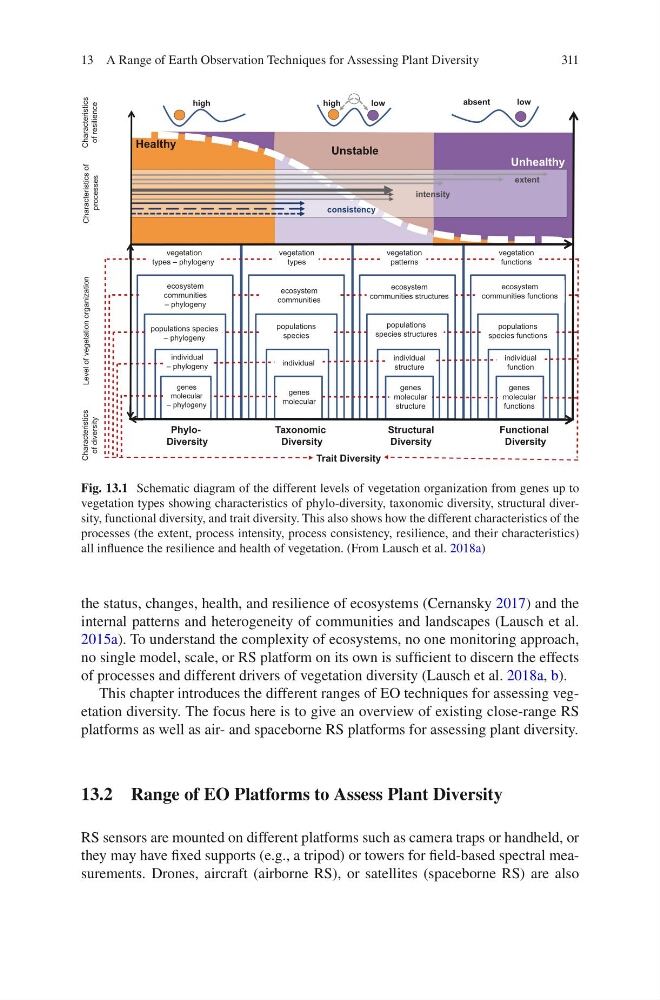
Fig. 13.1 Schematic diagram of the different levels of vegetation organization from genes up to
vegetation types showing characteristics of phylo-diversity, taxonomic diversity, structural diversity, functional diversity, and trait diversity. This also shows how the different characteristics of the
processes (the extent, process intensity, process consistency, resilience, and their characteristics)
all influence the resilience and health of vegetation. (From Lausch et al. 2018a)
13 A Range of Earth Observation Techniques for Assessing Plant Diversity
the status, changes, health, and resilience of ecosystems (Cernansky 2017) and the
internal patterns and heterogeneity of communities and landscapes (Lausch et al.
2015a). To understand the complexity of ecosystems, no one monitoring approach,
no single model, scale, or RS platform on its own is sufficient to discern the effects
of processes and different drivers of vegetation diversity (Lausch et al. 2018a, b).
This chapter introduces the different ranges of EO techniques for assessing vegetation diversity. The focus here is to give an overview of existing close-range RS
platforms as well as air- and spaceborne RS platforms for assessing plant diversity.
13.2 Range of EO Platforms to Assess Plant Diversity
RS sensors are mounted on different platforms such as camera traps or handheld, or
they may have fixed supports (e.g., a tripod) or towers for field-based spectral measurements. Drones, aircraft (airborne RS), or satellites (spaceborne RS) are also
Taxonomic
Diversity
Structural
Diversity
Functional
Diversity
PhyloDiversity
Healthy
Unhealthy
high
low
high
low
absent
n
o
i
t
a
z
i
n
a
g
r
o
n
o
i
t
a
t
e
g
e
v
f
o
l
e
v
e
L
extent
intensity
consistency
s
c
i
t
s
i
r
e
t
c
a
r
a
h
C
y
t
i
s
r
e
v
i
d
f
o
s
c
i
t
s
i
r
e
t
c
a
r
a
h
C
e
c
n
e
i
l
i
s
e
r
f
o
Unstable
f
o
s
c
i
t
s
i
r
e
t
c
a
r
a
h
C
s
e
s
s
e
c
o
r
p
vegetation
types – phylogeny
vegetation
types
vegetation
functions
vegetation
patterns
ecosystem
communities
– phylogeny
ecosystem
communities
ecosystem
communities functions
ecosystem
communities structures
individual
– phylogeny
populations species
– phylogeny
populations
species
populations
species structures
populations
species functions
individual
function
individual
structure
individual
genes
molecular
– phylogeny
genes
molecular
genes
molecular
structure
genes
molecular
functions
Trait Diversity
Fig. 13.1 Schematic diagram of the different levels of vegetation organization from genes up to
vegetation types showing characteristics of phylo-diversity, taxonomic diversity, structural diversity, functional diversity, and trait diversity. This also shows how the different characteristics of the
processes (the extent, process intensity, process consistency, resilience, and their characteristics)
all influence the resilience and health of vegetation. (From Lausch et al. 2018a)
13 A Range of Earth Observation Techniques for Assessing Plant Diversity