

165
Evolutionarily-explicit diversity detection approaches could have enormous
potential even when species cannot be identified. Biodiversity encompasses, among
other things, which branches of the tree of life are found in an area how much evolutionary history that represents. Because plant spectral profiles can carry information about evolutionary history, they can be leveraged to assess the diversity of
lineages instead of (or in addition to) the diversity in species or function. There are
key conceptual advantages of taking this approach.
First, we can estimate lineage diversity at different phylogenetic scales when
species-level detection performs poorly. As suggested in Fig. 7.7, leaf spectral
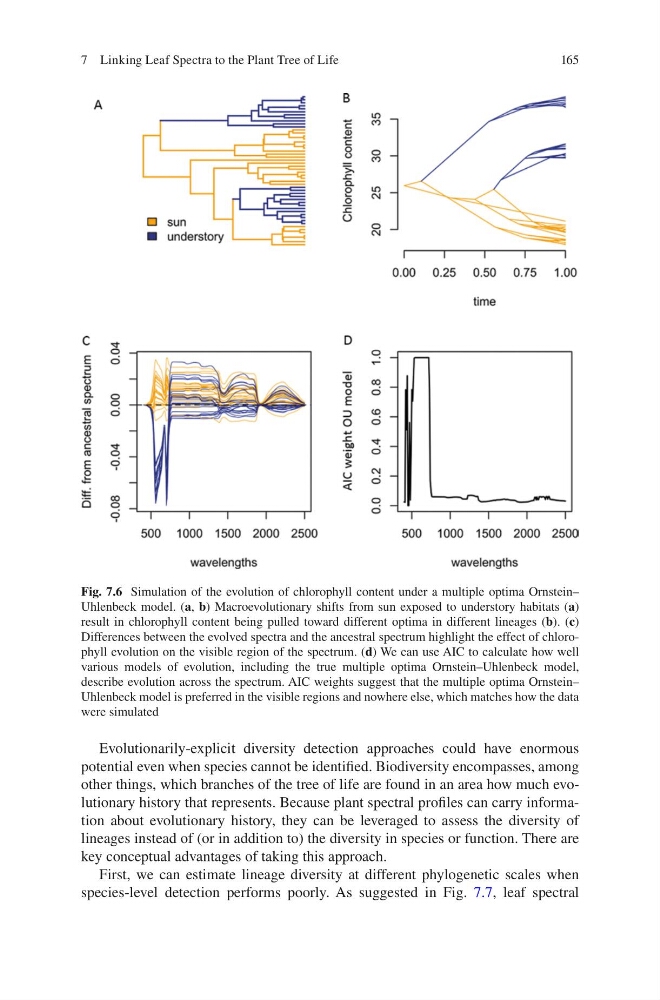
Fig. 7.6 Simulation of the evolution of chlorophyll content under a multiple optima Ornstein–
Uhlenbeck model. (a, b) Macroevolutionary shifts from sun exposed to understory habitats (a)
result in chlorophyll content being pulled toward different optima in different lineages (b). (c)
Differences between the evolved spectra and the ancestral spectrum highlight the effect of chlorophyll evolution on the visible region of the spectrum. (d) We can use AIC to calculate how well
various models of evolution, including the true multiple optima Ornstein–Uhlenbeck model,
describe evolution across the spectrum. AIC weights suggest that the multiple optima Ornstein–
Uhlenbeck model is preferred in the visible regions and nowhere else, which matches how the data
were simulated
7 Linking Leaf Spectra to the Plant Tree of Life
Evolutionarily-explicit diversity detection approaches could have enormous
potential even when species cannot be identified. Biodiversity encompasses, among
other things, which branches of the tree of life are found in an area how much evolutionary history that represents. Because plant spectral profiles can carry information about evolutionary history, they can be leveraged to assess the diversity of
lineages instead of (or in addition to) the diversity in species or function. There are
key conceptual advantages of taking this approach.
First, we can estimate lineage diversity at different phylogenetic scales when
species-level detection performs poorly. As suggested in Fig. 7.7, leaf spectral
Fig. 7.6 Simulation of the evolution of chlorophyll content under a multiple optima Ornstein–
Uhlenbeck model. (a, b) Macroevolutionary shifts from sun exposed to understory habitats (a)
result in chlorophyll content being pulled toward different optima in different lineages (b). (c)
Differences between the evolved spectra and the ancestral spectrum highlight the effect of chlorophyll evolution on the visible region of the spectrum. (d) We can use AIC to calculate how well
various models of evolution, including the true multiple optima Ornstein–Uhlenbeck model,
describe evolution across the spectrum. AIC weights suggest that the multiple optima Ornstein–
Uhlenbeck model is preferred in the visible regions and nowhere else, which matches how the data
were simulated
7 Linking Leaf Spectra to the Plant Tree of Life