

HDPE and LDPE contents. DSC can be used to determine PP in such materials but
as explained earlier the determination of the ratio of HDPE and LDPE in such
materials by DSC is rather difficult. CRYSTAF is the method of choice for the
analysis of such materials and three components can be easily identified and
quantified. Figure 2.37 displays a comparison of CRYSTAF and DSC results of a
waste plastic material. The three components, namely HDPE, PP and LDPE, can be
recognized by their crystallization peaks and the peak areas directly reveal the
concentration of the components. The crystallization peaks of the three components
show slight overlapping. Nonetheless, the relative amounts of the three components
can be determined to be about 40/27/33 wt%.
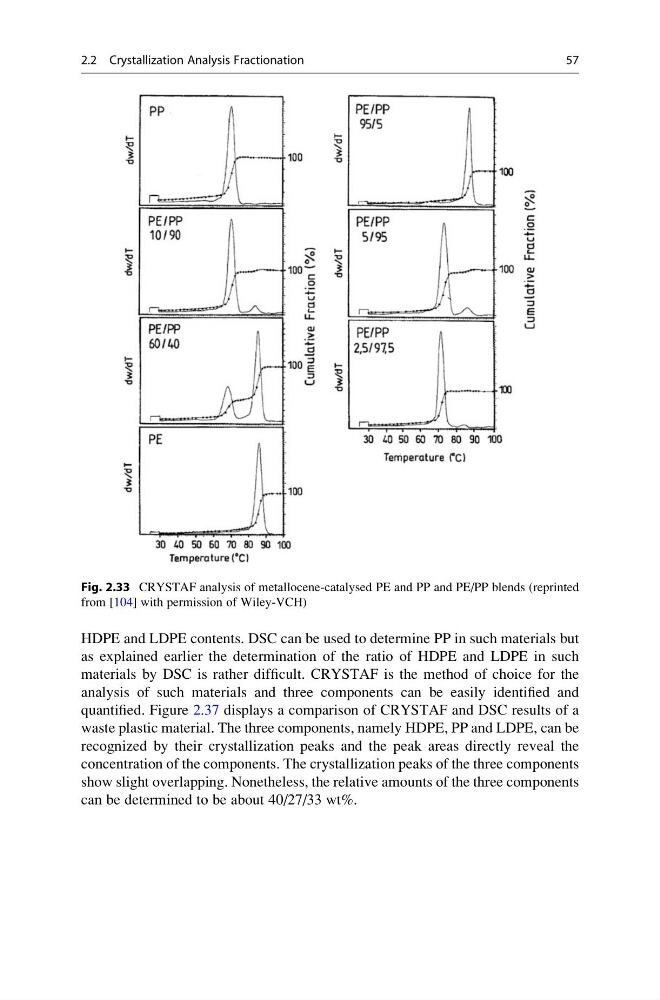
Fig. 2.33 CRYSTAF analysis of metallocene-catalysed PE and PP and PE/PP blends (reprinted
from [104] with permission of Wiley-VCH)
2.2 Crystallization Analysis Fractionation
57
as explained earlier the determination of the ratio of HDPE and LDPE in such
materials by DSC is rather difficult. CRYSTAF is the method of choice for the
analysis of such materials and three components can be easily identified and
quantified. Figure 2.37 displays a comparison of CRYSTAF and DSC results of a
waste plastic material. The three components, namely HDPE, PP and LDPE, can be
recognized by their crystallization peaks and the peak areas directly reveal the
concentration of the components. The crystallization peaks of the three components
show slight overlapping. Nonetheless, the relative amounts of the three components
can be determined to be about 40/27/33 wt%.
Fig. 2.33 CRYSTAF analysis of metallocene-catalysed PE and PP and PE/PP blends (reprinted
from [104] with permission of Wiley-VCH)
2.2 Crystallization Analysis Fractionation
57